Curran Emily, Chen Xiufen, Corrales Leticia, Kline Douglas E, Dubensky Thomas W, Duttagupta Priyanka, Kortylewski Marcin, Kline Justin
Department of Medicine, University of Chicago, Chicago, IL 60637, USA.
Department of Pathology, University of Chicago, Chicago, IL 60637, USA.
Cell Rep. 2016 Jun 14;15(11):2357-66. doi: 10.1016/j.celrep.2016.05.023. Epub 2016 Jun 2.
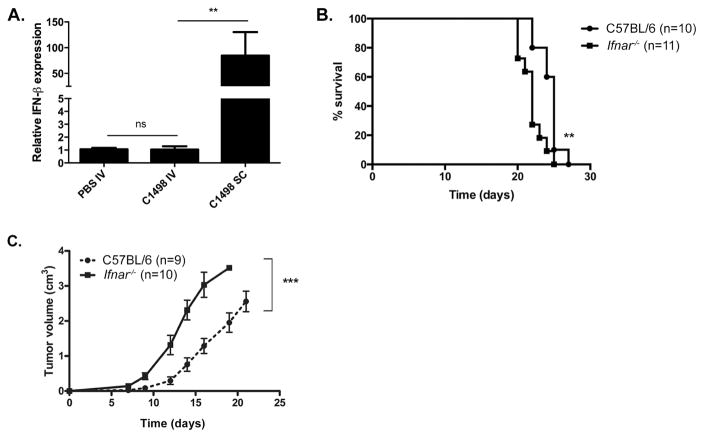
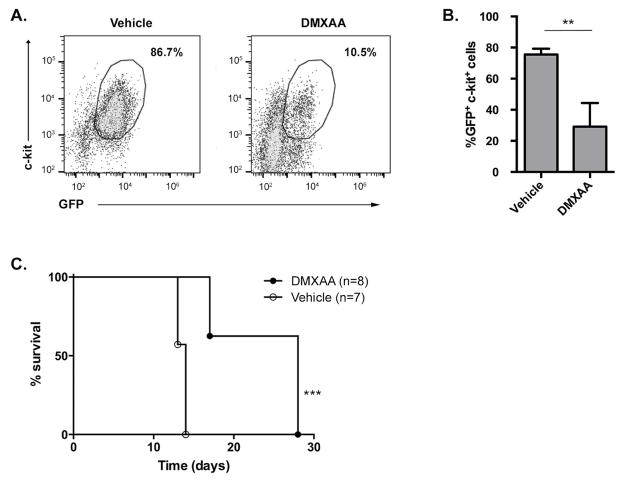
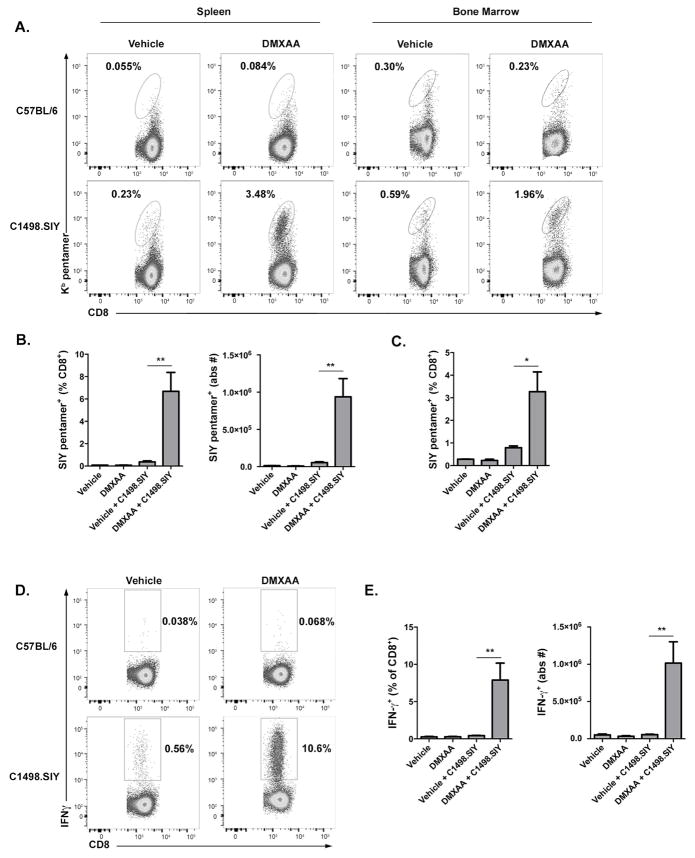
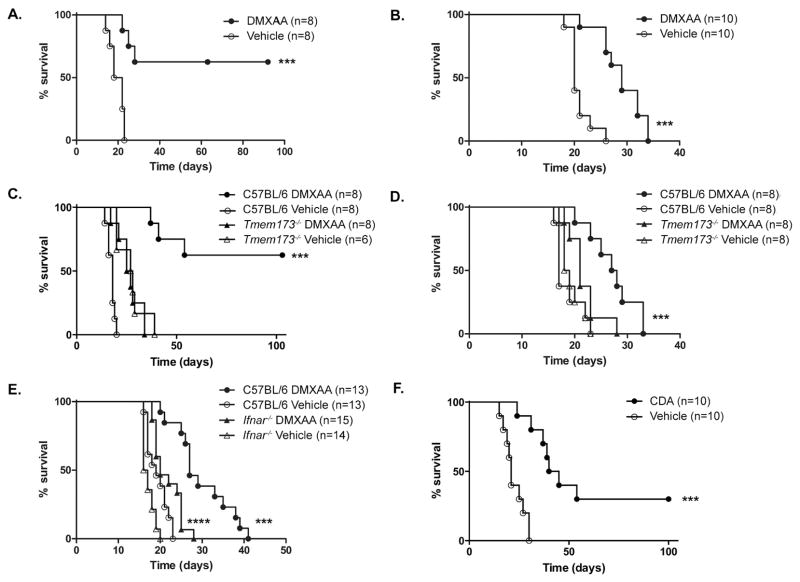
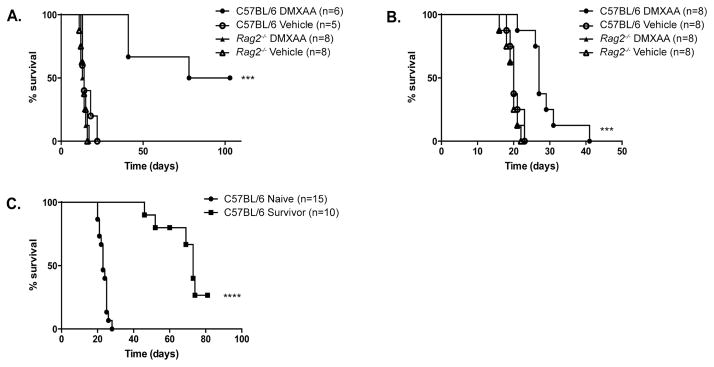
Type I interferon (IFN), essential for spontaneous T cell priming against solid tumors, is generated through recognition of tumor DNA by STING. Interestingly, we observe that type I IFN is not elicited in animals with disseminated acute myeloid leukemia (AML). Further, survival of leukemia-bearing animals is not diminished in the absence of type I IFN signaling, suggesting that STING may not be triggered by AML. However, the STING agonist, DMXAA, induces expression of IFN-β and other inflammatory cytokines, promotes dendritic cell (DC) maturation, and results in the striking expansion of leukemia-specific T cells. Systemic DMXAA administration significantly extends survival in two AML models. The therapeutic effect of DMXAA is only partially dependent on host type I IFN signaling, suggesting that other cytokines are important. A synthetic cyclic dinucleotide that also activates human STING provided a similar anti-leukemic effect. These data demonstrate that STING is a promising immunotherapeutic target in AML.
I型干扰素(IFN)是自发启动针对实体瘤的T细胞所必需的,它通过STING识别肿瘤DNA产生。有趣的是,我们观察到在患有播散性急性髓系白血病(AML)的动物中不会引发I型干扰素。此外,在没有I型干扰素信号传导的情况下,荷白血病动物的存活率并未降低,这表明AML可能不会触发STING。然而,STING激动剂DMXAA可诱导IFN-β和其他炎性细胞因子的表达,促进树突状细胞(DC)成熟,并导致白血病特异性T细胞显著扩增。全身给予DMXAA可显著延长两种AML模型的生存期。DMXAA的治疗效果仅部分依赖于宿主I型干扰素信号传导,这表明其他细胞因子也很重要。一种同样能激活人类STING的合成环二核苷酸也具有类似的抗白血病作用。这些数据表明,STING是AML中有前景的免疫治疗靶点。