Amu Sylvie, Lantto Graham Rebecka, Bekele Yonas, Nasi Aikaterini, Bengtsson Carina, Rethi Bence, Sorial Sam, Meini Genny, Zazzi Maurizio, Hejdeman Bo, Chiodi Francesca
Department of Microbiology, Tumor and Cell Biology Department of Medicine at Solna Department of Clinical Science and Education, Södersjukhuset, Karolinska Institutet and Unit of Infectious Diseases/Venhälsan, Södersjukhuset, Stockholm, Sweden Department of Microbiology and Virology, Policlinico S. Maria alle Scotte, Siena, Italy.
Medicine (Baltimore). 2016 Jun;95(23):e3738. doi: 10.1097/MD.0000000000003738.
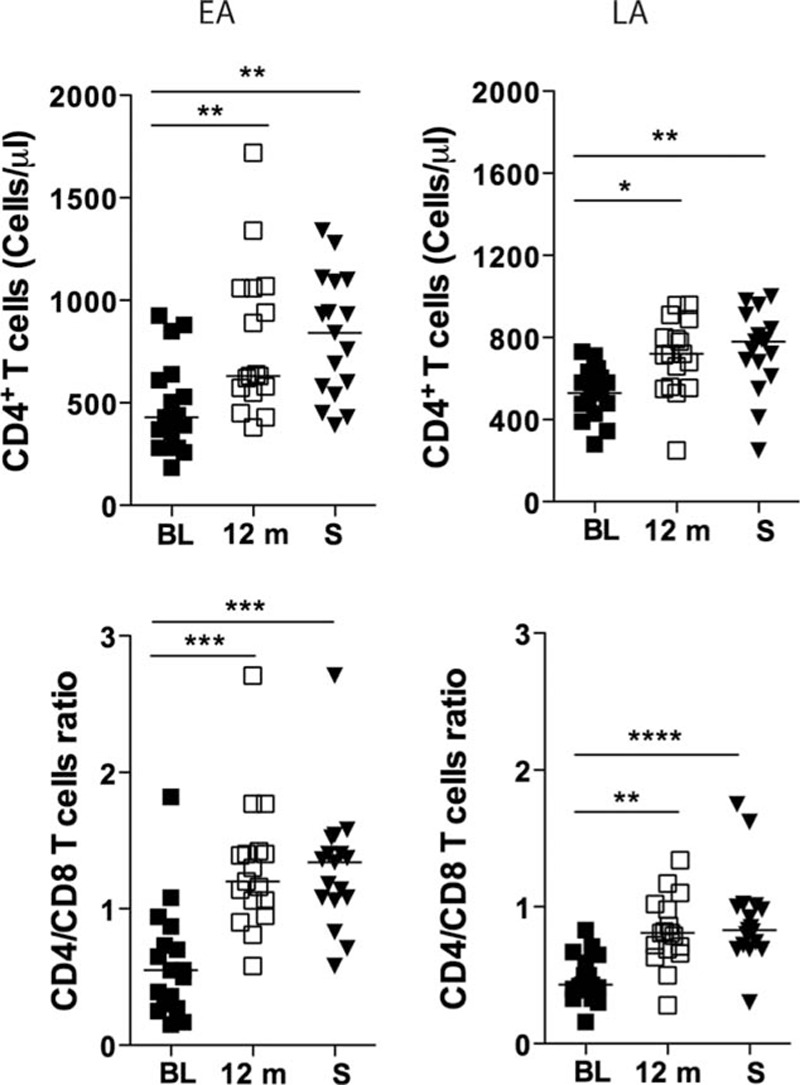
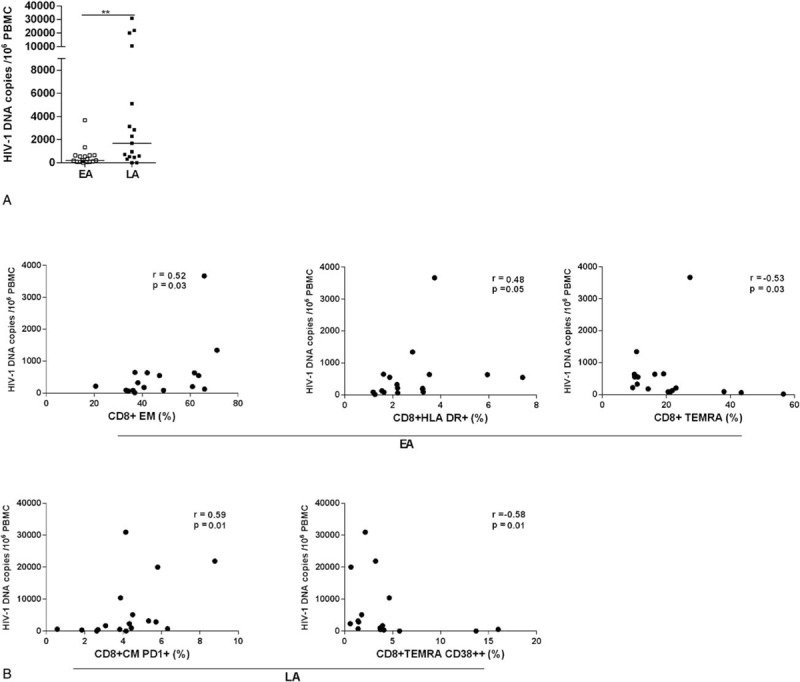
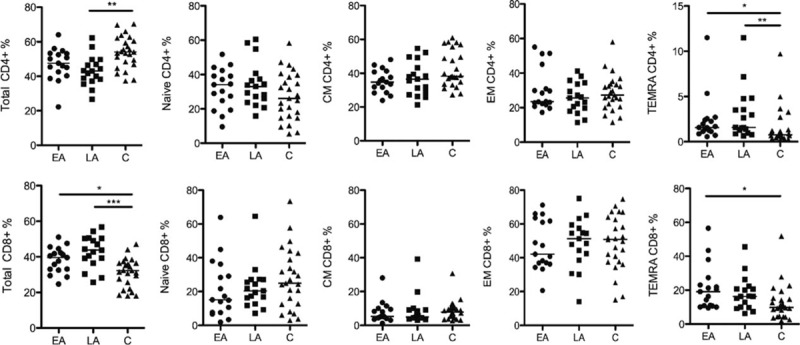
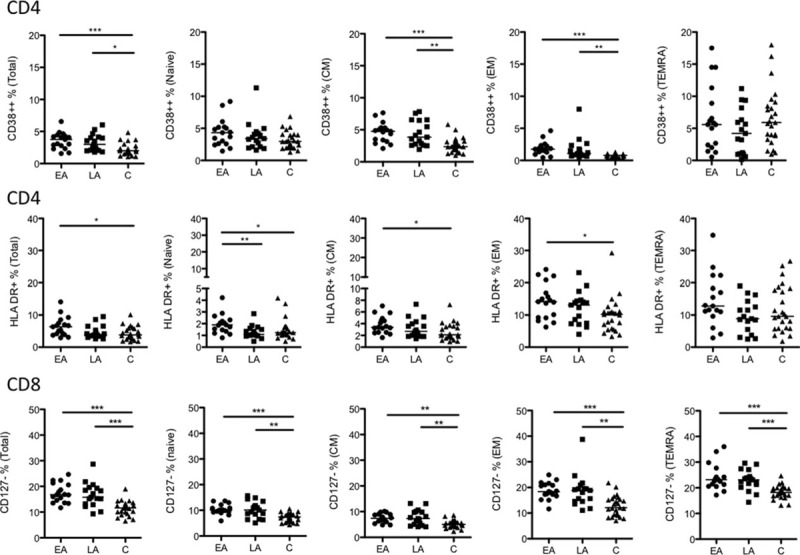
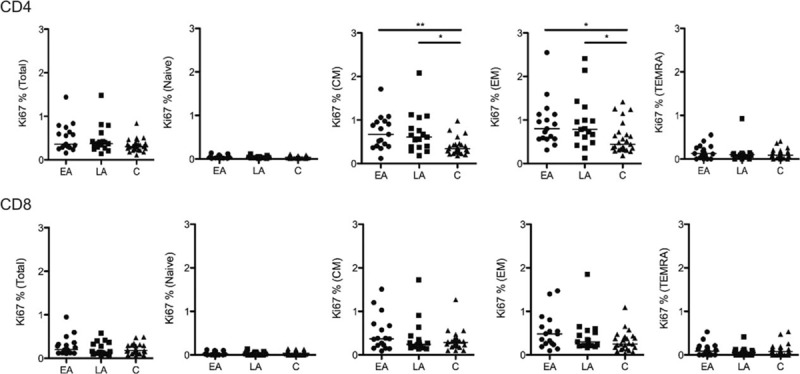
Early initiation of antiretroviral therapy (ART) is becoming a common clinical practice according to current guidelines recommending treatment to all HIV-1-infected patients. However, it is not known whether ART initiated during the early phase of infection prevents the establishment of abnormal phenotypic features previously reported in CD4+ and CD8+T cells during chronic HIV-1 infection. In this cross-sectional study, blood specimens were obtained from 17 HIV-1-infected patients who began ART treatment shortly after infection (early ART [EA]), 17 age-matched HIV-1-infected patients who started ART during chronic phase of infection (late ART [LA]), and 25 age-matched non-HIV-1-infected controls. At collection of specimens, patients in EA and LA groups had received ART for comparable periods of time. Total HIV-1 DNA was measured in white blood cells by quantitative PCR. The concentration of 9 inflammatory parameters and 1 marker of fibrosis, including sCD14 and β-2 microglobulin, was measured in plasma. Furthermore, expression of markers of abnormal immune activation (human leukocyte antigen - antigen D related [HLA-DR] and CD38), exhaustion (programmed death 1, CD28, CD57) and terminal differentiation (CD127) was measured on CD4+ and CD8+T cells. T-cell proliferation was measured through Ki67 expression. The copies of total HIV-1 DNA in blood were significantly lower (P = 0.009) in EA compared with that in LA group. Only the expression of HLA-DR on naïve CD4+ T cells distinguished EA from LA, whereas expression of 3 surface markers distinguished T-cell populations of HIV-1-infected patients from controls. These included HLA-DR distinguishing CD4+ T cells from EA compared with controls, and also CD38 and CD127 on CD4+ and CD8+ T cells, respectively, distinguishing both groups of patients from controls. The sCD14 levels were significantly higher in EA patients, and β-2 microglobulin levels were higher in LA group compared with that in controls. Our results demonstrate an equivalent abnormal expression of activation (HLA-DR and CD38 on CD4+ T cells) and terminal differentiation (CD127 on CD8+ T cells) markers in T cells from both EA and LA patients. The size of total HIV-1 DNA copies in blood of EA was lower compared with LA patients. These findings suggest that some abnormalities taking place in the T-cell compartment during primary HIV-1 infection may not be corrected by early ART.
根据当前指南建议对所有HIV-1感染患者进行治疗,早期启动抗逆转录病毒疗法(ART)正成为一种常见的临床实践。然而,尚不清楚在感染早期启动的ART是否能预防慢性HIV-1感染期间CD4+和CD8+T细胞中先前报道的异常表型特征的形成。在这项横断面研究中,从17例感染后不久开始接受ART治疗的HIV-1感染患者(早期ART [EA])、17例在感染慢性期开始接受ART治疗的年龄匹配的HIV-1感染患者(晚期ART [LA])以及25例年龄匹配的未感染HIV-1的对照者中采集血标本。在采集标本时,EA组和LA组的患者接受ART的时间相当。通过定量PCR检测白细胞中的总HIV-1 DNA。检测血浆中9种炎症参数和1种纤维化标志物(包括可溶性CD14和β2微球蛋白)的浓度。此外,检测CD4+和CD8+T细胞上异常免疫激活标志物(人类白细胞抗原-D相关 [HLA-DR] 和CD38)、耗竭标志物(程序性死亡1、CD28、CD57)和终末分化标志物(CD127)的表达。通过Ki67表达检测T细胞增殖。与LA组相比,EA组血液中总HIV-1 DNA的拷贝数显著更低(P = 0.009)。只有初始CD4+ T细胞上HLA-DR的表达能区分EA组和LA组,而3种表面标志物的表达能区分HIV-1感染患者的T细胞群体与对照组。这些标志物包括,与对照组相比区分EA组CD4+ T细胞的HLA-DR,以及分别区分两组患者与对照组的CD4+和CD8+ T细胞上的CD38和CD127。EA组患者的可溶性CD14水平显著更高,与对照组相比,LA组的β2微球蛋白水平更高。我们的结果表明,EA组和LA组患者T细胞中激活标志物(CD4+ T细胞上的HLA-DR和CD38)和终末分化标志物(CD8+ T细胞上的CD127)存在同等程度的异常表达。与LA组患者相比,EA组患者血液中总HIV-1 DNA拷贝数更低。这些发现表明,原发性HIV-1感染期间T细胞区室中发生的一些异常可能无法通过早期ART得到纠正。