Bustany Sophie, Bourgeais Jérôme, Tchakarska Guergana, Body Simon, Hérault Olivier, Gouilleux Fabrice, Sola Brigitte
Université de Caen Normandie, EA4652 (MILPAT), MICAH Team, Caen, France.
Université François Rabelais, CNRS UMR 7292 (GICC), LNOx Team, Tours, France.
Oncotarget. 2016 Jul 19;7(29):45214-45224. doi: 10.18632/oncotarget.9901.
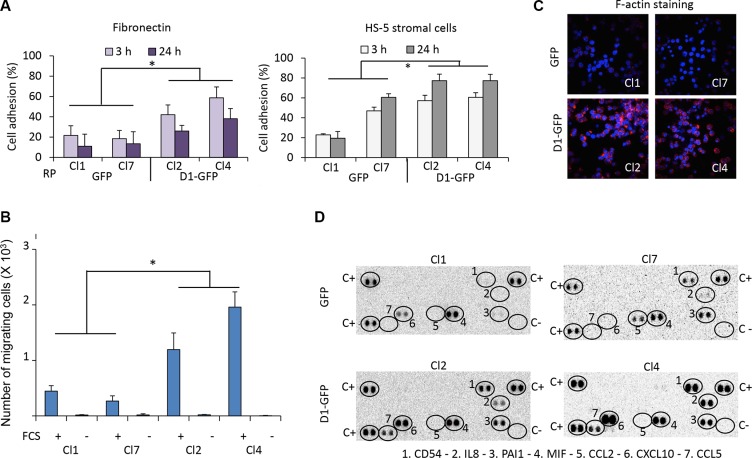
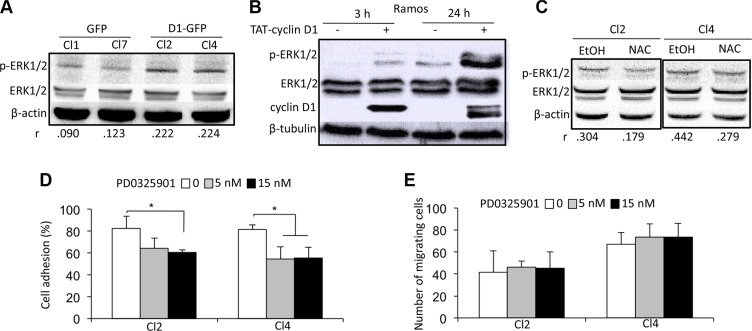
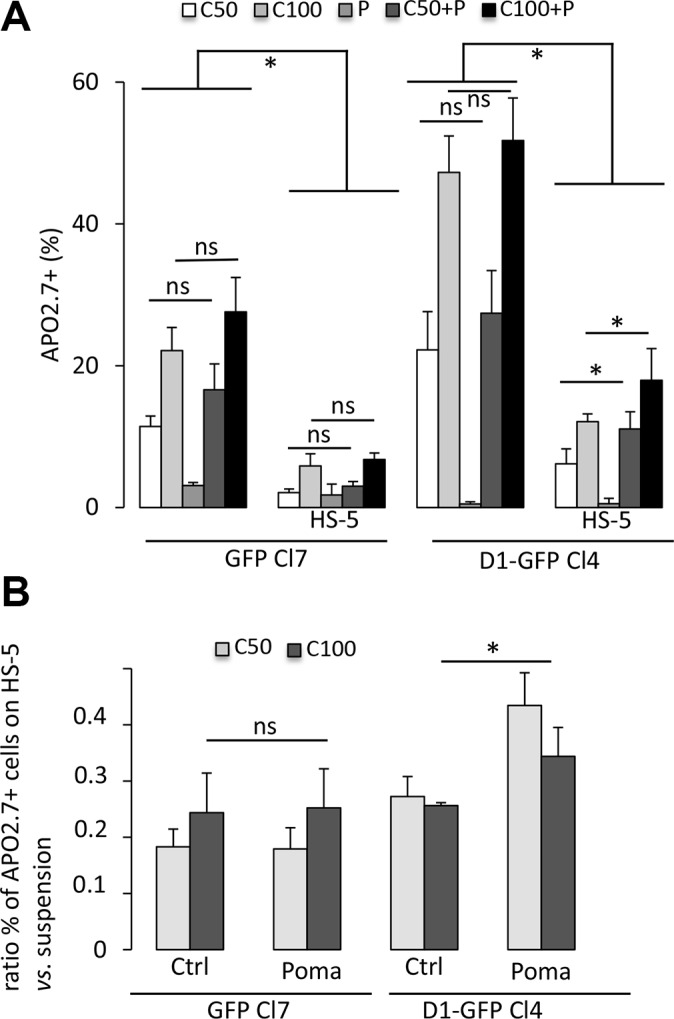
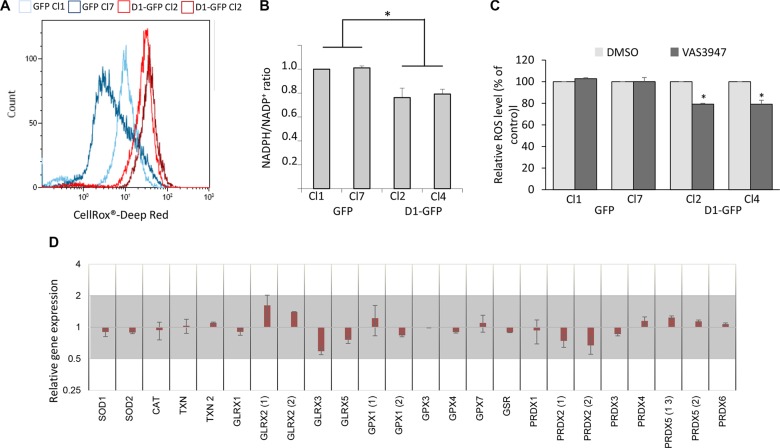
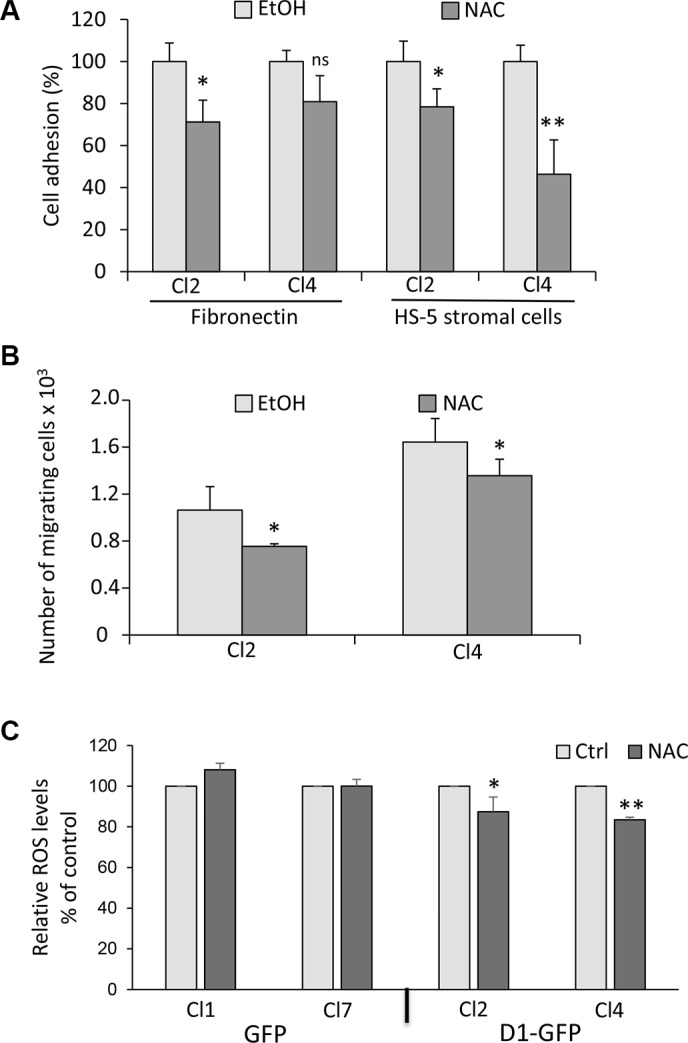
The interactions of multiple myeloma (MM) cells with their microenvironment are crucial for pathogenesis. MM cells could interact differentially with their microenvironment depending on the type of cyclin D they express. We established several clones that constitutively express cyclin D1 from the parental RPMI8226 MM cell line and analyzed the impact of cyclin D1 expression on cell behavior. We performed a gene expression profiling study on cyclin D1-expressing vs. control cells and validated the results by semi-quantitative RT-PCR. The expression of cyclin D1 altered the transcription of genes that control adhesion and migration. We confirmed that cyclin D1 increases cell adhesion to stromal cells and fibronectin, stabilizes F-actin fibers, and enhances chemotaxis and inflammatory chemokine secretion. Both control and cyclin D1-expressing cells were more resistant to acute carfilzomib treatment when cultured on stromal cells than in suspension. However, this resistance was specifically reduced in cyclin D1-expressing cells after pomalidomide pre-treatment that modifies tumor cell/microenvironment interactions. Transcriptomic analysis revealed that cyclin D1 expression was also associated with changes in the expression of genes controlling metabolism. We also found that cyclin D1 expression disrupted the redox balance by producing reactive oxygen species. The resulting oxidative stress activated the p44/42 mitogen-activated protein kinase (or ERK1/2) signaling pathway, increased cell adhesion to fibronectin or stromal cells, and controlled drug sensitivity.Our results have uncovered a new function for cyclin D1 in the control of redox metabolism and interactions of cyclin D1-expressing MM cells with their bone marrow microenvironment.
多发性骨髓瘤(MM)细胞与其微环境的相互作用对发病机制至关重要。MM细胞根据其表达的细胞周期蛋白D的类型与其微环境进行不同的相互作用。我们从亲本RPMI8226 MM细胞系中建立了几个组成性表达细胞周期蛋白D1的克隆,并分析了细胞周期蛋白D1表达对细胞行为的影响。我们对表达细胞周期蛋白D1的细胞与对照细胞进行了基因表达谱研究,并通过半定量逆转录聚合酶链反应(RT-PCR)验证了结果。细胞周期蛋白D1的表达改变了控制黏附和迁移的基因的转录。我们证实细胞周期蛋白D1增加了细胞对基质细胞和纤连蛋白的黏附,稳定了F-肌动蛋白纤维,并增强了趋化性和炎性趋化因子分泌。当在基质细胞上培养时,对照细胞和表达细胞周期蛋白D1的细胞对急性卡非佐米治疗的耐药性均高于悬浮培养时。然而,在经泊马度胺预处理改变肿瘤细胞/微环境相互作用后,表达细胞周期蛋白D1的细胞中的这种耐药性特异性降低。转录组分析显示,细胞周期蛋白D1的表达还与控制代谢的基因表达变化有关。我们还发现细胞周期蛋白D1的表达通过产生活性氧破坏了氧化还原平衡。由此产生的氧化应激激活了p44/42丝裂原活化蛋白激酶(或细胞外信号调节激酶1/2,ERK1/2)信号通路,增加了细胞对纤连蛋白或基质细胞的黏附,并控制了药物敏感性。我们的结果揭示了细胞周期蛋白D1在控制氧化还原代谢以及表达细胞周期蛋白D1的MM细胞与其骨髓微环境相互作用方面的新功能。