Łuczkowska Karolina, Rutka Magdalena, Rogińska Dorota, Paczkowska Edyta, Baumert Bartłomiej, Milczarek Sławomir, Górska Martyna, Kulig Piotr, Osękowska Bogumiła, Janowski Michał, Safranow Krzysztof, Sommerfeld Krzysztof, Borowiecka Ewa, Zawodny Piotr, Koclęga Anna, Helbig Grzegorz, Machaliński Bogusław
Department of General Pathology, Pomeranian Medical University, 70-111 Szczecin, Poland.
Department of Bone Marrow Transplantation, Pomeranian Medical University, 71-252 Szczecin, Poland.
J Clin Med. 2021 Oct 4;10(19):4584. doi: 10.3390/jcm10194584.
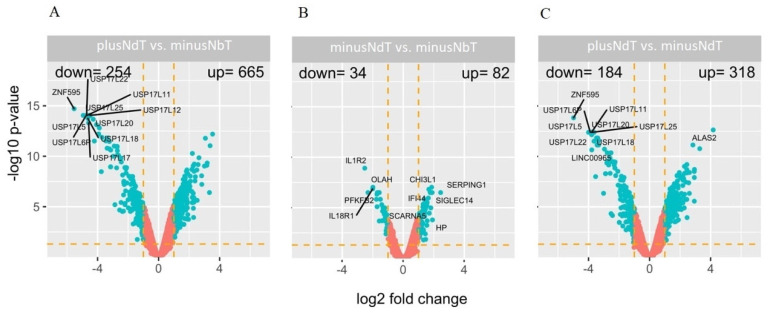
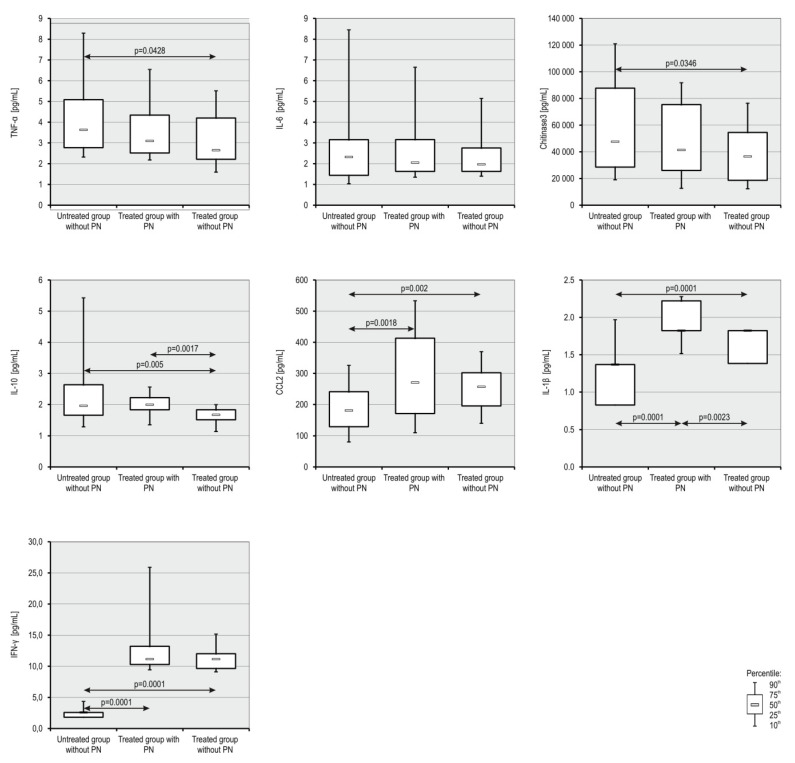
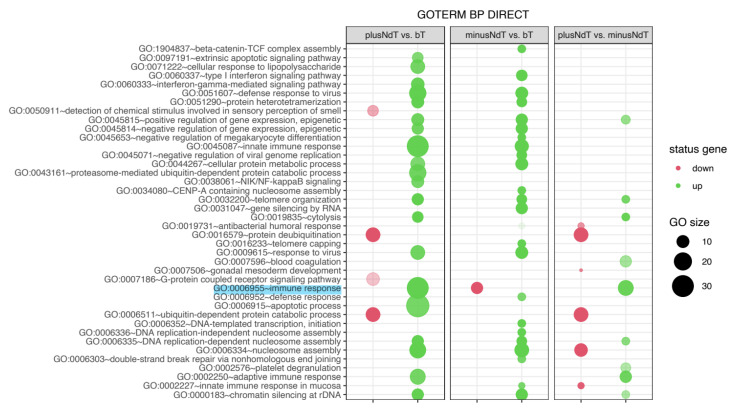
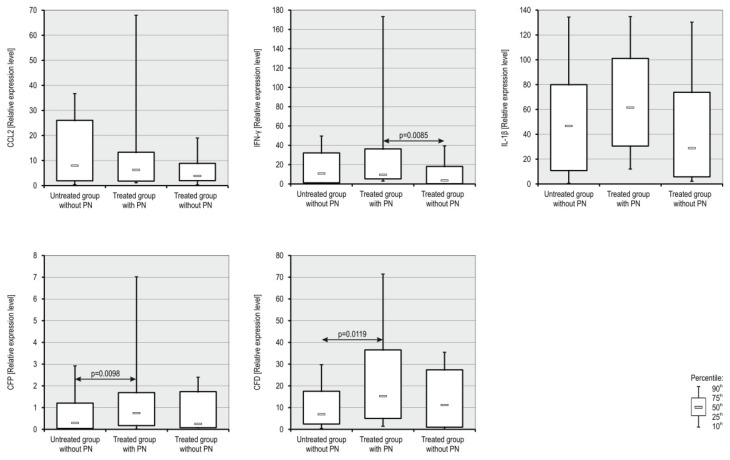
The launch of novel chemotherapeutic agents-in particular, proteasome inhibitors and immunomodulatory drugs-dramatically changed multiple myeloma (MM) therapy, improving the response rate and prolonging progression-free survival. However, none of the anti-MM drugs are deprived of side effects. Peripheral neuropathy (PN) seems to be one of the most pressing problems. Despite extensive research in this area, the pathogenesis of drug-induced peripheral neuropathy (DiPN) has not yet been fully elucidated. In the present study, we aimed to assess the potential relationship between proinflammatory factors and the development of PN in MM patients with particular emphasis on the application of VTD (bortezomib, thalidomide, dexamethasone) regimen. Our analysis identified increased concentrations of CCL2, IL-1β, and IFN-γ in plasma of MM patients during treatment, both with and without symptoms of PN, compared with untreated neuropathy-free MM patients. At the same time, the plasma concentration of IL-1β in patients with neuropathy was significantly increased compared with patients without PN before and during treatment. Moreover, the results were enhanced at the transcript level by performing global mRNA expression analysis using microarray technology. The most significant changes were observed in the expression of genes responsible for regulating immunological and apoptotic processes. An in-depth understanding of the mechanisms responsible for the development of DiPN might in the future reduce the incidence of PN and accelerate diagnosis, allowing the choice of neuropathy-free treatment strategies for MM.
新型化疗药物的推出——尤其是蛋白酶体抑制剂和免疫调节药物——极大地改变了多发性骨髓瘤(MM)的治疗方式,提高了缓解率并延长了无进展生存期。然而,没有一种抗MM药物没有副作用。周围神经病变(PN)似乎是最紧迫的问题之一。尽管在该领域进行了广泛研究,但药物性周围神经病变(DiPN)的发病机制尚未完全阐明。在本研究中,我们旨在评估促炎因子与MM患者PN发生之间的潜在关系,特别强调VTD(硼替佐米、沙利度胺、地塞米松)方案的应用。我们的分析发现,与未经治疗且无神经病变的MM患者相比,接受治疗的MM患者血浆中CCL2、IL-1β和IFN-γ的浓度增加,无论有无PN症状。同时,有神经病变的患者在治疗前和治疗期间血浆中IL-1β的浓度与无PN的患者相比显著增加。此外,通过使用微阵列技术进行全局mRNA表达分析,在转录水平上增强了结果。在负责调节免疫和凋亡过程的基因表达中观察到最显著的变化。深入了解DiPN发生的机制可能在未来降低PN的发生率并加速诊断,从而为MM选择无神经病变的治疗策略。