Caillot Mélody, Dakik Hassan, Mazurier Frédéric, Sola Brigitte
Normandie University, INSERM, Université de Caen, F-14000 Caen, France.
Université de Tours, GICC EA7501, CNRS, F-3700 Tours, France.
Cancers (Basel). 2021 May 17;13(10):2411. doi: 10.3390/cancers13102411.
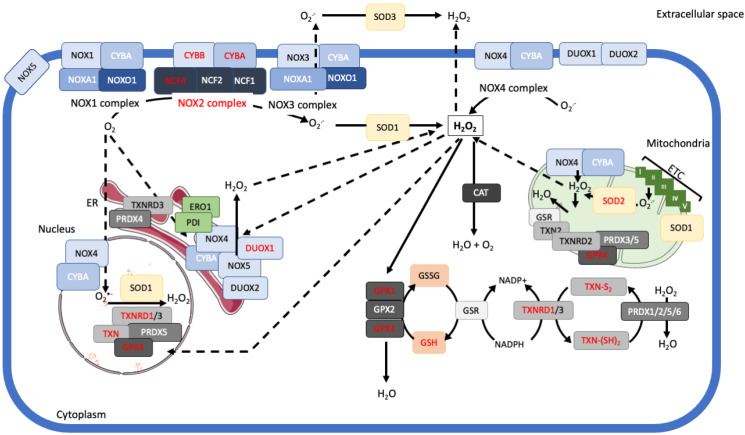
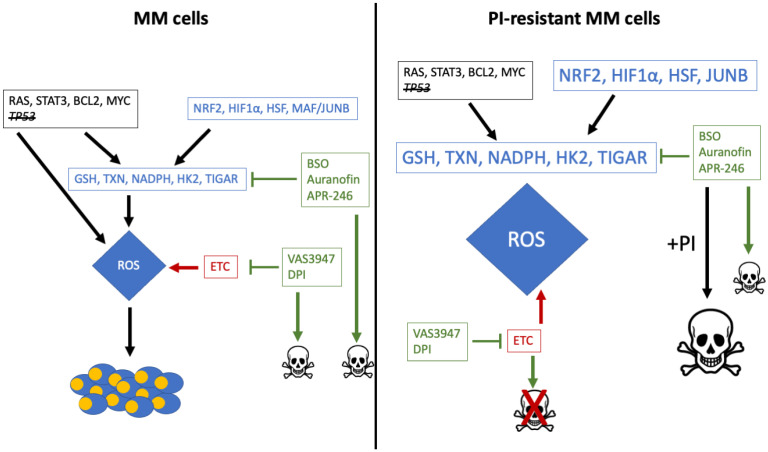
Multiple myeloma (MM) is a common hematological disease characterized by the accumulation of clonal malignant plasma cells in the bone marrow. Over the past two decades, new therapeutic strategies have significantly improved the treatment outcome and patients survival. Nevertheless, most MM patients relapse underlying the need of new therapeutic approaches. Plasma cells are prone to produce large amounts of immunoglobulins causing the production of intracellular ROS. Although adapted to high level of ROS, MM cells die when exposed to drugs increasing ROS production either directly or by inhibiting antioxidant enzymes. In this review, we discuss the efficacy of ROS-generating drugs for inducing MM cell death and counteracting acquired drug resistance specifically toward proteasome inhibitors.
多发性骨髓瘤(MM)是一种常见的血液系统疾病,其特征是骨髓中克隆性恶性浆细胞的积累。在过去的二十年中,新的治疗策略显著改善了治疗效果和患者生存率。然而,大多数MM患者会复发,这就需要新的治疗方法。浆细胞易于产生大量免疫球蛋白,从而导致细胞内活性氧(ROS)的产生。尽管MM细胞适应了高水平的ROS,但当暴露于直接增加ROS产生或通过抑制抗氧化酶来增加ROS产生的药物时,它们会死亡。在这篇综述中,我们讨论了产生ROS的药物诱导MM细胞死亡以及对抗对蛋白酶体抑制剂的获得性耐药的疗效。