Geninatti Thomas, Hood R Lyle, Bruno Giacomo, Jain Priya, Nicolov Eugenia, Ziemys Arturas, Grattoni Alessandro
Nanomedicine Department, Houston Methodist Research Institute, Houston, TX 77030, USA; College of Materials Science and Engineering, University of Chinese Academy of Sciences, Beijing 100049, China.
Nanomedicine Department, Houston Methodist Research Institute, Houston, TX 77030, USA.
Materials (Basel). 2015 Aug;8(8):5276-5288. doi: 10.3390/ma8085241. Epub 2015 Aug 13.
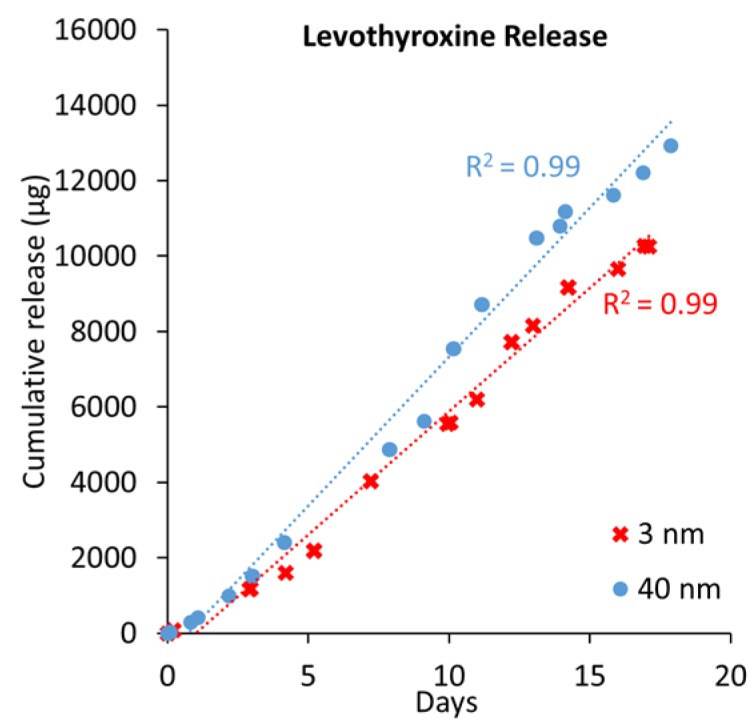
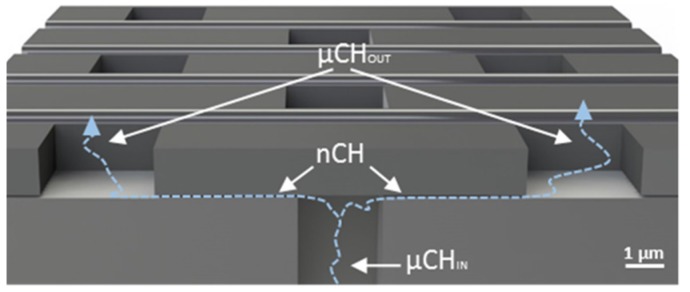
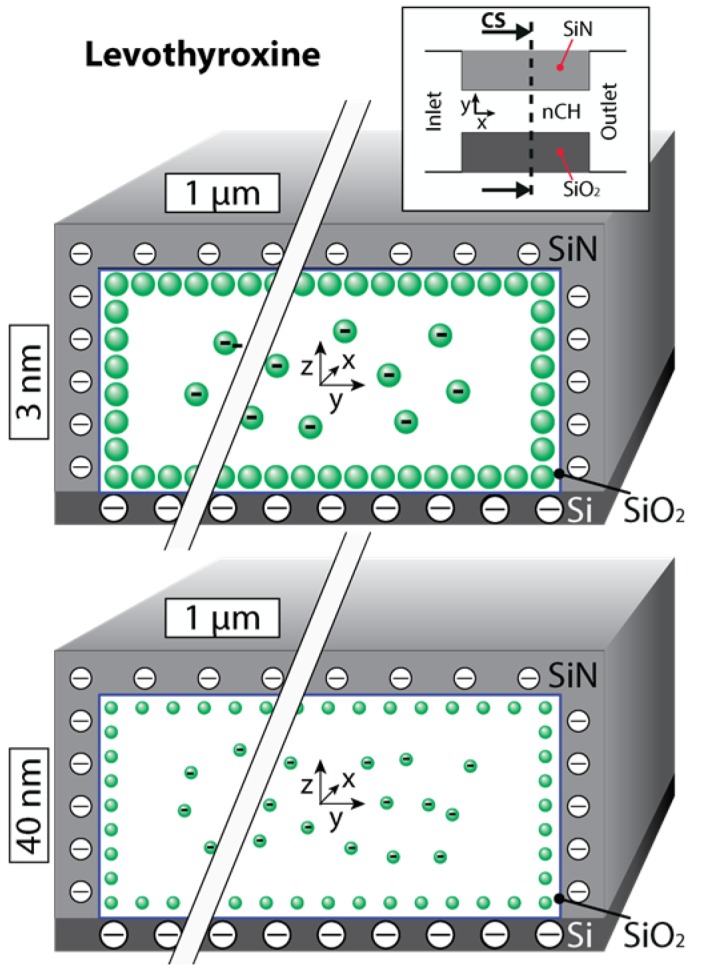
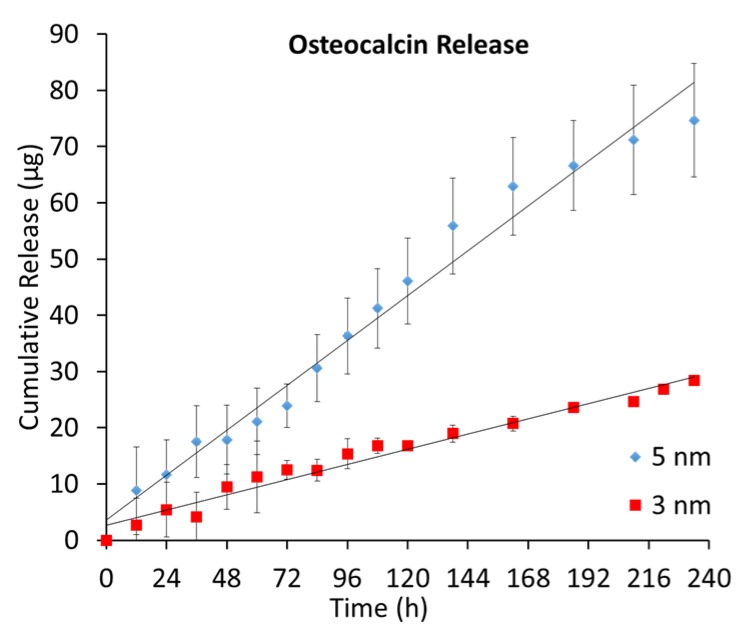
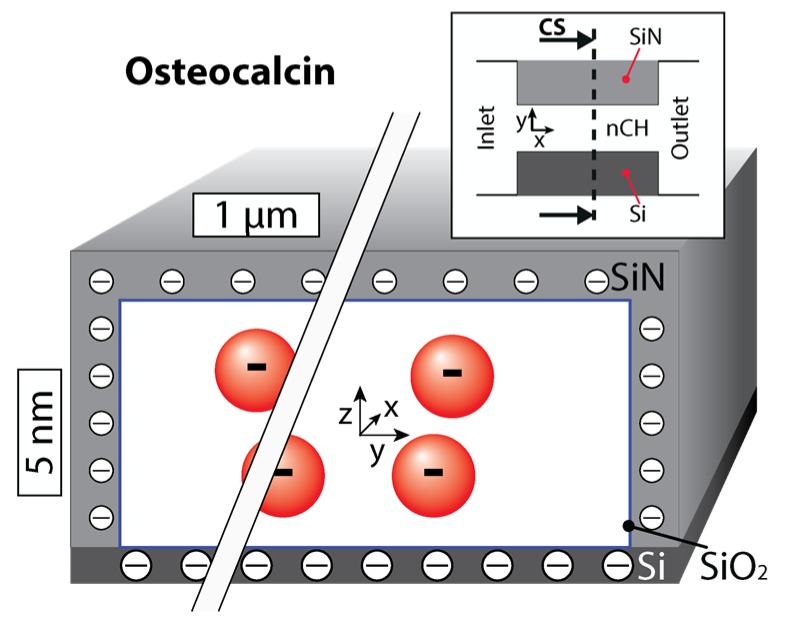
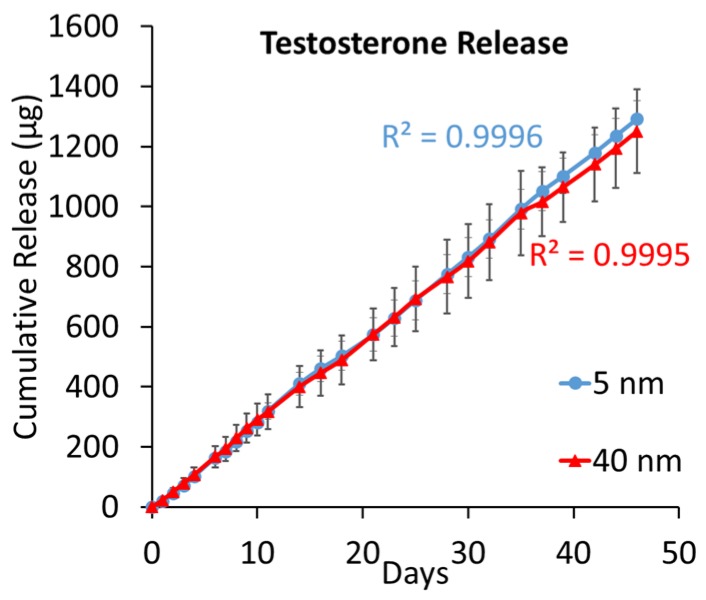
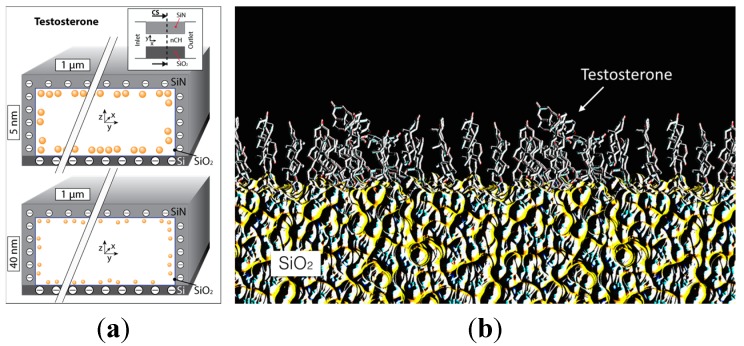
Implantable devices may provide a superior means for hormone delivery through maintaining serum levels within target therapeutic windows. Zero-order administration has been shown to reach an equilibrium with metabolic clearance, resulting in a constant serum concentration and bioavailability of released hormones. By exploiting surface-to-molecule interaction within nanochannel membranes, it is possible to achieve a long-term, constant diffusive release of agents from implantable reservoirs. In this study, we sought to demonstrate the controlled release of model hormones from a novel nanochannel system. We investigated the delivery of hormones through our nanochannel membrane over a period of 40 days. Levothyroxine, osteocalcin and testosterone were selected as representative hormones based on their different molecular properties and structures. The release mechanisms and transport behaviors of these hormones within 3, 5 and 40 nm channels were characterized. Results further supported the suitability of the nanochannels for sustained administration from implantable platforms.
植入式装置通过将血清水平维持在目标治疗范围内,可能为激素递送提供一种更优的方式。已证明零级给药可与代谢清除达到平衡,从而使释放的激素具有恒定的血清浓度和生物利用度。通过利用纳米通道膜内的表面与分子相互作用,有可能实现从植入式储库中长期、持续地扩散释放药物。在本研究中,我们试图证明从一种新型纳米通道系统中可控释放模型激素。我们在40天的时间里研究了激素通过我们的纳米通道膜的递送情况。基于其不同的分子特性和结构,选择左甲状腺素、骨钙素和睾酮作为代表性激素。对这些激素在3、5和40纳米通道内的释放机制和转运行为进行了表征。结果进一步支持了纳米通道用于从植入式平台进行持续给药的适用性。