Garcia-Robledo Emilio, Bohorquez Julio, Corzo Alfonso, Jimenez-Arias Juan L, Papaspyrou Sokratis
Microbiology Section, Department of Biosciences, Aarhus UniversityAarhus, Denmark; Departamento de Biología, Facultad de Ciencias del Mar y Ambientales, Universidad de CádizPuerto Real, Spain.
Departamento de Biología, Facultad de Ciencias del Mar y Ambientales, Universidad de Cádiz Puerto Real, Spain.
Front Microbiol. 2016 May 26;7:761. doi: 10.3389/fmicb.2016.00761. eCollection 2016.
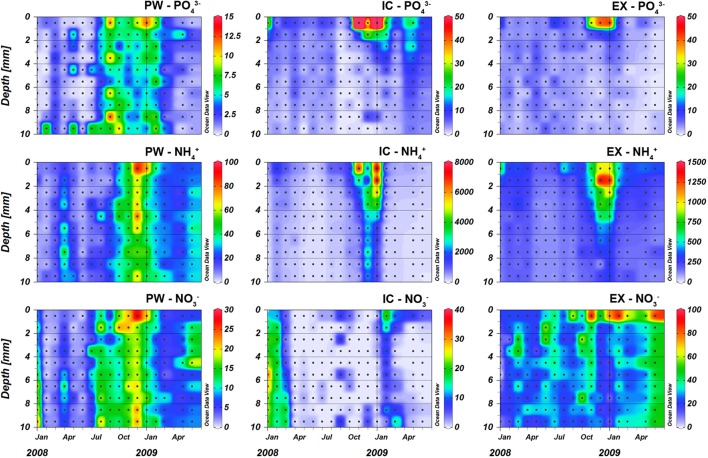
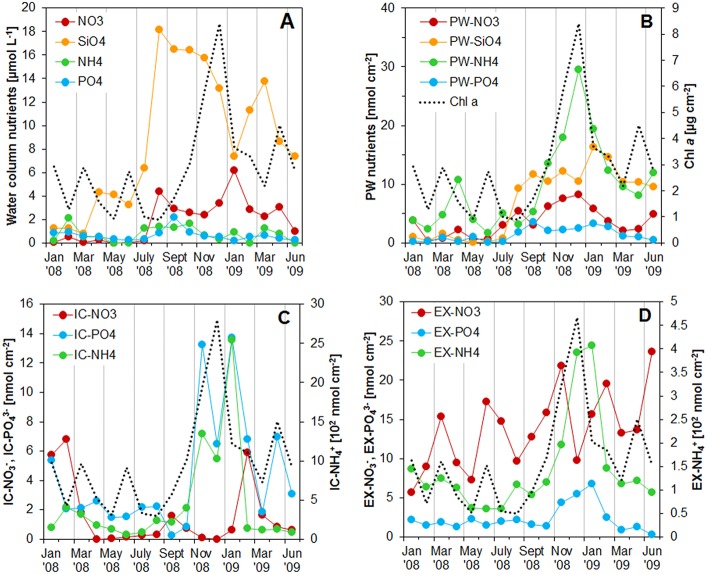
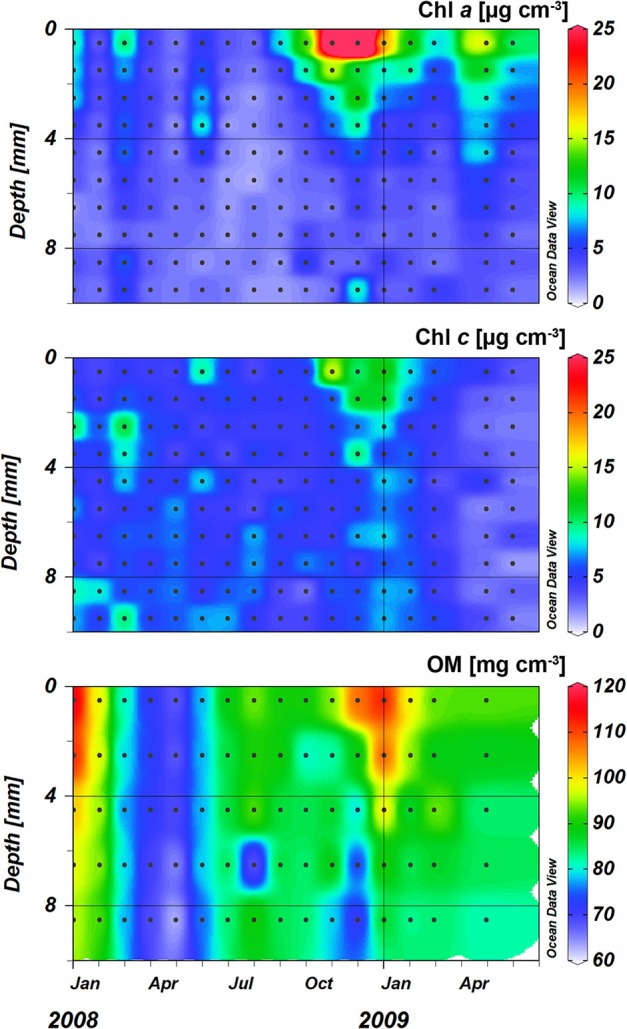
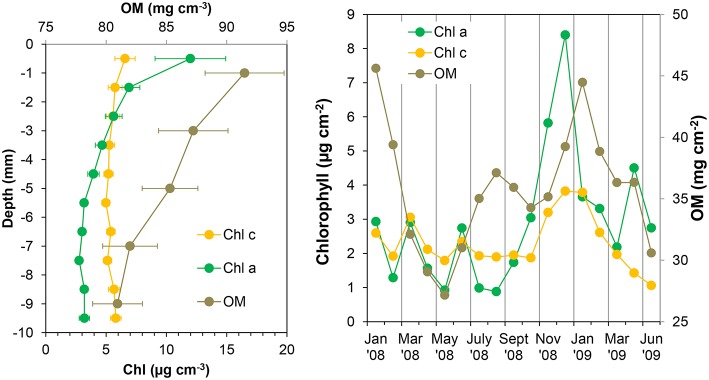
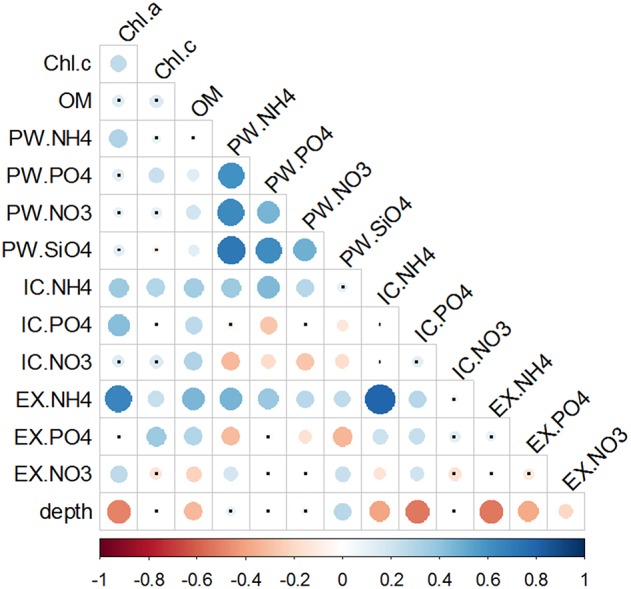
The study of inorganic nutrients dynamics in shallow sediments usually focuses on two main pools: porewater (PW) nutrients and exchangeable (EX) ammonium and phosphate. Recently, it has been found that microphytobenthos (MPB) and other microorganisms can accumulate large amounts of nutrients intracellularly (IC), highlighting the biogeochemical importance of this nutrient pool. Storing nutrients could support the growth of autotrophs when nutrients are not available, and could also provide alternative electron acceptors for dissimilatory processes such as nitrate reduction. Here, we studied the magnitude and relative importance of these three nutrient pools (PW, IC, and EX) and their relation to chlorophylls (used as a proxy for MPB abundance) and organic matter (OM) contents in an intertidal mudflat of Cadiz Bay (Spain). MPB was localized in the first 4 mm of the sediment and showed a clear seasonal pattern; highest chlorophylls content was found during autumn and lowest during spring-summer. The temporal and spatial distribution of nutrients pools and MPB were largely correlated. Ammonium was higher in the IC and EX fractions, representing on average 59 and 37% of the total ammonium pool, respectively. Similarly, phosphate in the IC and EX fractions accounted on average for 40 and 31% of the total phosphate pool, respectively. Nitrate in the PW was low, suggesting low nitrification activity and rapid consumption. Nitrate accumulated in the IC pool during periods of moderate MPB abundance, being up to 66% of the total nitrate pool, whereas it decreased when chlorophyll concentration peaked likely due to a high nitrogen demand. EX-Nitrate accounted for the largest fraction of total sediment nitrate, 66% on average. The distribution of EX-Nitrate was significantly correlated with chlorophyll and OM, which probably indicates a relation of this pool to an increased availability of sites for ionic adsorption. This EX-Nitrate pool could represent an alternative nitrate source with significant concentrations available to the microbial community, deeper in the sediment below the oxic layer.
孔隙水(PW)养分以及可交换(EX)铵和磷酸盐。最近,人们发现微型底栖藻类(MPB)和其他微生物能够在细胞内(IC)积累大量养分,这凸显了该养分库在生物地球化学方面的重要性。当养分匮乏时,储存养分可为自养生物的生长提供支持,并且还能为诸如硝酸盐还原等异化过程提供替代电子受体。在此,我们研究了西班牙加的斯湾潮间带泥滩中这三个养分库(PW、IC和EX)的规模及相对重要性,以及它们与叶绿素(用作MPB丰度的指标)和有机质(OM)含量的关系。MPB集中在沉积物的前4毫米处,并呈现出明显的季节性模式;秋季叶绿素含量最高,春夏季最低。养分库和MPB的时空分布在很大程度上相互关联。铵在IC和EX组分中含量较高,分别平均占总铵库的59%和37%。同样,IC和EX组分中的磷酸盐分别平均占总磷酸盐库的40%和31%。PW中的硝酸盐含量较低,表明硝化活性低且消耗迅速。在MPB丰度适中的时期,硝酸盐在IC库中积累,占总硝酸盐库的比例高达66%,而当叶绿素浓度达到峰值时硝酸盐含量下降,这可能是由于对氮的需求较高。EX - 硝酸盐占沉积物总硝酸盐的比例最大,平均为66%。EX - 硝酸盐的分布与叶绿素和OM显著相关,这可能表明该库与离子吸附位点可用性增加之间存在关联。这个EX - 硝酸盐库可能代表了一个替代硝酸盐源,在沉积物中含氧层以下更深的位置,微生物群落可利用其中的大量硝酸盐。