Wang Yanqun, Li Yamin, Liu Jun, Zhao Yanjie, Xie Zhengde, Shen Jun, Tan Wenjie
Key Laboratory of Medical Virology, Ministry of Health, National Institute for Viral Disease Control and Prevention, China CDC, Beijing 102206, China.
Key Laboratory of Major Diseases in Children and National Key Discipline of Pediatrics Capital Medical University, Ministry of Education, Beijing Pediatric Research Institute, Beijing Children's Hospital, Capital Medical University, Beijing 100045, China.
J Infect. 2016 Aug;73(2):155-63. doi: 10.1016/j.jinf.2016.05.014. Epub 2016 Jun 13.
To investigate the genetic character of Human bocavirus (HBoV) among children with severe acute respiratory infection (SARI) in China.
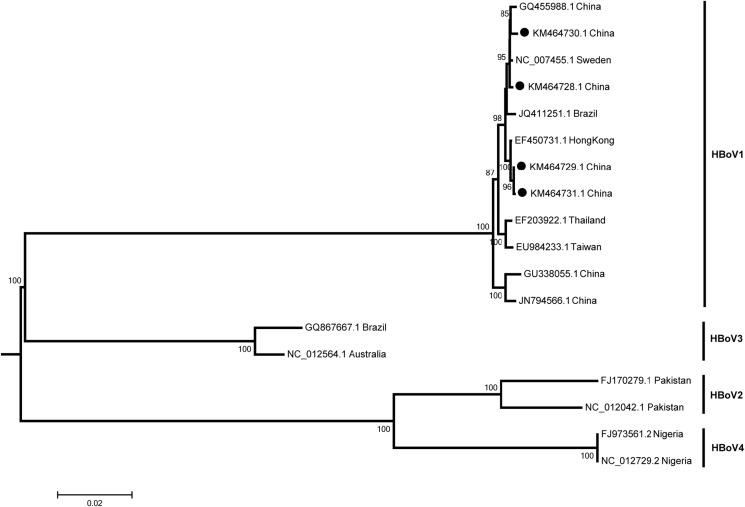
We screened 993 respiratory samples for HBoV by PCR among hospitalized children with SARI between September 2007 and March 2014. Four of HBoV1 samples were selected for complete genomes analysis by next-generation sequencing.
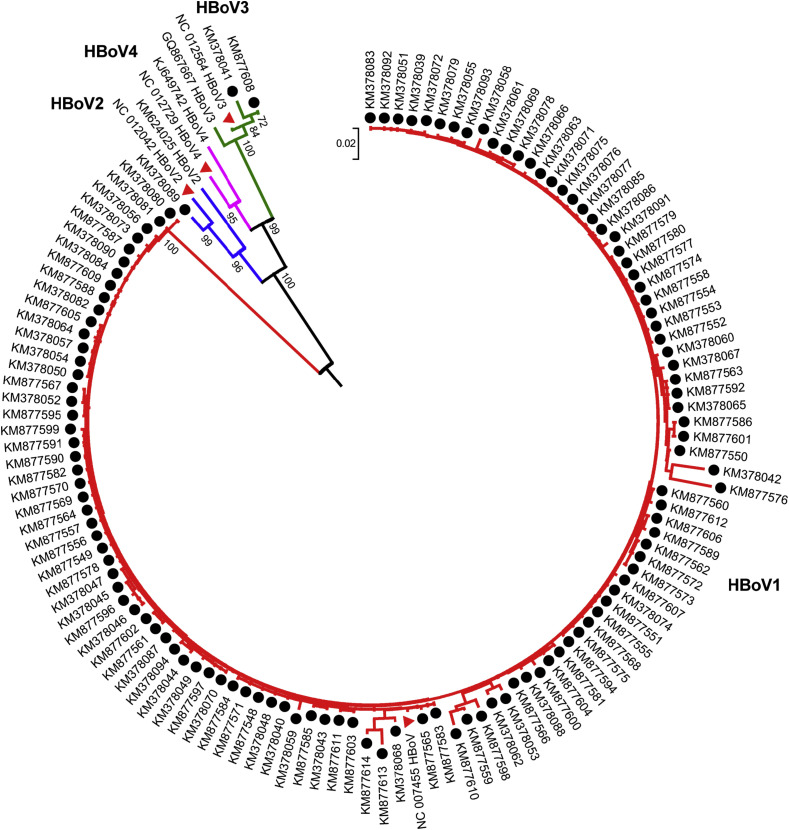
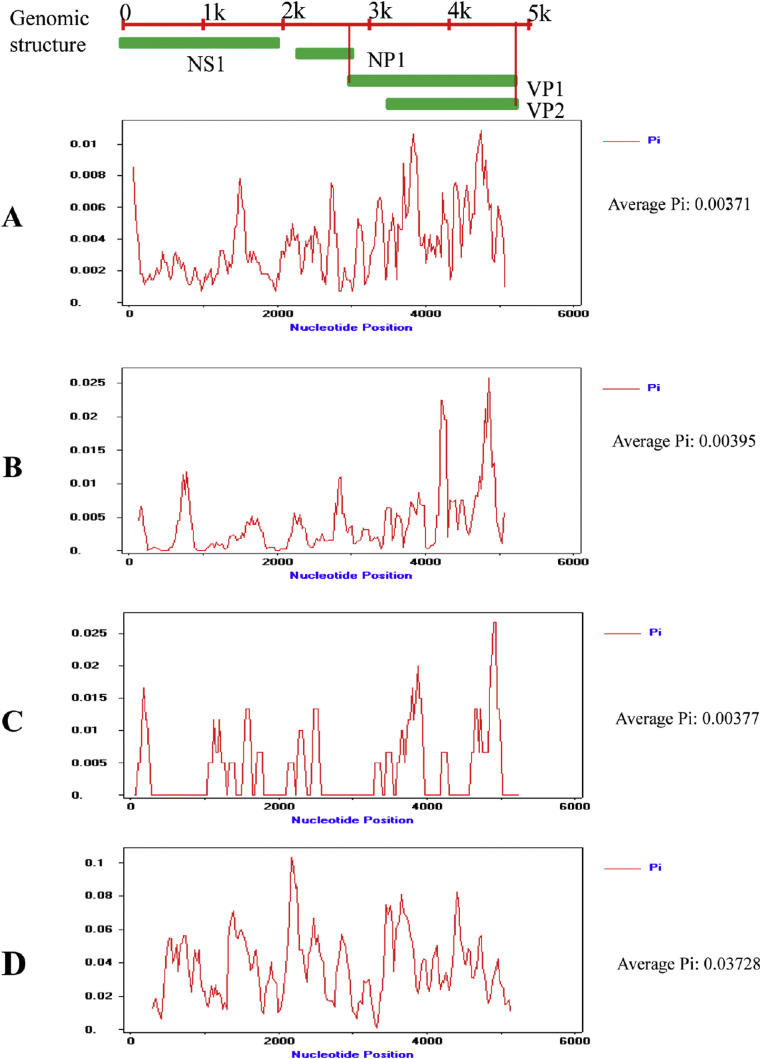
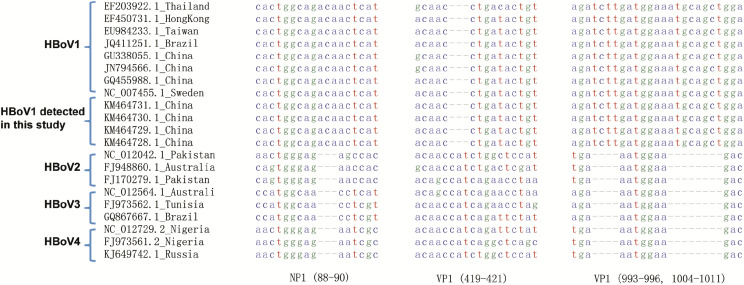
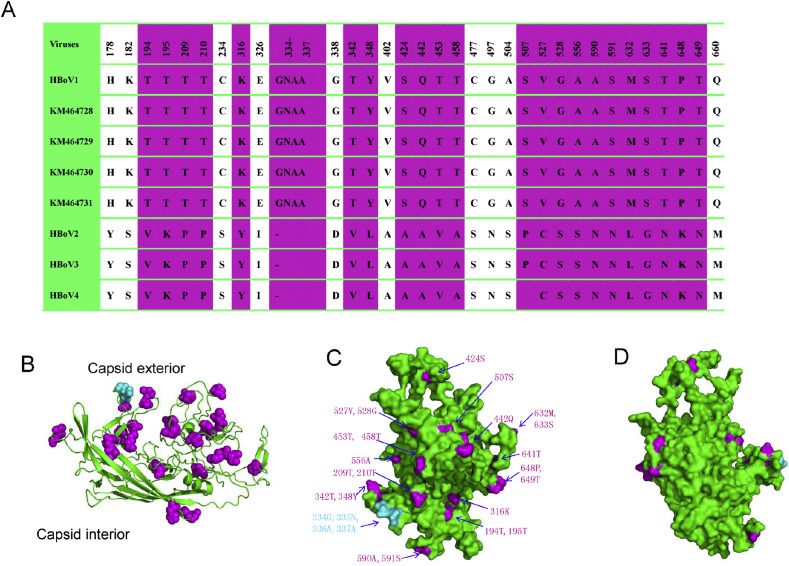
The results show that 200 (20.1%) out of 993 samples were HBoV-positive, most of these HBoV belong to HBoV1 subtype (n = 197), HBoV2 (n = 1) and HBoV3 (n = 2) were also detected. Fifty (5.04%) of 993 SARI patient were detected as HBoV-positive only. Four HBoV1 genomes in this study were conserved and showed no significant difference among the nucleotide diversity from different regions. Analyses of evolutionary rates showed that NS1 exhibited the highest degree of conservation while the VP1 gene exhibited the fastest rate of evolution at 4.20 × 10(-4) substitutions/site/year. The nucleotide deletions and substitutions occurred in NP1 and VP1 represented novel molecular signatures enabling subtype differentiation between HBoVs.
We described some new characteristics in the epidemiology of HBoV among children with SARI, these data will significantly expand the current knowledge of HBoV epidemic and genomic characterization among children with SARI.
调查中国重症急性呼吸道感染(SARI)儿童中人博卡病毒(HBoV)的基因特征。
2007年9月至2014年3月期间,我们对993份住院SARI儿童的呼吸道样本进行了聚合酶链反应(PCR)检测,以筛查HBoV。选取4份HBoV1样本通过二代测序进行全基因组分析。
结果显示,993份样本中有200份(20.1%)HBoV呈阳性,其中大多数HBoV属于HBoV1亚型(n = 197),还检测到1份HBoV2和2份HBoV3。993名SARI患者中有50名(5.04%)仅检测出HBoV呈阳性。本研究中的4个HBoV1基因组具有保守性,不同区域的核苷酸多样性之间无显著差异。进化速率分析表明,NS1的保守程度最高,而VP1基因的进化速率最快,为4.20×10⁻⁴替换/位点/年。NP1和VP1中发生的核苷酸缺失和替换代表了新的分子特征,可用于区分不同HBoV亚型。
我们描述了SARI儿童中HBoV流行病学的一些新特征,这些数据将显著扩展目前关于SARI儿童中HBoV流行情况和基因组特征的认识。