Chen Zhiwen, Feng Kun, Grover Corrinne E, Li Pengbo, Liu Fang, Wang Yumei, Xu Qin, Shang Mingzhao, Zhou Zhongli, Cai Xiaoyan, Wang Xingxing, Wendel Jonathan F, Wang Kunbo, Hua Jinping
Department of Plant Genetics and Breeding/Key Laboratory of Crop Heterosis and Utilization of Ministry of Education/Beijing Key Laboratory of Crop Genetic Improvement, China Agricultural University, Beijing 100193, China.
State Key Laboratory of Cotton Biology, Institute of Cotton Research, Chinese Academy of Agricultural Sciences, Anyang 455000, Henan, China.
PLoS One. 2016 Jun 16;11(6):e0157183. doi: 10.1371/journal.pone.0157183. eCollection 2016.
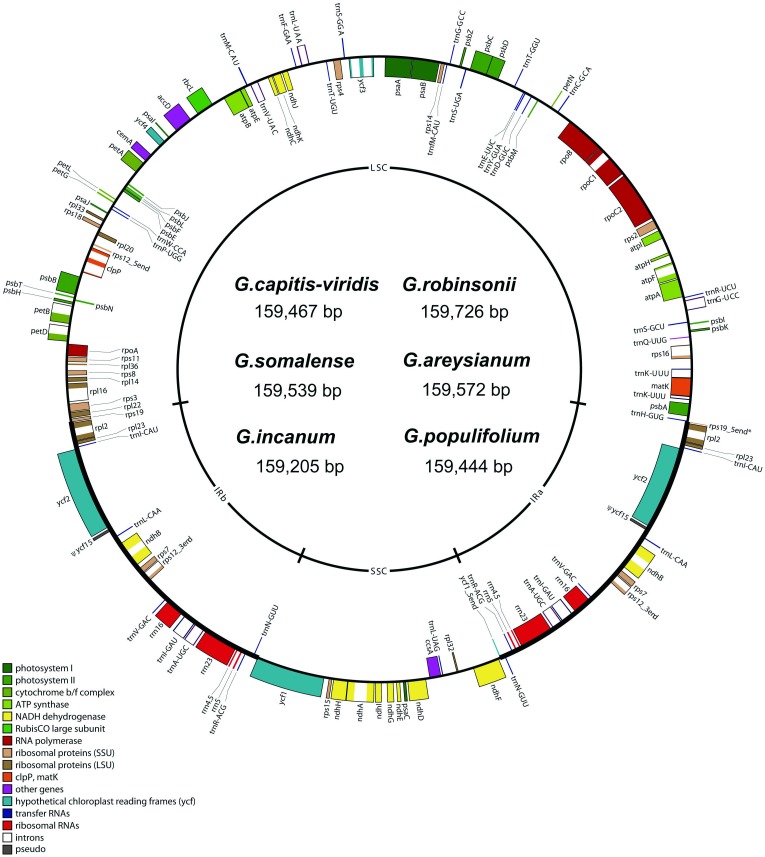
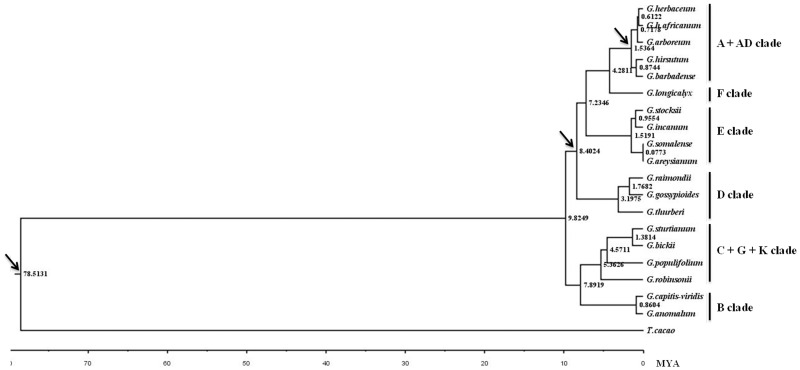
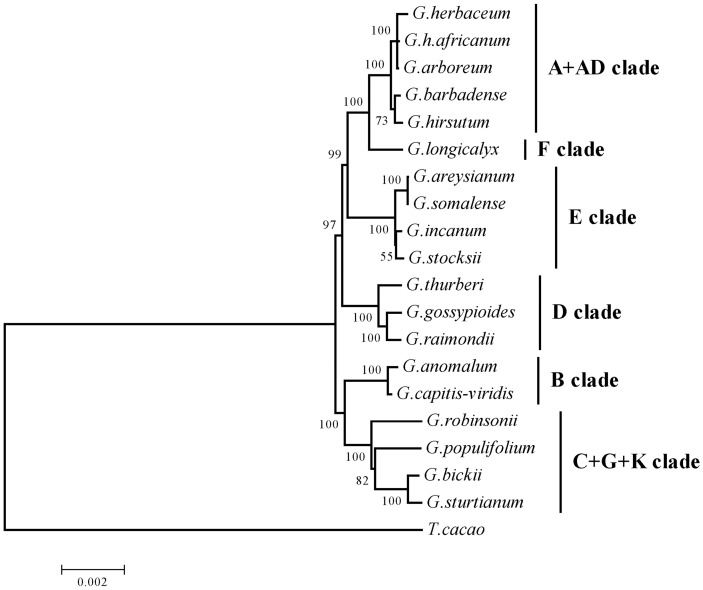
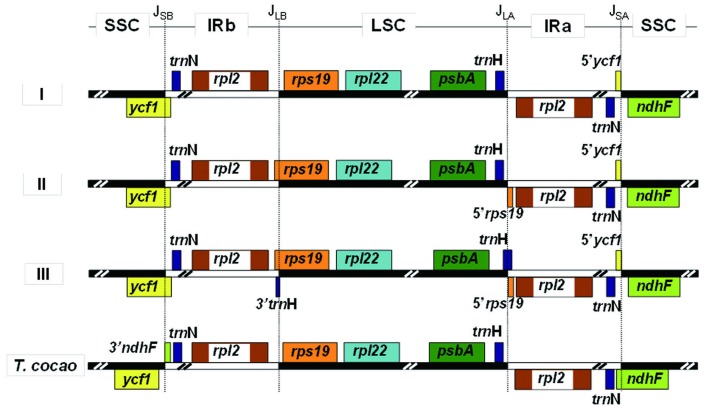
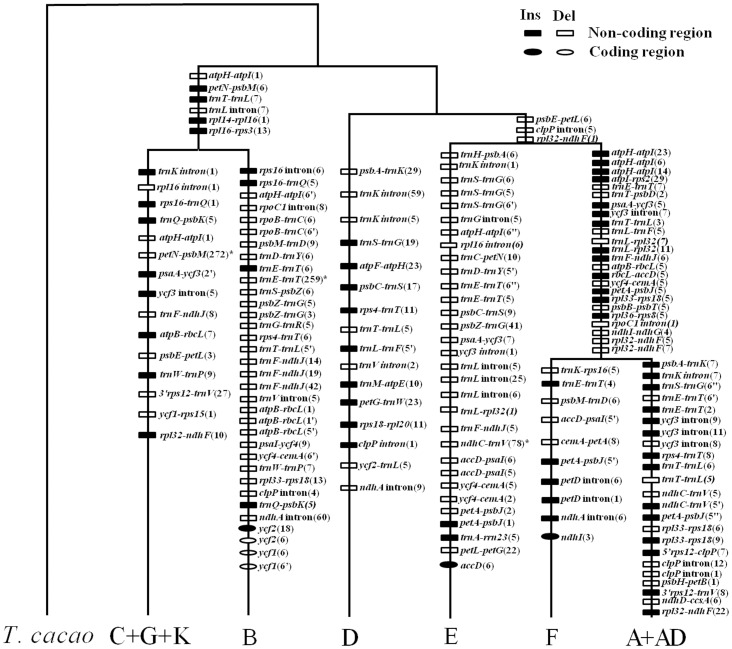
The cotton genus (Gossypium spp.) contains 8 monophyletic diploid genome groups (A, B, C, D, E, F, G, K) and a single allotetraploid clade (AD). To gain insight into the phylogeny of Gossypium and molecular evolution of the chloroplast genome in this group, we performed a comparative analysis of 19 Gossypium chloroplast genomes, six reported here for the first time. Nucleotide distance in non-coding regions was about three times that of coding regions. As expected, distances were smaller within than among genome groups. Phylogenetic topologies based on nucleotide and indel data support for the resolution of the 8 genome groups into 6 clades. Phylogenetic analysis of indel distribution among the 19 genomes demonstrates contrasting evolutionary dynamics in different clades, with a parallel genome downsizing in two genome groups and a biased accumulation of insertions in the clade containing the cultivated cottons leading to large (for Gossypium) chloroplast genomes. Divergence time estimates derived from the cpDNA sequence suggest that the major diploid clades had diverged approximately 10 to 11 million years ago. The complete nucleotide sequences of 6 cpDNA genomes are provided, offering a resource for cytonuclear studies in Gossypium.
棉属(棉属物种)包含8个单系二倍体基因组组(A、B、C、D、E、F、G、K)和一个单一的异源四倍体分支(AD)。为了深入了解棉属的系统发育以及该类群中叶绿体基因组的分子进化,我们对19个棉属叶绿体基因组进行了比较分析,其中6个是首次在此报道。非编码区的核苷酸距离约为编码区的三倍。正如预期的那样,基因组组内的距离小于组间距离。基于核苷酸和插入缺失数据的系统发育拓扑结构支持将8个基因组组解析为6个分支。对19个基因组中插入缺失分布的系统发育分析表明,不同分支的进化动态形成对比,两个基因组组中存在平行的基因组缩小现象,而在包含栽培棉的分支中插入片段有偏向性积累,导致叶绿体基因组较大(相对于棉属而言)。从cpDNA序列得出的分歧时间估计表明,主要的二倍体分支大约在1000万至1100万年前就已经分化。提供了6个cpDNA基因组的完整核苷酸序列,为棉属的细胞核研究提供了资源。