Prickett Todd D, Crystal Jessica S, Cohen Cyrille J, Pasetto Anna, Parkhurst Maria R, Gartner Jared J, Yao Xin, Wang Rong, Gros Alena, Li Yong F, El-Gamil Mona, Trebska-McGowan Kasia, Rosenberg Steven A, Robbins Paul F
National Institutes of Health, National Cancer Institute, Surgery Branch, Bethesda, Maryland.
Laboratory of Tumor Immunology and Immunotherapy, Bar-Ilan University, Ramat Gan, Israel.
Cancer Immunol Res. 2016 Aug;4(8):669-78. doi: 10.1158/2326-6066.CIR-15-0215. Epub 2016 Jun 16.
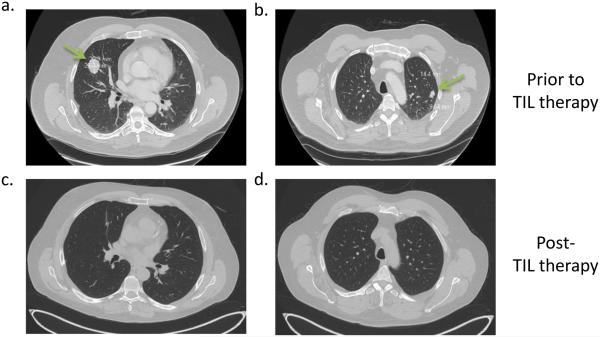
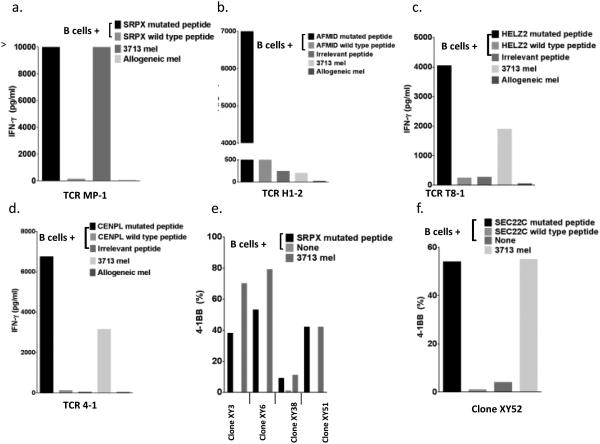
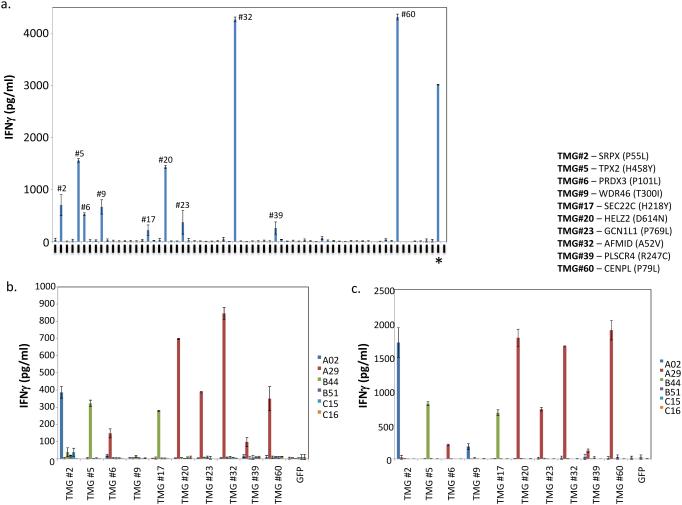
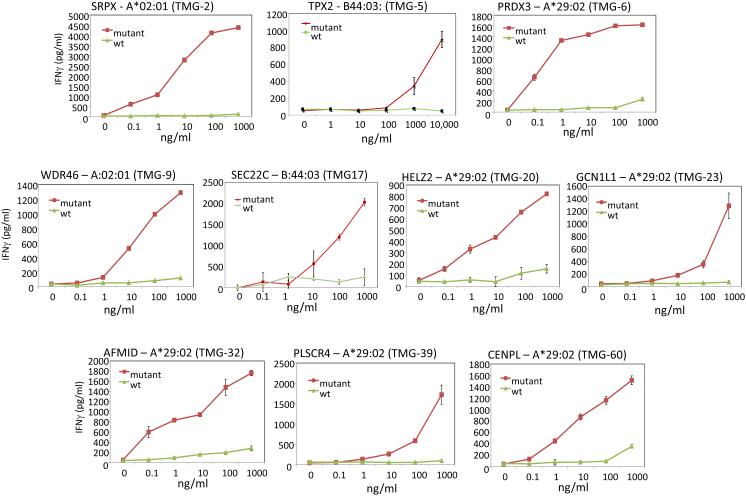
Immunotherapy treatment of patients with metastatic cancer has assumed a prominent role in the clinic. Durable complete response rates of 20% to 25% are achieved in patients with metastatic melanoma following adoptive cell transfer of T cells derived from metastatic lesions, responses that appear in some patients to be mediated by T cells that predominantly recognize mutated antigens. Here, we provide a detailed analysis of the reactivity of T cells administered to a patient with metastatic melanoma who exhibited a complete response for over 3 years after treatment. Over 4,000 nonsynonymous somatic mutations were identified by whole-exome sequence analysis of the patient's autologous normal and tumor cell DNA. Autologous B cells transfected with 720 mutated minigenes corresponding to the most highly expressed tumor cell transcripts were then analyzed for their ability to stimulate the administered T cells. Autologous tumor-infiltrating lymphocytes recognized 10 distinct mutated gene products, but not the corresponding wild-type products, each of which was recognized in the context of one of three different MHC class I restriction elements expressed by the patient. Detailed clonal analysis revealed that 9 of the top 20 most prevalent clones present in the infused T cells, comprising approximately 24% of the total cells, recognized mutated antigens. Thus, we have identified and enriched mutation-reactive T cells and suggest that such analyses may lead to the development of more effective therapies for the treatment of patients with metastatic cancer. Cancer Immunol Res; 4(8); 669-78. ©2016 AACR.
免疫疗法在转移性癌症患者的治疗中已在临床占据显著地位。对转移性黑色素瘤患者进行源自转移病灶的T细胞过继性细胞转移后,可实现20%至25%的持久完全缓解率,部分患者的缓解似乎是由主要识别突变抗原的T细胞介导的。在此,我们详细分析了给予一名转移性黑色素瘤患者的T细胞的反应性,该患者在治疗后出现了超过3年的完全缓解。通过对患者自体正常细胞和肿瘤细胞DNA进行全外显子组序列分析,鉴定出超过4000个非同义体细胞突变。然后分析了用与表达量最高的肿瘤细胞转录本相对应的720个突变小基因转染的自体B细胞刺激所给予T细胞的能力。自体肿瘤浸润淋巴细胞识别出10种不同的突变基因产物,但不识别相应的野生型产物,每种产物在患者表达的三种不同的MHC I类限制性元件之一的背景下被识别。详细的克隆分析显示,输注的T细胞中存在的前20个最常见克隆中有9个,约占细胞总数的24%,识别突变抗原。因此,我们已经鉴定并富集了对突变有反应的T细胞,并表明此类分析可能会促成开发出更有效的转移性癌症患者治疗方法。《癌症免疫研究》;4(8);669 - 78。©2016美国癌症研究协会。