Surgery Branch, National Cancer Institute, Bethesda, Maryland.
Clin Cancer Res. 2018 Nov 15;24(22):5562-5573. doi: 10.1158/1078-0432.CCR-18-0573. Epub 2018 May 31.
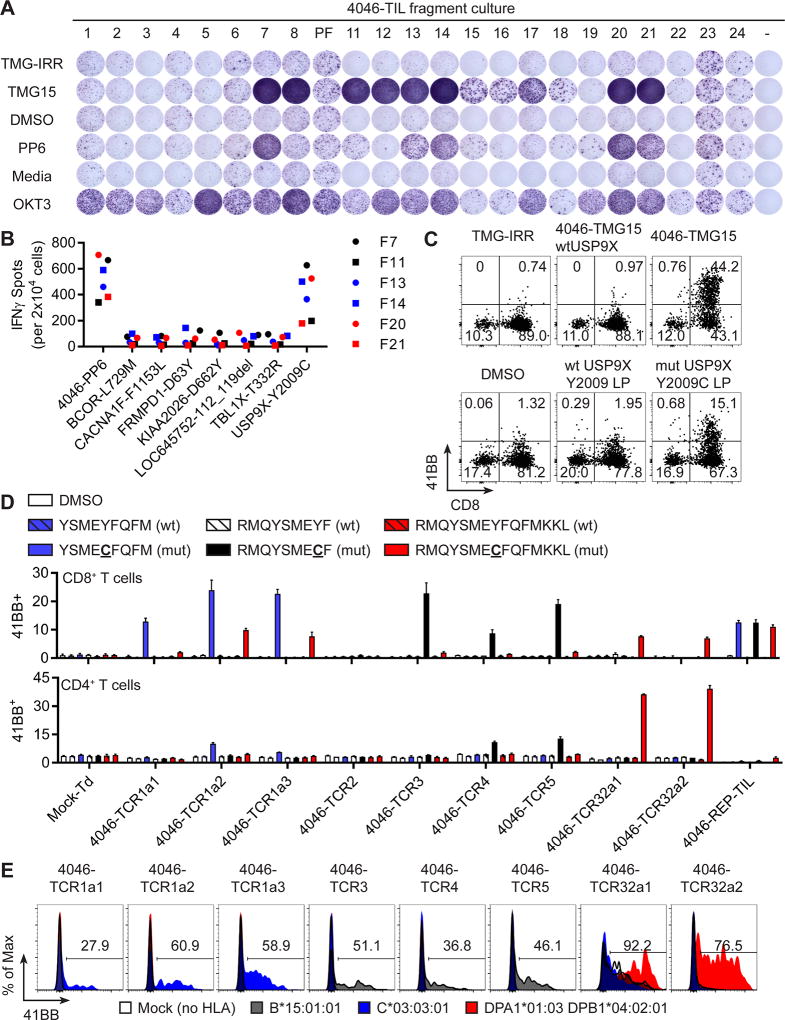
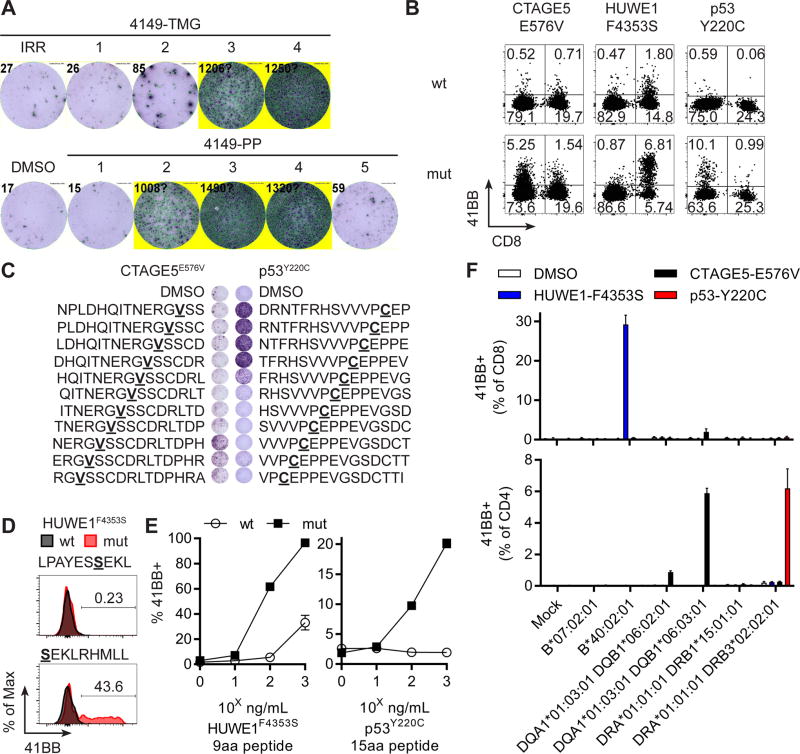
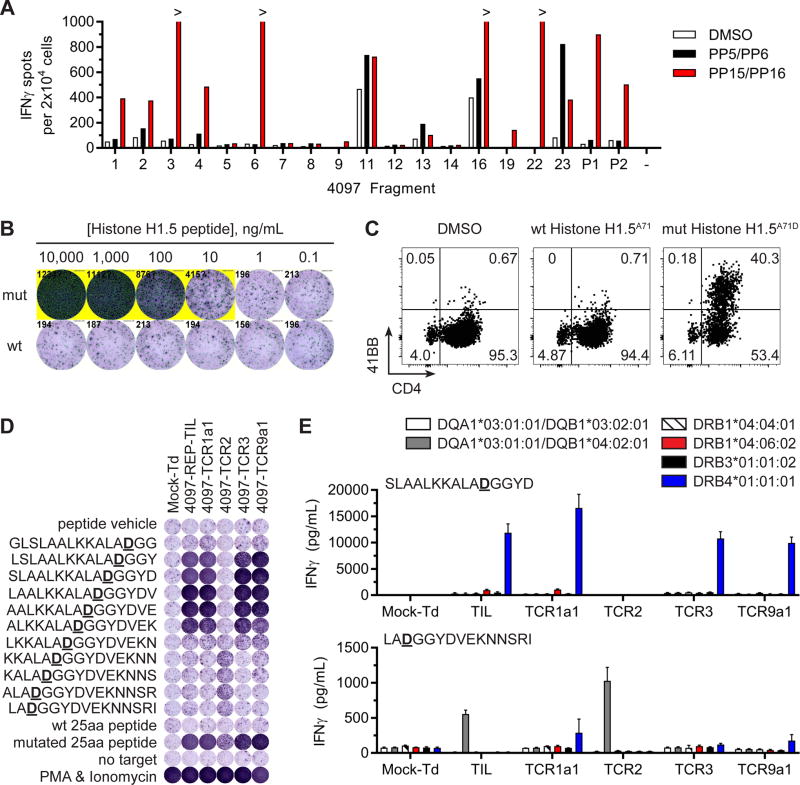
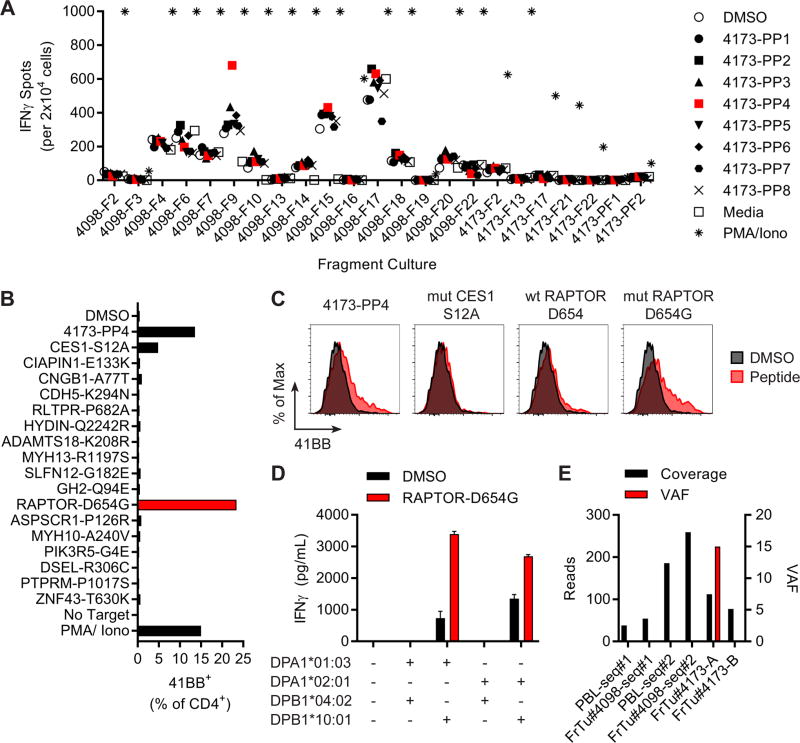
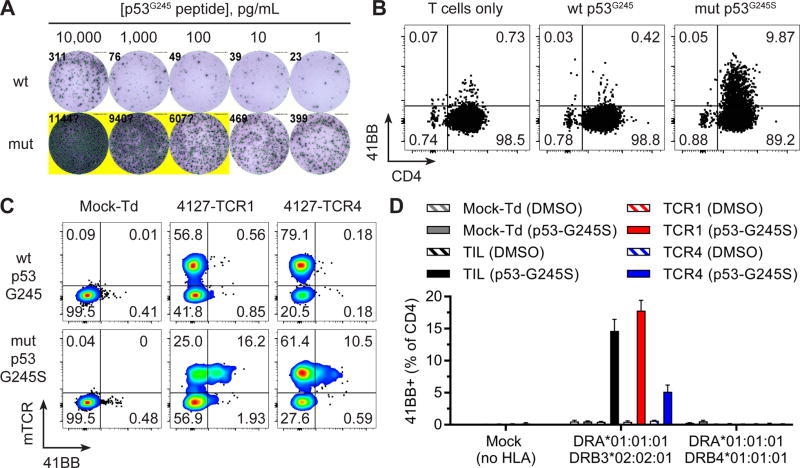
This was a study prospectively evaluating intratumoral T-cell responses to autologous somatic mutated neoepitopes expressed by human metastatic ovarian cancers. Tumor-infiltrating lymphocytes (TIL) were expanded from resected ovarian cancer metastases, which were analyzed by whole-exome and transcriptome sequencing to identify autologous somatic mutations. All mutated neoepitopes, independent of prediction algorithms, were expressed in autologous antigen-presenting cells and then cocultured with TIL fragment cultures. Secretion of IFNγ or upregulation of 41BB indicated a T-cell response. Seven women with metastatic ovarian cancer were evaluated, and 5 patients had clear, dominant T-cell responses to mutated neoantigens, which were corroborated by comparison with the wild-type sequence, identification of the minimal epitope, human leukocyte antigen (HLA) restriction element(s), and neoantigen-specific T-cell receptor(s). Mutated neoantigens were restricted by HLA-B, -C, -DP, -DQ, and/or -DR alleles and appeared to principally arise from random, somatic mutations unique to each patient. We established that "hotspot" mutations (c.659A>G; p.Y220C and c.733G>A; p.G245S) expressed by two different patients' tumors were both immunogenic in the context of HLA-DRB3*02:02. Mutation-reactive T cells infiltrated ovarian cancer metastases at sufficient frequencies to warrant their investigation as adoptive cell therapy. In addition, transfer of "hotspot" mutation-reactive T-cell receptors into peripheral blood T cells could be evaluated as a gene therapy for a diverse range of tumor histologies. .
这是一项前瞻性研究,评估了自体体细胞突变新表位在人类转移性卵巢癌中的肿瘤内 T 细胞反应。从切除的卵巢癌转移灶中扩增肿瘤浸润淋巴细胞 (TIL),通过全外显子组和转录组测序分析鉴定自体体细胞突变。所有突变的新抗原,无论预测算法如何,都在自体抗原呈递细胞中表达,然后与 TIL 片段培养物共培养。IFNγ 的分泌或 41BB 的上调表明存在 T 细胞反应。对 7 名患有转移性卵巢癌的女性进行了评估,其中 5 名患者对突变新抗原产生了清晰、占主导地位的 T 细胞反应,这与与野生型序列的比较、最小表位的鉴定、人类白细胞抗原 (HLA) 限制元件和新抗原特异性 T 细胞受体相一致。突变新抗原受 HLA-B、-C、-DP、-DQ 和/或 -DR 等位基因限制,似乎主要来自每个患者特有的随机体细胞突变。我们确定了两个不同患者肿瘤中表达的“热点”突变(c.659A>G;p.Y220C 和 c.733G>A;p.G245S)在 HLA-DRB3*02:02 的背景下都是免疫原性的。突变反应性 T 细胞以足够的频率浸润卵巢癌转移灶,有理由将其作为过继细胞治疗进行研究。此外,可以评估将“热点”突变反应性 T 细胞受体转移到外周血 T 细胞中作为一种基因治疗方法,用于多种肿瘤组织学类型。