Ferreira João Pedro, Girerd Nicolas, Bozec Erwan, Machu Jean Loup, Boivin Jean-Marc, London Gérard M, Zannad Faiez, Rossignol Patrick
INSERM, Centre d'Investigations Cliniques Plurithématique 1433, Université de Lorraine, CHRU de Nancy, Nancy, France F-CRIN INI-CRCT, Nancy, France Cardiovascular Research and Development Unit, Department of Physiology and Cardiothoracic Surgery, Faculty of Medicine, University of Porto, Portugal.
INSERM, Centre d'Investigations Cliniques Plurithématique 1433, Université de Lorraine, CHRU de Nancy, Nancy, France F-CRIN INI-CRCT, Nancy, France.
J Am Heart Assoc. 2016 Jun 16;5(6):e003529. doi: 10.1161/JAHA.116.003529.
Carotid intima-media thickness (cIMT) is a noninvasive marker of cardiovascular risk. The cIMT may be increased in patients with harmonisation, but little is known regarding the functional form of the association between blood pressure (BP) and cIMT in hypertensive and nonhypertensive persons. We aimed to define the shape of the association between BP and cIMT.
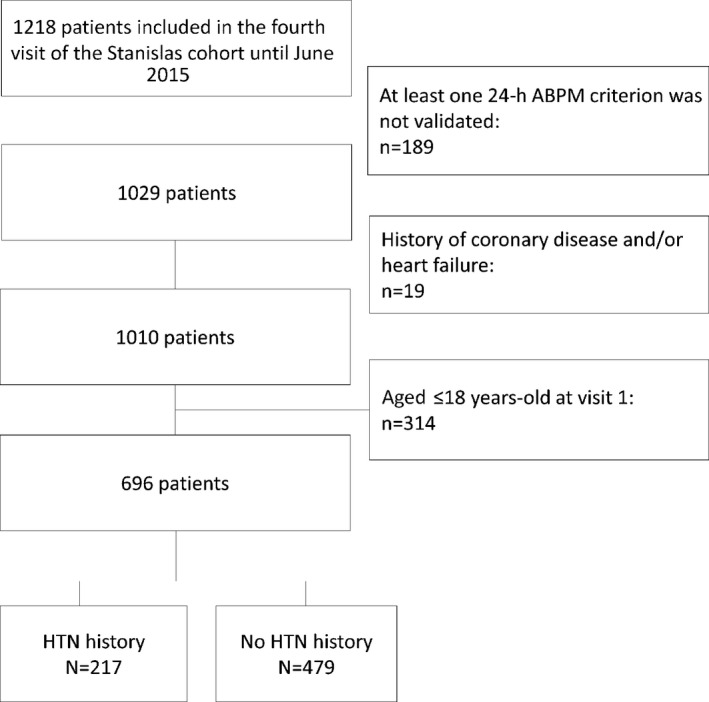
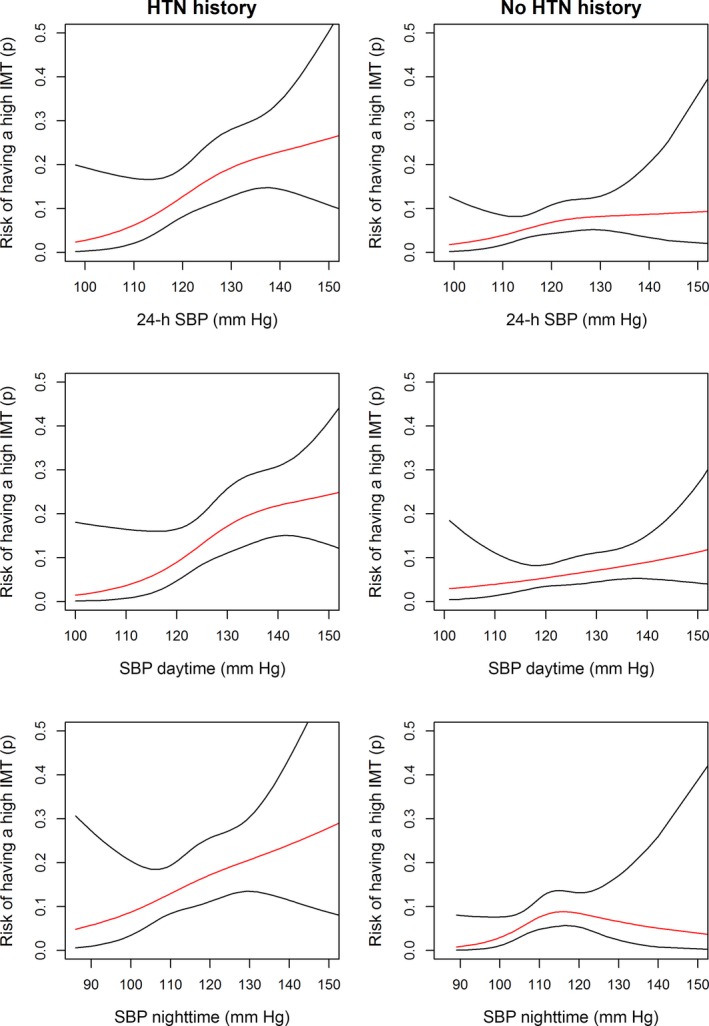
We studied cIMT and ambulatory BP monitoring data from a single-center, cross-sectional, population-based study involving 696 adult participants from the STANISLAS cohort, a familial longitudinal cohort from the Nancy region of France. Participants with a history of hypertension were more likely to have a cIMT >900 μm and had higher mean cIMT (both P<0.001). The risk of cIMT >900 μm increased linearly with higher 24-hour and daytime systolic BP in participants both with and without history of hypertension. The relationship between systolic BP and the risk of cIMT >900 μm was not dependent on hypertension status (all P for interaction >0.10). In multivariable analysis adjusted on cardiovascular risk factors, each 5-mm Hg increase in systolic BP was associated with an 8-μm increase in cIMT (β=8.249 [95% CI 2.490-14.008], P=0.005). In contrast, the association between diastolic BP and cIMT was weaker and not significant.
Systolic BP is linearly and continuously associated with higher cIMT in both hypertensive and nonhypertensive persons, suggesting a detrimental effect of BP on the vascular tree prior to overt hypertension. Similarly, it suggests a detrimental effect of BP at the higher end of the normal range in treated hypertensive patients.
URL: https://www.clinicaltrials.gov/. Unique identifier: NCT01391442.
颈动脉内膜中层厚度(cIMT)是心血管风险的一种非侵入性标志物。在合并症患者中cIMT可能会增加,但关于高血压患者和非高血压患者血压(BP)与cIMT之间关联的函数形式知之甚少。我们旨在明确BP与cIMT之间关联的形式。
我们研究了来自一项单中心、横断面、基于人群的研究中的cIMT和动态血压监测数据,该研究纳入了来自法国南锡地区的家族性纵向队列STANISLAS队列的696名成年参与者。有高血压病史的参与者更有可能出现cIMT>900μm,且平均cIMT更高(均P<0.001)。无论有无高血压病史,24小时和日间收缩压越高,cIMT>900μm的风险呈线性增加。收缩压与cIMT>900μm风险之间的关系不依赖于高血压状态(所有交互作用的P>0.10)。在根据心血管危险因素进行校正的多变量分析中,收缩压每升高5mmHg,cIMT增加8μm(β=8.249[95%CI 2.490-14.008],P=0.005)。相比之下,舒张压与cIMT之间的关联较弱且无统计学意义。
在高血压患者和非高血压患者中,收缩压均与较高的cIMT呈线性且持续相关,这表明在明显高血压之前血压对血管系统有有害影响。同样,这也表明在接受治疗的高血压患者中,血压在正常范围较高端时也有有害影响。