Yu Cai-Guo, Zhang Ning, Yuan Sha-Sha, Ma Yan, Yang Long-Yan, Feng Ying-Mei, Zhao Dong
Beijing Key Laboratory of Diabetes Prevention and Research, Luhe Hospital, Capital Medical University, Beijing 101149, China; Department of Endocrinology, Luhe Hospital, Capital Medical University, Beijing 101149, China.
Stem Cells Int. 2016;2016:1803989. doi: 10.1155/2016/1803989. Epub 2016 May 29.
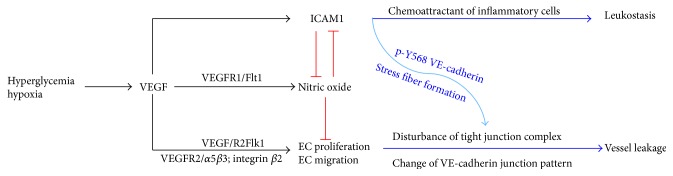
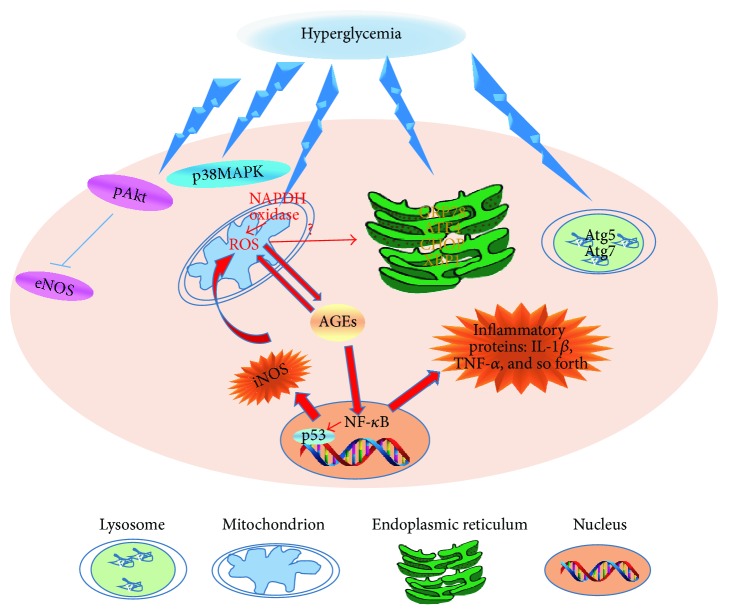
Despite being featured as metabolic disorder, diabetic patients are largely affected by hyperglycemia-induced vascular abnormality. Accumulated evidence has confirmed the beneficial effect of endothelial progenitor cells (EPCs) in coronary heart disease. However, antivascular endothelial growth factor (anti-VEGF) treatment is the main therapy for diabetic retinopathy and nephropathy, indicating the uncertain role of EPCs in the pathogenesis of diabetic microvascular disease. In this review, we first illustrate how hyperglycemia induces metabolic and epigenetic changes in EPCs, which exerts deleterious impact on their number and function. We then discuss how abnormal angiogenesis develops in eyes and kidneys under diabetes condition, focusing on "VEGF uncoupling with nitric oxide" and "competitive angiopoietin 1/angiopoietin 2" mechanisms that are shared in both organs. Next, we dissect the nature of EPCs in diabetic microvascular complications. After we overview the current EPCs-related strategies, we point out new EPCs-associated options for future exploration. Ultimately, we hope that this review would uncover the mysterious nature of EPCs in diabetic microvascular disease for therapeutics.
尽管糖尿病被视为一种代谢紊乱疾病,但糖尿病患者在很大程度上受到高血糖诱导的血管异常的影响。越来越多的证据证实了内皮祖细胞(EPCs)在冠心病中的有益作用。然而,抗血管内皮生长因子(anti-VEGF)治疗是糖尿病视网膜病变和肾病的主要治疗方法,这表明EPCs在糖尿病微血管疾病发病机制中的作用尚不确定。在这篇综述中,我们首先阐述高血糖如何诱导EPCs发生代谢和表观遗传变化,这些变化对其数量和功能产生有害影响。然后,我们讨论在糖尿病条件下眼睛和肾脏中异常血管生成是如何发展的,重点关注两个器官中共同存在的“VEGF与一氧化氮解偶联”和“血管生成素1/血管生成素2竞争”机制。接下来,我们剖析糖尿病微血管并发症中EPCs的本质。在概述当前与EPCs相关的策略后,我们指出未来有待探索的与EPCs相关的新选择。最终,我们希望这篇综述能够揭示EPCs在糖尿病微血管疾病中的神秘本质,以用于治疗。