Ebel Eric D, Williams Michael S, Cole Dana, Travis Curtis C, Klontz Karl C, Golden Neal J, Hoekstra Robert M
Emerg Infect Dis. 2016 Jul;22(7):1193-200. doi: 10.3201/eid2207.150833.
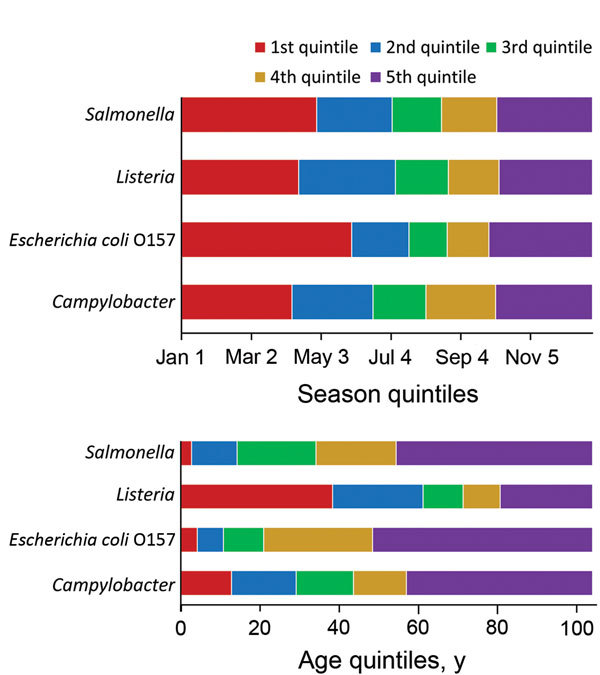
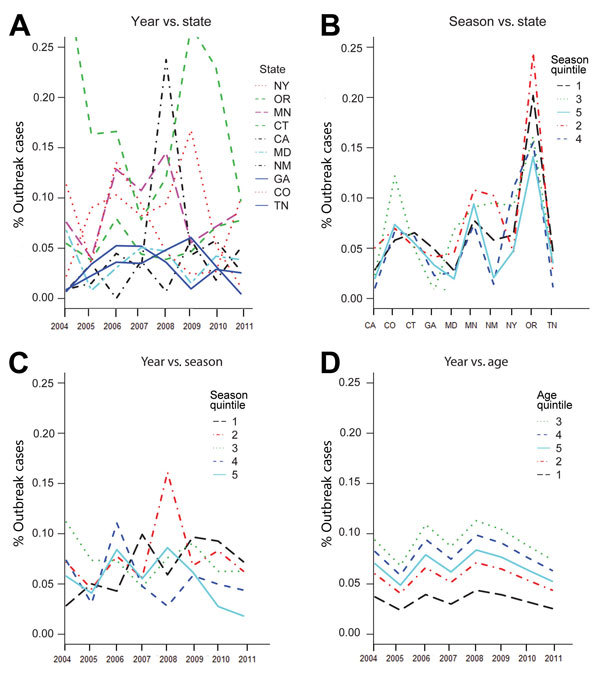
Outbreak data have been used to estimate the proportion of illnesses attributable to different foods. Applying outbreak-based attribution estimates to nonoutbreak foodborne illnesses requires an assumption of similar exposure pathways for outbreak and sporadic illnesses. This assumption cannot be tested, but other comparisons can assess its veracity. Our study compares demographic, clinical, temporal, and geographic characteristics of outbreak and sporadic illnesses from Campylobacter, Escherichia coli O157, Listeria, and Salmonella bacteria ascertained by the Foodborne Diseases Active Surveillance Network (FoodNet). Differences among FoodNet sites in outbreak and sporadic illnesses might reflect differences in surveillance practices. For Campylobacter, Listeria, and Escherichia coli O157, outbreak and sporadic illnesses are similar for severity, sex, and age. For Salmonella, outbreak and sporadic illnesses are similar for severity and sex. Nevertheless, the percentage of outbreak illnesses in the youngest age category was lower. Therefore, we do not reject the assumption that outbreak and sporadic illnesses are similar.
疫情数据已被用于估算不同食物所致疾病的比例。将基于疫情的归因估计应用于非疫情食源性疾病,需要假设疫情和散发病例的暴露途径相似。这一假设无法得到验证,但可以通过其他比较来评估其真实性。我们的研究比较了食源性疾病主动监测网络(FoodNet)确定的弯曲杆菌、大肠杆菌O157、李斯特菌和沙门氏菌引发的疫情和散发病例的人口统计学、临床、时间和地理特征。FoodNet各监测点在疫情和散发病例方面的差异可能反映了监测方法的不同。对于弯曲杆菌、李斯特菌和大肠杆菌O157,疫情和散发病例在严重程度、性别和年龄方面相似。对于沙门氏菌,疫情和散发病例在严重程度和性别方面相似。然而,最年幼年龄组的疫情病例百分比更低。因此,我们不否认疫情和散发病例相似的假设。