Gruol Donna L
Molecular and Cellular Neuroscience Department, The Scripps Research Institute, La Jolla, CA 92037, USA.
Brain Sci. 2016 Jun 17;6(2):19. doi: 10.3390/brainsci6020019.
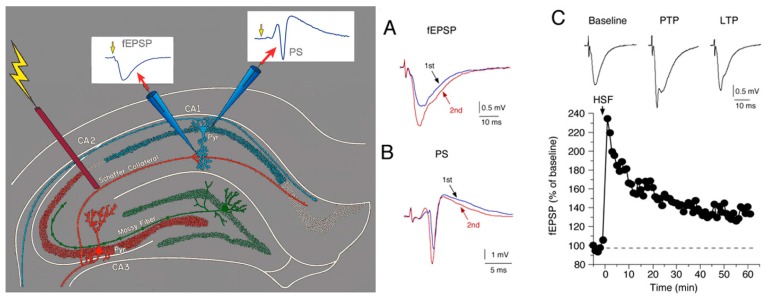
An important aspect of CNS disease and injury is the elevated expression of neuroimmune factors. These factors are thought to contribute to processes ranging from recovery and repair to pathology. The complexity of the CNS and the multitude of neuroimmune factors that are expressed in the CNS during disease and injury is a challenge to an understanding of the consequences of the elevated expression relative to CNS function. One approach to address this issue is the use of transgenic mice that express elevated levels of a specific neuroimmune factor in the CNS by a cell type that normally produces it. This approach can provide basic information about the actions of specific neuroimmune factors and can contribute to an understanding of more complex conditions when multiple neuroimmune factors are expressed. This review summarizes studies using transgenic mice that express elevated levels of IL-6, CCL2 or CXCL10 through increased astrocyte expression. The studies focus on the effects of these neuroimmune factors on synaptic function at the Schaffer collateral to CA1 pyramidal neuron synapse of the hippocampus, a brain region that plays a key role in cognitive function.
中枢神经系统疾病和损伤的一个重要方面是神经免疫因子表达升高。这些因子被认为参与了从恢复和修复到病理过程等一系列过程。中枢神经系统的复杂性以及疾病和损伤期间中枢神经系统中表达的众多神经免疫因子,对于理解相对于中枢神经系统功能而言表达升高的后果构成了挑战。解决这一问题的一种方法是使用转基因小鼠,这些小鼠通过正常产生特定神经免疫因子的细胞类型在中枢神经系统中表达升高水平的该因子。这种方法可以提供有关特定神经免疫因子作用的基本信息,并有助于理解当多种神经免疫因子表达时更复杂的情况。本综述总结了使用通过增加星形胶质细胞表达而表达升高水平的白细胞介素-6、趋化因子配体2或趋化因子配体10的转基因小鼠的研究。这些研究聚焦于这些神经免疫因子对海马体中从施affer侧支到CA1锥体神经元突触的突触功能的影响,海马体是在认知功能中起关键作用的脑区。