Günther Maximilian N, Nettesheim Guilherme, Shubeita George T
Center for Nonlinear Dynamics and Department of Physics, The University of Texas at Austin, Austin, TX 78712, USA.
New York University Abu Dhabi, P. O. Box 129188, Abu Dhabi, United Arab Emirates.
Sci Rep. 2016 Jun 21;6:27972. doi: 10.1038/srep27972.
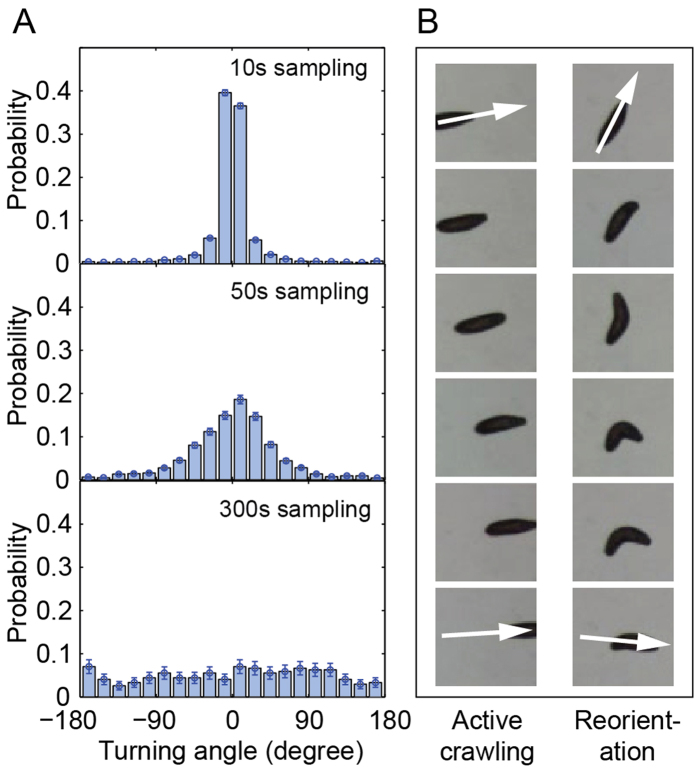
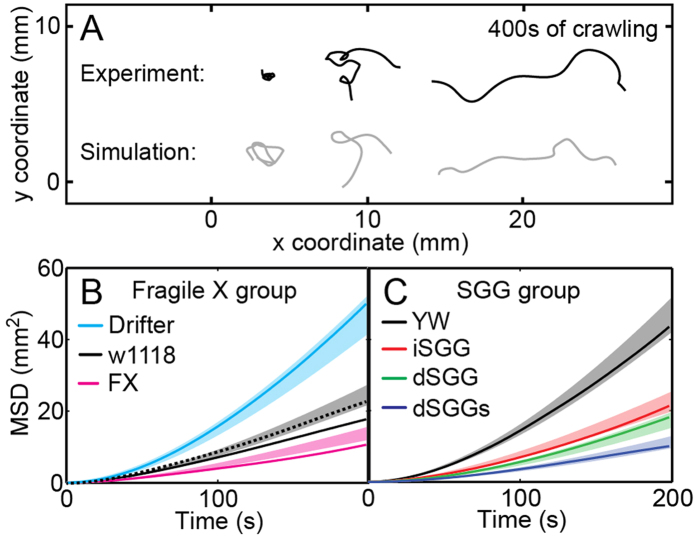
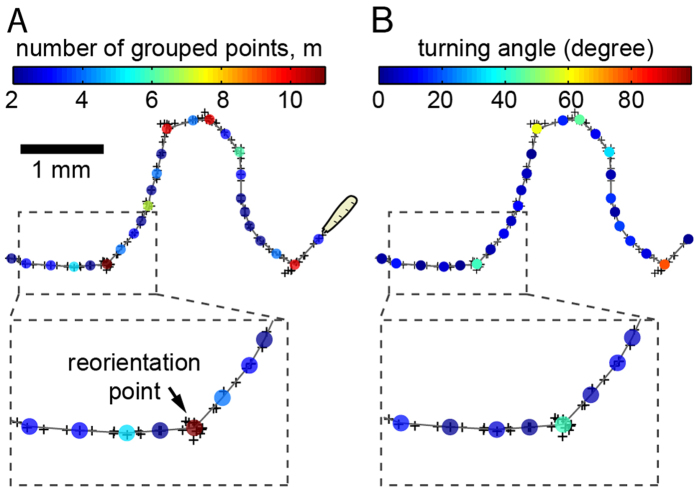
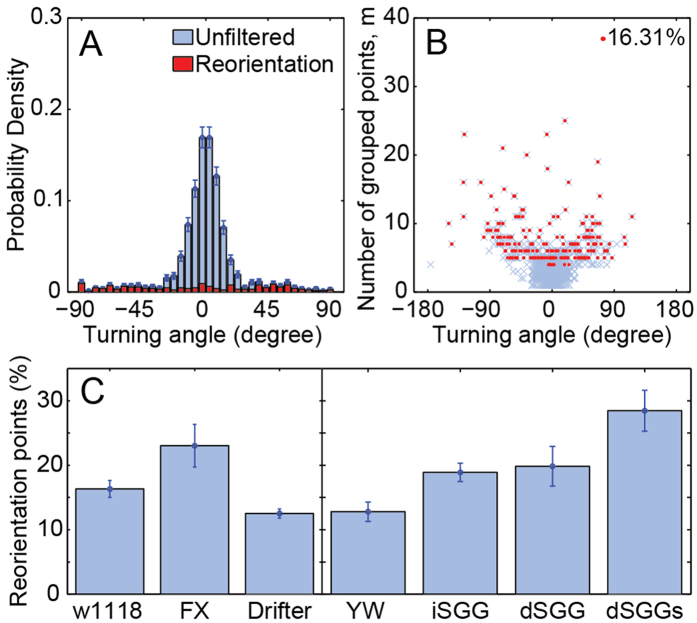
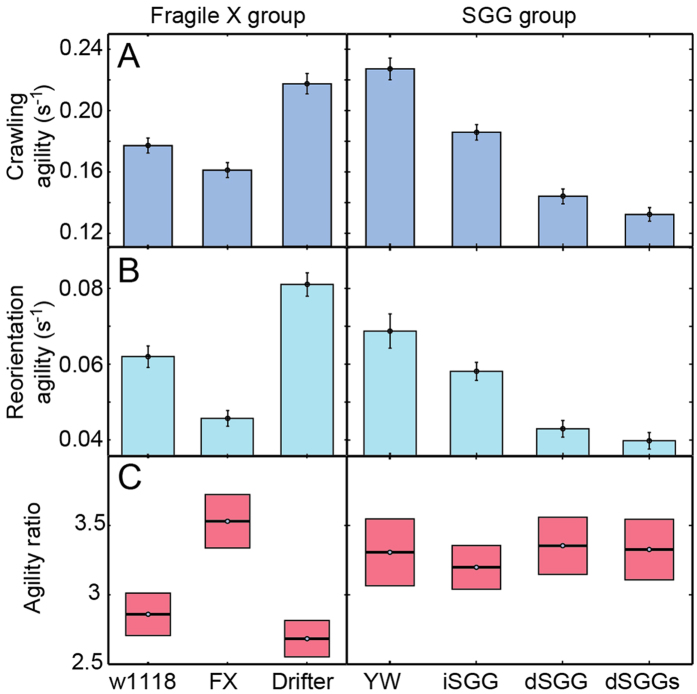
The fruit fly Drosophila melanogaster is a widely used model for cell biology, development, disease, and neuroscience. The fly's power as a genetic model for disease and neuroscience can be augmented by a quantitative description of its behavior. Here we show that we can accurately account for the complex and unique crawling patterns exhibited by individual Drosophila larvae using a small set of four parameters obtained from the trajectories of a few crawling larvae. The values of these parameters change for larvae from different genetic mutants, as we demonstrate for fly models of Alzheimer's disease and the Fragile X syndrome, allowing applications such as genetic or drug screens. Using the quantitative model of larval crawling developed here we use the mutant-specific parameters to robustly simulate larval crawling, which allows estimating the feasibility of laborious experimental assays and aids in their design.
果蝇黑腹果蝇是细胞生物学、发育、疾病和神经科学领域广泛使用的模型。果蝇作为疾病和神经科学遗传模型的作用可以通过对其行为的定量描述得到增强。在这里,我们表明,我们可以使用从少数几只爬行幼虫的轨迹中获得的一小组四个参数,准确地描述单个果蝇幼虫表现出的复杂而独特的爬行模式。正如我们在阿尔茨海默病和脆性X综合征的果蝇模型中所证明的那样,这些参数的值在来自不同基因变异体的幼虫中会发生变化,这使得诸如基因或药物筛选等应用成为可能。利用这里开发的幼虫爬行定量模型,我们使用突变体特异性参数来稳健地模拟幼虫爬行,这有助于估计费力的实验分析的可行性并辅助其设计。