Gelaye Bizu, Kajeepeta Sandhya, Williams Michelle A
Department of Epidemiology, Harvard T. H. Chan School of Public Health, 677 Huntington Ave, K505F, Boston, MA, 02115, USA.
Arch Womens Ment Health. 2016 Oct;19(5):741-51. doi: 10.1007/s00737-016-0646-0. Epub 2016 Jun 21.
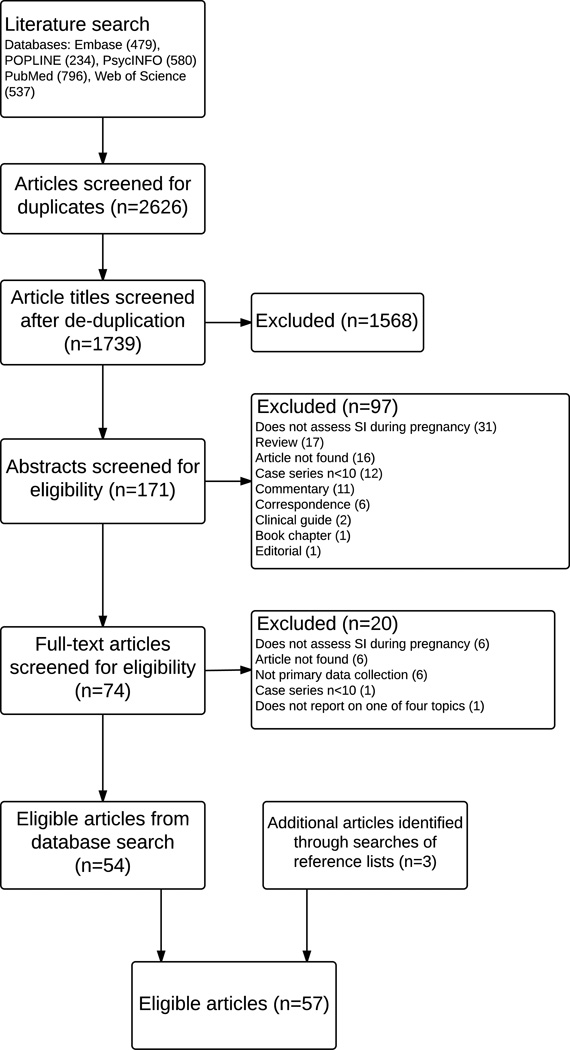
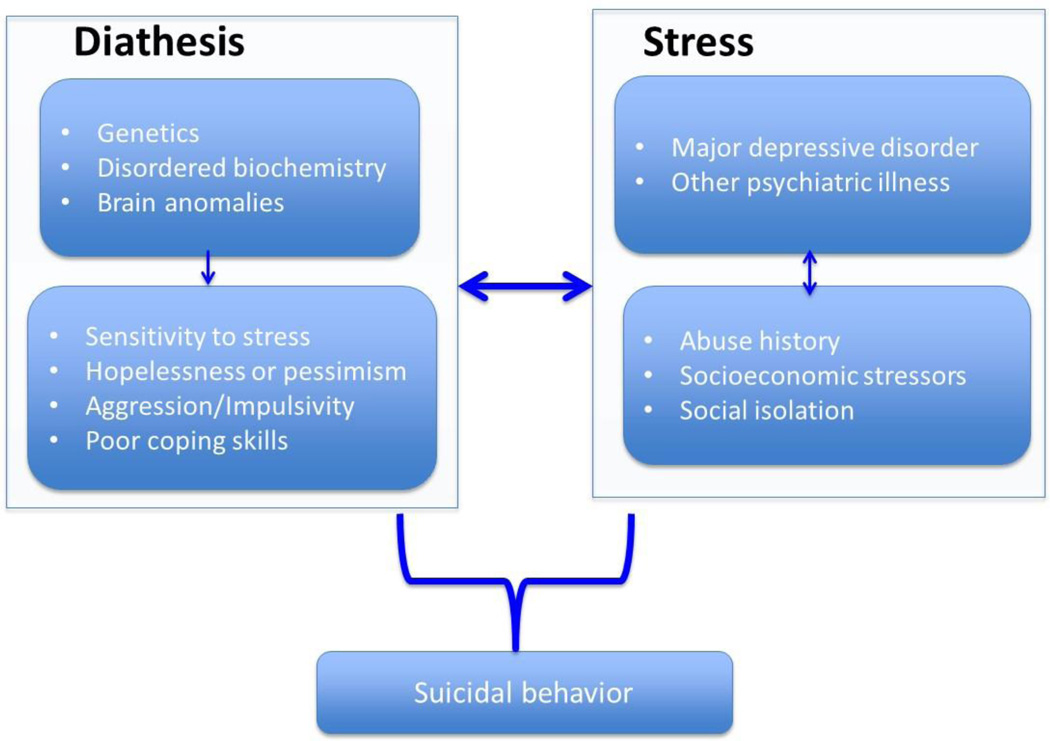
Suicidal behaviors are the leading causes of injury and death worldwide, and are leading causes of maternal deaths in some countries. One of the strongest risk factors, suicidal ideation, is considered a harbinger and distal predictor of later suicide attempt and completion, and also presents an opportunity for interventions prior to physical self-harm. The purpose of this systematic epidemiologic review is to synthesize available research on antepartum suicidal ideation. Original publications were identified through searches of the electronic databases using the search terms pregnancy, pregnant women, suicidal ideation, and pregnan* and suicid* as root searches. We also reviewed references of published articles. We identified a total of 2626 articles through the electronic database search. After irrelevant and redundant articles were excluded, 57 articles were selected. The selected articles were original articles that focused on pregnancy and suicidal ideation. Of the 57 included articles, 20 reported prevalence, 26 reported risk factors, 21 reported consequences of antepartum suicidal ideation, and 5 reported on screening measures. Available evidence indicates that pregnant women are more likely than the general population to endorse suicidal ideation. Additionally, a number of risk factors for antepartum suicidal ideation were identified including intimate partner violence, <12-year education, and major depressive disorder. There is a need for enhanced screening for antepartum suicidal ideation. The few screening instruments that exist are limited as they were primarily developed to measure antepartum and postpartum depression. Given a substantial proportion of women with suicidal ideation that does not meet clinical thresholds of depression and given the stress-diathesis model that shows susceptibility to suicidal behavior independent of depressive disorders, innovative approaches to improve screening and detection of antepartum suicidal ideation are urgently needed.
自杀行为是全球伤害和死亡的主要原因,在一些国家也是孕产妇死亡的主要原因。最强的风险因素之一——自杀意念,被认为是后来自杀未遂和自杀成功的先兆及远期预测指标,同时也为在身体自我伤害之前进行干预提供了机会。本系统流行病学综述的目的是综合现有的关于产前自杀意念的研究。通过使用“怀孕”“孕妇”“自杀意念”以及以“pregnan*”和“suicid*”为词根搜索词在电子数据库中进行检索,确定原始出版物。我们还查阅了已发表文章的参考文献。通过电子数据库检索,我们共识别出2626篇文章。排除无关和重复的文章后,筛选出57篇文章。所选文章均为关注怀孕和自杀意念的原创文章。在这57篇纳入的文章中,20篇报告了患病率,26篇报告了风险因素,21篇报告了产前自杀意念的后果,5篇报告了筛查措施。现有证据表明,孕妇比一般人群更有可能认可自杀意念。此外,还确定了一些产前自杀意念的风险因素,包括亲密伴侣暴力、受教育年限<12年以及重度抑郁症。有必要加强对产前自杀意念的筛查。现有的少数筛查工具存在局限性,因为它们主要是为测量产前和产后抑郁症而开发的。鉴于相当一部分有自杀意念的女性未达到抑郁症的临床阈值,且鉴于应激素质模型表明自杀行为易感性独立于抑郁症,迫切需要创新方法来改进产前自杀意念的筛查和检测。