
西葫芦和黄瓜对施用污水污泥的不同生理和抗氧化反应。
The Different Physiological and Antioxidative Responses of Zucchini and Cucumber to Sewage Sludge Application.
作者信息
Wyrwicka Anna, Urbaniak Magdalena
机构信息
University of Lodz, Faculty of Biology and Environmental Protection, Department of Plant Physiology and Biochemistry, Lodz, Poland.
University of Lodz, Faculty of Biology and Environmental Protection, Department of Applied Ecology, Lodz, Poland.
出版信息
PLoS One. 2016 Jun 21;11(6):e0157782. doi: 10.1371/journal.pone.0157782. eCollection 2016.
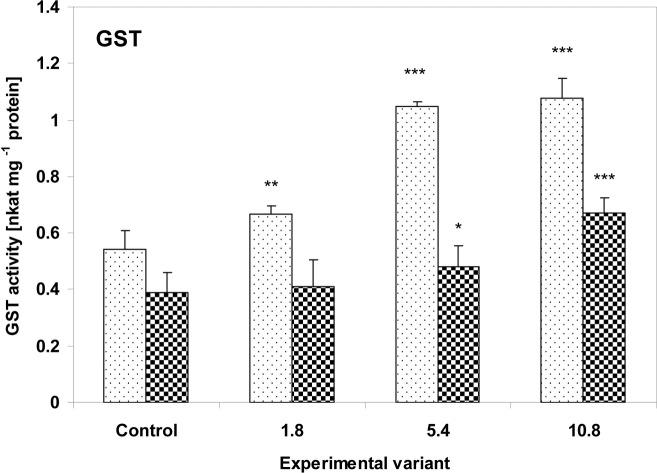
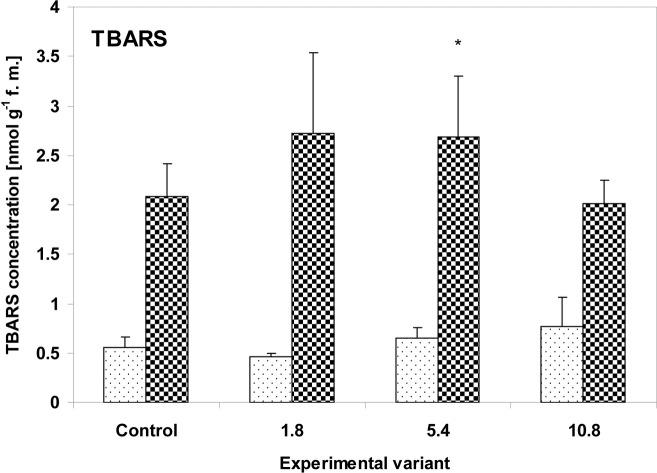
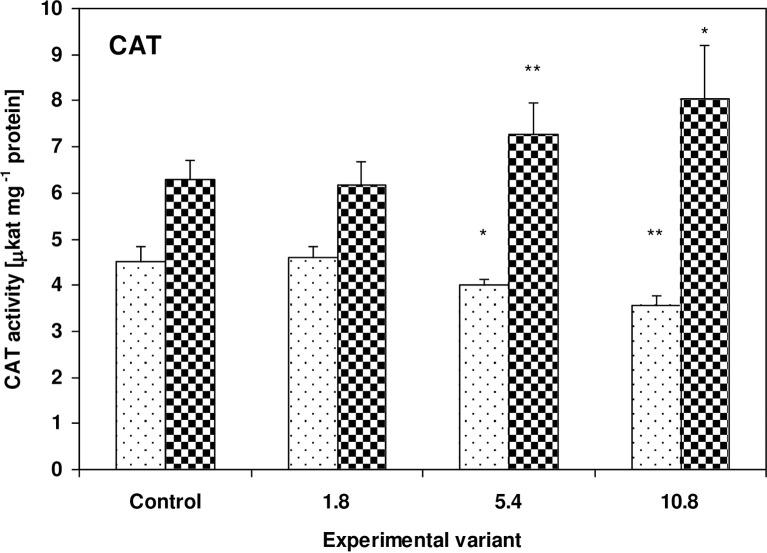
The present study investigates the effect of soil amended with sewage sludge on oxidative changes in zucchini and cucumber plants (Cucurbitaceae) and the consequent activation of their antioxidative systems and detoxification mechanisms. The plants were grown in pots containing soil amended with three concentrations of sewage sludge (1.8 g, 5.4 g and 10.8 g per pot), while controls were potted with vegetable soil. The activities of three antioxidative enzymes, ascorbate peroxidase (APx), catalase (CAT) and guaiacol peroxidase (POx), were assessed, as well as of the detoxifying enzyme S-glutathione transferase (GST). Lipid peroxidation was evaluated by measuring the extent of oxidative damage; α-tocopherol content, the main lipophilic antioxidant, was also measured. Visible symptoms of leaf blade damage after sewage sludge application occurred only on the zucchini plants. The zucchini and cucumber plants showed a range of enzymatic antioxidant responses to sewage sludge application. While APx and POx activities increased significantly with increasing sludge concentration in the zucchini plants, they decreased in the cucumber plants. Moreover, although the activity of these enzymes increased gradually with increasing doses of sewage sludge, these levels fell at the highest dose. An inverse relationship between peroxidases activity and CAT activity was observed in both investigated plant species. In contrast, although GST activity increased progressively with sludge concentration in both the zucchini and cucumber leaves, the increase in GST activity was greater in the zucchini plants, being visible at the lowest dose used. The results indicate that signs of sewage sludge toxicity were greater in zucchini than cucumber, and its defense reactions were mainly associated with increases in APx, POx and GST activity.
本研究调查了添加污水污泥的土壤对西葫芦和黄瓜植株(葫芦科)氧化变化的影响,以及随之而来的抗氧化系统激活和解毒机制。植株种植在装有添加了三种浓度污水污泥(每盆1.8克、5.4克和10.8克)的土壤的花盆中,而对照组种植在菜园土中。评估了三种抗氧化酶,即抗坏血酸过氧化物酶(APx)、过氧化氢酶(CAT)和愈创木酚过氧化物酶(POx)以及解毒酶S-谷胱甘肽转移酶(GST)的活性。通过测量氧化损伤程度评估脂质过氧化;还测量了主要亲脂性抗氧化剂α-生育酚的含量。施用污水污泥后叶片损伤的可见症状仅出现在西葫芦植株上。西葫芦和黄瓜植株对施用污水污泥表现出一系列酶促抗氧化反应。虽然西葫芦植株中APx和POx活性随污泥浓度增加而显著增加,但在黄瓜植株中却降低。此外,尽管这些酶的活性随着污水污泥剂量增加而逐渐增加,但在最高剂量时这些水平下降。在两种被研究的植物物种中均观察到过氧化物酶活性与CAT活性之间呈负相关。相比之下,虽然西葫芦和黄瓜叶片中GST活性均随污泥浓度逐渐增加,但西葫芦植株中GST活性增加更大,在使用的最低剂量时就可见。结果表明,污水污泥对西葫芦的毒性迹象比对黄瓜更大,其防御反应主要与APx、POx和GST活性增加有关。




 Zotero 插件