CSIRO Oceans and Atmosphere, Castray Esplanade, Hobart, Tasmania 7000, Australia.
School of Biological Sciences, The University of Queensland, St Lucia Queensland 4072, Australia.
Sci Data. 2016 Jun 21;3:160043. doi: 10.1038/sdata.2016.43.
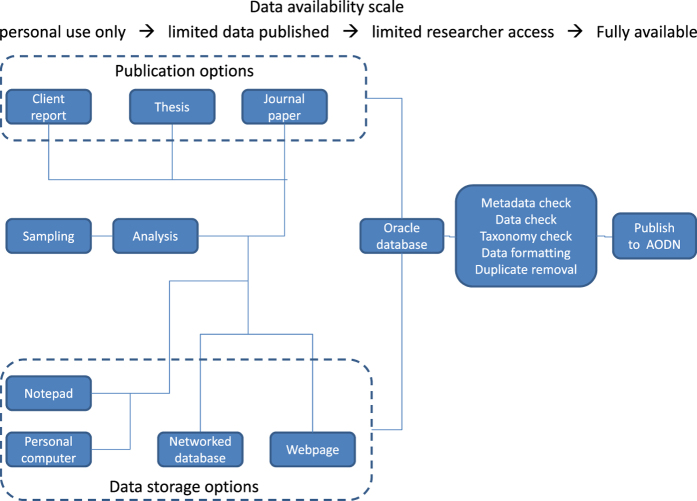
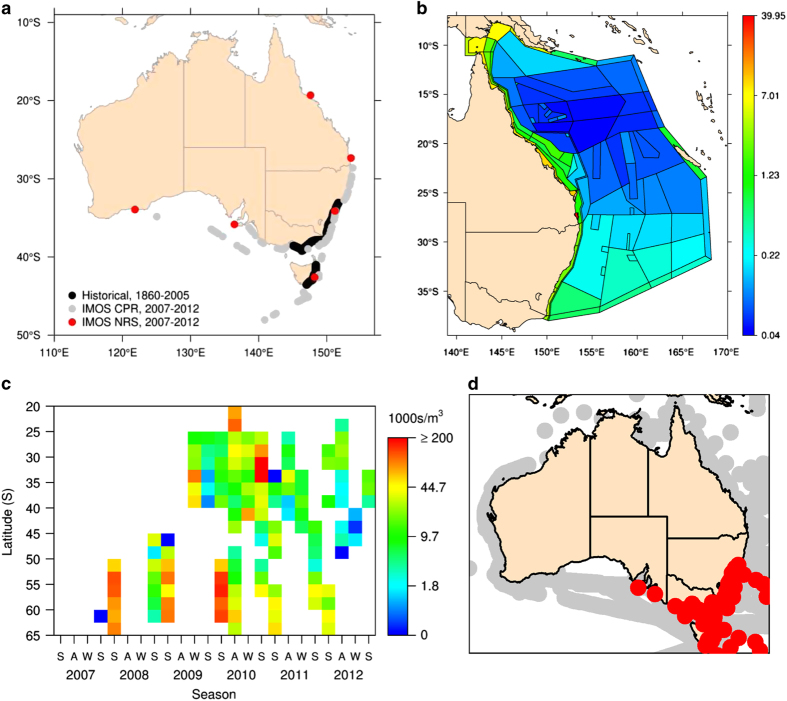
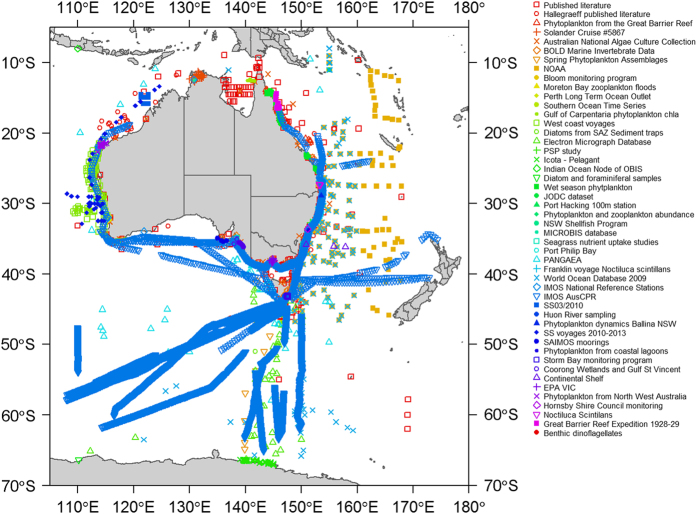
There have been many individual phytoplankton datasets collected across Australia since the mid 1900s, but most are unavailable to the research community. We have searched archives, contacted researchers, and scanned the primary and grey literature to collate 3,621,847 records of marine phytoplankton species from Australian waters from 1844 to the present. Many of these are small datasets collected for local questions, but combined they provide over 170 years of data on phytoplankton communities in Australian waters. Units and taxonomy have been standardised, obviously erroneous data removed, and all metadata included. We have lodged this dataset with the Australian Ocean Data Network (http://portal.aodn.org.au/) allowing public access. The Australian Phytoplankton Database will be invaluable for global change studies, as it allows analysis of ecological indicators of climate change and eutrophication (e.g., changes in distribution; diatom:dinoflagellate ratios). In addition, the standardised conversion of abundance records to biomass provides modellers with quantifiable data to initialise and validate ecosystem models of lower marine trophic levels.
自 20 世纪中期以来,澳大利亚已经收集了许多单独的浮游植物数据集,但大多数数据集都无法为研究界所用。我们已经搜索了档案,联系了研究人员,并对主要和灰色文献进行了扫描,以整理从 1844 年至今澳大利亚海域的海洋浮游植物物种的 3621847 条记录。其中许多是为当地问题收集的小型数据集,但将它们组合起来,就提供了超过 170 年的澳大利亚海域浮游植物群落的数据。单位和分类已经标准化,明显错误的数据已经被删除,并且包含了所有元数据。我们已经将这个数据集提交给了澳大利亚海洋数据网络(http://portal.aodn.org.au/),允许公众访问。澳大利亚浮游植物数据库对于全球变化研究将是非常宝贵的,因为它允许分析气候变化和富营养化的生态指标(例如,分布变化;硅藻:甲藻比率)。此外,将丰度记录标准化为生物量,为模型提供了可量化的数据,以便为较低海洋营养级别的生态系统模型初始化和验证。