Teumer Alexander, Qi Qibin, Nethander Maria, Aschard Hugues, Bandinelli Stefania, Beekman Marian, Berndt Sonja I, Bidlingmaier Martin, Broer Linda, Cappola Anne, Ceda Gian Paolo, Chanock Stephen, Chen Ming-Huei, Chen Tai C, Chen Yii-Der Ida, Chung Jonathan, Del Greco Miglianico Fabiola, Eriksson Joel, Ferrucci Luigi, Friedrich Nele, Gnewuch Carsten, Goodarzi Mark O, Grarup Niels, Guo Tingwei, Hammer Elke, Hayes Richard B, Hicks Andrew A, Hofman Albert, Houwing-Duistermaat Jeanine J, Hu Frank, Hunter David J, Husemoen Lise L, Isaacs Aaron, Jacobs Kevin B, Janssen Joop A M J L, Jansson John-Olov, Jehmlich Nico, Johnson Simon, Juul Anders, Karlsson Magnus, Kilpelainen Tuomas O, Kovacs Peter, Kraft Peter, Li Chao, Linneberg Allan, Liu Yongmei, Loos Ruth J F, Lorentzon Mattias, Lu Yingchang, Maggio Marcello, Magi Reedik, Meigs James, Mellström Dan, Nauck Matthias, Newman Anne B, Pollak Michael N, Pramstaller Peter P, Prokopenko Inga, Psaty Bruce M, Reincke Martin, Rimm Eric B, Rotter Jerome I, Saint Pierre Aude, Schurmann Claudia, Seshadri Sudha, Sjögren Klara, Slagboom P Eline, Strickler Howard D, Stumvoll Michael, Suh Yousin, Sun Qi, Zhang Cuilin, Svensson Johan, Tanaka Toshiko, Tare Archana, Tönjes Anke, Uh Hae-Won, van Duijn Cornelia M, van Heemst Diana, Vandenput Liesbeth, Vasan Ramachandran S, Völker Uwe, Willems Sara M, Ohlsson Claes, Wallaschofski Henri, Kaplan Robert C
Institute for Community Medicine, University Medicine Greifswald, 17475, Greifswald, Germany.
Interfaculty Institute for Genetics and Functional Genomics, University Medicine Greifswald, 17475, Greifswald, Germany.
Aging Cell. 2016 Oct;15(5):811-24. doi: 10.1111/acel.12490. Epub 2016 Jun 21.
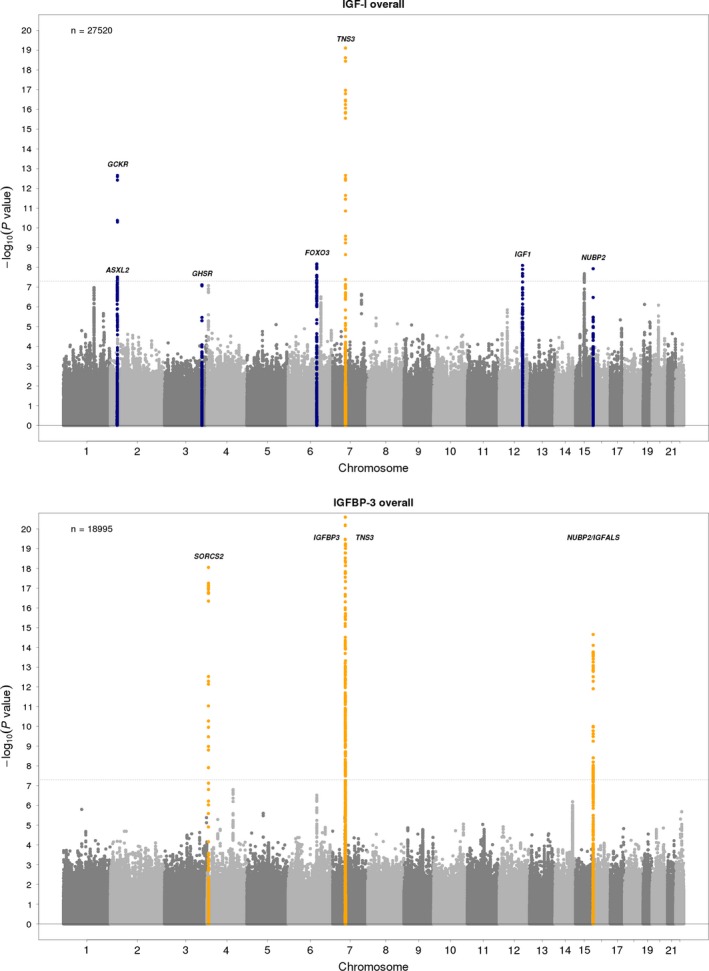
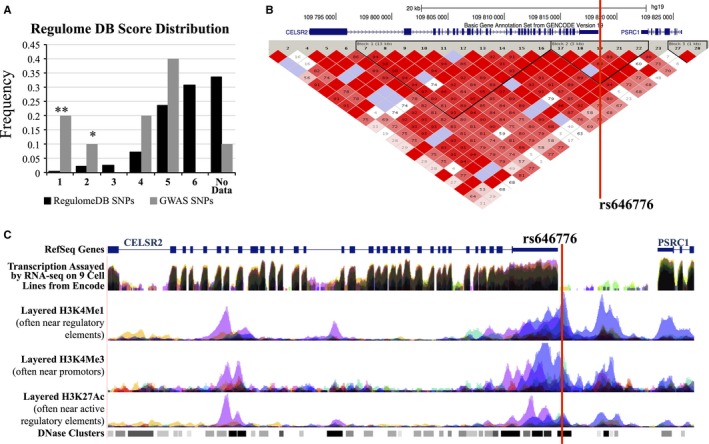
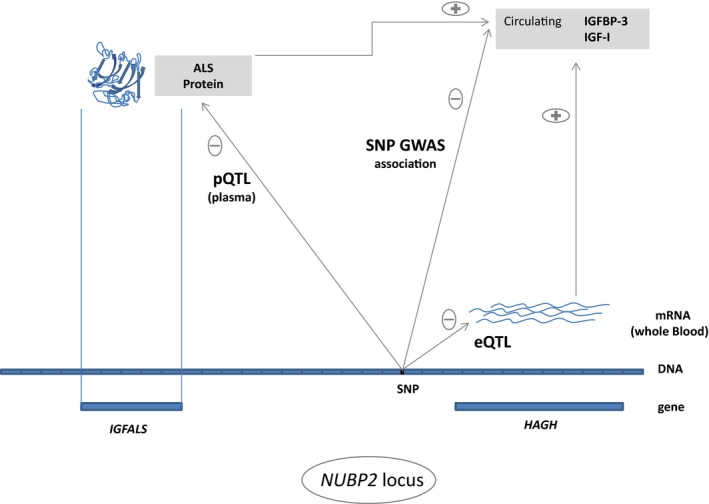
The growth hormone/insulin-like growth factor (IGF) axis can be manipulated in animal models to promote longevity, and IGF-related proteins including IGF-I and IGF-binding protein-3 (IGFBP-3) have also been implicated in risk of human diseases including cardiovascular diseases, diabetes, and cancer. Through genomewide association study of up to 30 884 adults of European ancestry from 21 studies, we confirmed and extended the list of previously identified loci associated with circulating IGF-I and IGFBP-3 concentrations (IGF1, IGFBP3, GCKR, TNS3, GHSR, FOXO3, ASXL2, NUBP2/IGFALS, SORCS2, and CELSR2). Significant sex interactions, which were characterized by different genotype-phenotype associations between men and women, were found only for associations of IGFBP-3 concentrations with SNPs at the loci IGFBP3 and SORCS2. Analyses of SNPs, gene expression, and protein levels suggested that interplay between IGFBP3 and genes within the NUBP2 locus (IGFALS and HAGH) may affect circulating IGF-I and IGFBP-3 concentrations. The IGF-I-decreasing allele of SNP rs934073, which is an eQTL of ASXL2, was associated with lower adiposity and higher likelihood of survival beyond 90 years. The known longevity-associated variant rs2153960 (FOXO3) was observed to be a genomewide significant SNP for IGF-I concentrations. Bioinformatics analysis suggested enrichment of putative regulatory elements among these IGF-I- and IGFBP-3-associated loci, particularly of rs646776 at CELSR2. In conclusion, this study identified several loci associated with circulating IGF-I and IGFBP-3 concentrations and provides clues to the potential role of the IGF axis in mediating effects of known (FOXO3) and novel (ASXL2) longevity-associated loci.
在动物模型中,可以通过操控生长激素/胰岛素样生长因子(IGF)轴来延长寿命,并且包括IGF-I和胰岛素样生长因子结合蛋白-3(IGFBP-3)在内的IGF相关蛋白也与包括心血管疾病、糖尿病和癌症在内的人类疾病风险有关。通过对来自21项研究的多达30884名欧洲血统成年人进行全基因组关联研究,我们确认并扩展了先前确定的与循环IGF-I和IGFBP-3浓度相关的基因座列表(IGF1、IGFBP3、GCKR、TNS3、GHSR、FOXO3、ASXL2、NUBP2/IGFALS、SORCS2和CELSR2)。仅在IGFBP-3浓度与IGFBP-3和SORCS2基因座处的单核苷酸多态性(SNP)的关联中发现了显著的性别相互作用,其特征是男性和女性之间存在不同的基因型-表型关联。对SNP、基因表达和蛋白质水平的分析表明,IGFBP3与NUBP2基因座内的基因(IGFALS和HAGH)之间的相互作用可能会影响循环IGF-I和IGFBP-3的浓度。SNP rs934073的降低IGF-I的等位基因是ASXL2的一个表达数量性状基因座(eQTL),与较低的肥胖程度和90岁以上更高的存活可能性相关。已知的与长寿相关的变体rs2153960(FOXO3)被观察到是一个在全基因组范围内对IGF-I浓度有显著意义的SNP。生物信息学分析表明,在这些与IGF-I和IGFBP-3相关的基因座中,特别是CELSR2处的rs646776,推定调控元件显著富集。总之,本研究确定了几个与循环IGF-I和IGFBP-3浓度相关的基因座,并为IGF轴在介导已知(FOXO3)和新发现(ASXL2)的与长寿相关基因座的效应中的潜在作用提供了线索。