• 文献检索
  • 文档翻译
  • 深度研究
  • 学术资讯
  • Suppr Zotero 插件Zotero 插件
  • 邀请有礼
  • 套餐&价格
  • 历史记录
应用&插件
Suppr Zotero 插件Zotero 插件浏览器插件Mac 客户端Windows 客户端微信小程序
定价
高级版会员购买积分包购买API积分包
服务
文献检索文档翻译深度研究API 文档MCP 服务
关于我们
关于 Suppr公司介绍联系我们用户协议隐私条款
关注我们

Suppr 超能文献

核心技术专利:CN118964589B侵权必究
粤ICP备2023148730 号-1Suppr @ 2026

文献检索

告别复杂PubMed语法,用中文像聊天一样搜索,搜遍4000万医学文献。AI智能推荐,让科研检索更轻松。

立即免费搜索

文件翻译

保留排版,准确专业,支持PDF/Word/PPT等文件格式,支持 12+语言互译。

免费翻译文档

深度研究

AI帮你快速写综述,25分钟生成高质量综述,智能提取关键信息,辅助科研写作。

立即免费体验

基于信息的分类对网络传播的影响。

Impact of Information based Classification on Network Epidemics.

作者信息

Mishra Bimal Kumar, Haldar Kaushik, Sinha Durgesh Nandini

机构信息

Department of Mathematics, Birla Institute of Technology, Mesra, Ranchi, 835215 India.

Adjunct Assistant Professor, Department of Mathematics, Temple University, Philadelphia, USA.

出版信息

Sci Rep. 2016 Jun 22;6:28289. doi: 10.1038/srep28289.

DOI:10.1038/srep28289
PMID:27329348
原文链接:https://pmc.ncbi.nlm.nih.gov/articles/PMC4916446/
Abstract

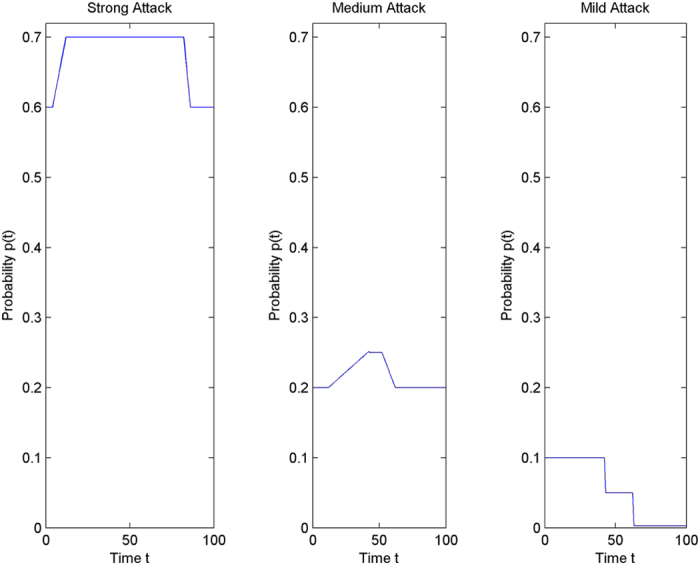
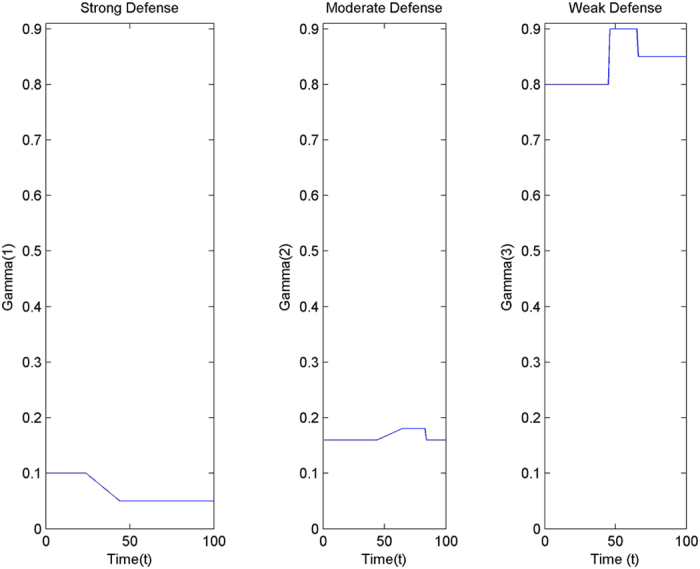
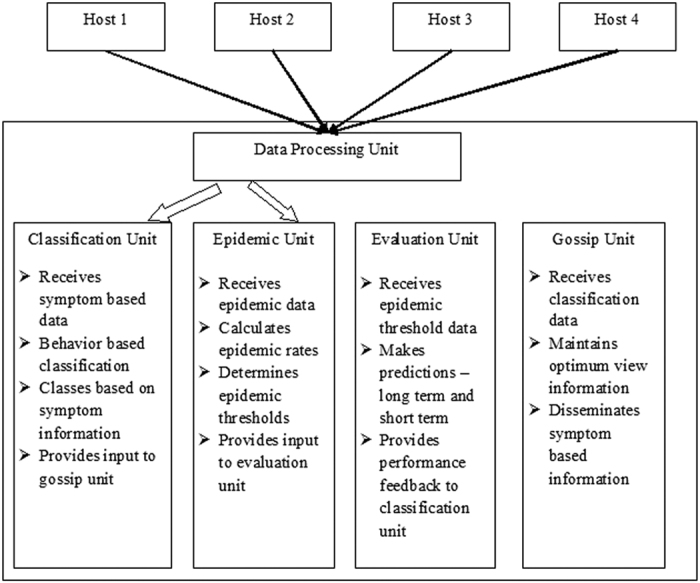
Formulating mathematical models for accurate approximation of malicious propagation in a network is a difficult process because of our inherent lack of understanding of several underlying physical processes that intrinsically characterize the broader picture. The aim of this paper is to understand the impact of available information in the control of malicious network epidemics. A 1-n-n-1 type differential epidemic model is proposed, where the differentiality allows a symptom based classification. This is the first such attempt to add such a classification into the existing epidemic framework. The model is incorporated into a five class system called the DifEpGoss architecture. Analysis reveals an epidemic threshold, based on which the long-term behavior of the system is analyzed. In this work three real network datasets with 22002, 22469 and 22607 undirected edges respectively, are used. The datasets show that classification based prevention given in the model can have a good role in containing network epidemics. Further simulation based experiments are used with a three category classification of attack and defense strengths, which allows us to consider 27 different possibilities. These experiments further corroborate the utility of the proposed model. The paper concludes with several interesting results.

摘要

由于我们对一些内在表征更广泛情况的潜在物理过程缺乏深入理解,为网络中恶意传播的精确近似制定数学模型是一个困难的过程。本文的目的是了解可用信息在控制恶意网络流行病中的影响。提出了一种1-n-n-1型微分流行病模型,其中微分性允许基于症状的分类。这是首次尝试将此类分类添加到现有的流行病框架中。该模型被纳入一个名为DifEpGoss架构的五类系统中。分析揭示了一个流行病阈值,并在此基础上分析了系统的长期行为。在这项工作中,使用了三个分别具有22002条、22469条和22607条无向边的真实网络数据集。数据集表明,模型中给出的基于分类的预防措施在控制网络流行病方面可以发挥很好的作用。进一步基于模拟的实验使用了攻击和防御强度的三类分类,这使我们能够考虑27种不同的可能性。这些实验进一步证实了所提出模型的实用性。本文以几个有趣的结果作为结论。
https://cdn.ncbi.nlm.nih.gov/pmc/blobs/8cca/4916446/cd617dde4a5d/srep28289-f11.jpg
https://cdn.ncbi.nlm.nih.gov/pmc/blobs/8cca/4916446/55ec289d3d94/srep28289-f1.jpg
https://cdn.ncbi.nlm.nih.gov/pmc/blobs/8cca/4916446/650274990d51/srep28289-f2.jpg
https://cdn.ncbi.nlm.nih.gov/pmc/blobs/8cca/4916446/7d2f5989f9d4/srep28289-f3.jpg
https://cdn.ncbi.nlm.nih.gov/pmc/blobs/8cca/4916446/f435f62f17e6/srep28289-f4.jpg
https://cdn.ncbi.nlm.nih.gov/pmc/blobs/8cca/4916446/eeed241031ab/srep28289-f5.jpg
https://cdn.ncbi.nlm.nih.gov/pmc/blobs/8cca/4916446/e0dfd81d3e04/srep28289-f6.jpg
https://cdn.ncbi.nlm.nih.gov/pmc/blobs/8cca/4916446/bd6c3d169841/srep28289-f7.jpg
https://cdn.ncbi.nlm.nih.gov/pmc/blobs/8cca/4916446/d1731fcb55ac/srep28289-f8.jpg
https://cdn.ncbi.nlm.nih.gov/pmc/blobs/8cca/4916446/e0dcd5e85235/srep28289-f9.jpg
https://cdn.ncbi.nlm.nih.gov/pmc/blobs/8cca/4916446/9fabc8344ce6/srep28289-f10.jpg
https://cdn.ncbi.nlm.nih.gov/pmc/blobs/8cca/4916446/cd617dde4a5d/srep28289-f11.jpg
https://cdn.ncbi.nlm.nih.gov/pmc/blobs/8cca/4916446/55ec289d3d94/srep28289-f1.jpg
https://cdn.ncbi.nlm.nih.gov/pmc/blobs/8cca/4916446/650274990d51/srep28289-f2.jpg
https://cdn.ncbi.nlm.nih.gov/pmc/blobs/8cca/4916446/7d2f5989f9d4/srep28289-f3.jpg
https://cdn.ncbi.nlm.nih.gov/pmc/blobs/8cca/4916446/f435f62f17e6/srep28289-f4.jpg
https://cdn.ncbi.nlm.nih.gov/pmc/blobs/8cca/4916446/eeed241031ab/srep28289-f5.jpg
https://cdn.ncbi.nlm.nih.gov/pmc/blobs/8cca/4916446/e0dfd81d3e04/srep28289-f6.jpg
https://cdn.ncbi.nlm.nih.gov/pmc/blobs/8cca/4916446/bd6c3d169841/srep28289-f7.jpg
https://cdn.ncbi.nlm.nih.gov/pmc/blobs/8cca/4916446/d1731fcb55ac/srep28289-f8.jpg
https://cdn.ncbi.nlm.nih.gov/pmc/blobs/8cca/4916446/e0dcd5e85235/srep28289-f9.jpg
https://cdn.ncbi.nlm.nih.gov/pmc/blobs/8cca/4916446/9fabc8344ce6/srep28289-f10.jpg
https://cdn.ncbi.nlm.nih.gov/pmc/blobs/8cca/4916446/cd617dde4a5d/srep28289-f11.jpg

相似文献

1
Impact of Information based Classification on Network Epidemics.基于信息的分类对网络传播的影响。
Sci Rep. 2016 Jun 22;6:28289. doi: 10.1038/srep28289.
2
Modelling influenza A(H1N1) 2009 epidemics using a random network in a distributed computing environment.在分布式计算环境中使用随机网络对2009年甲型H1N1流感疫情进行建模。
Acta Trop. 2015 Mar;143:29-35. doi: 10.1016/j.actatropica.2014.12.008. Epub 2015 Jan 3.
3
Human mobility and time spent at destination: impact on spatial epidemic spreading.人口流动与停留时间:对空间传染病传播的影响。
J Theor Biol. 2013 Dec 7;338:41-58. doi: 10.1016/j.jtbi.2013.08.032. Epub 2013 Sep 4.
4
A Network Epidemic Model with Preventive Rewiring: Comparative Analysis of the Initial Phase.一种具有预防性重连的网络流行病模型:初始阶段的比较分析
Bull Math Biol. 2016 Dec;78(12):2427-2454. doi: 10.1007/s11538-016-0227-4. Epub 2016 Oct 31.
5
Dynamical interplay between awareness and epidemic spreading in multiplex networks.在多重网络中意识和传染病传播之间的动态相互作用。
Phys Rev Lett. 2013 Sep 20;111(12):128701. doi: 10.1103/PhysRevLett.111.128701. Epub 2013 Sep 17.
6
The large graph limit of a stochastic epidemic model on a dynamic multilayer network.动态多层网络上随机流行病模型的大图极限
J Biol Dyn. 2018 Dec;12(1):746-788. doi: 10.1080/17513758.2018.1515993.
7
Performance of a Computational Model of the Mammalian Olfactory System哺乳动物嗅觉系统计算模型的性能
8
Oscillating epidemics in a dynamic network model: stochastic and mean-field analysis.动态网络模型中的振荡流行:随机和平均场分析
J Math Biol. 2016 Apr;72(5):1153-76. doi: 10.1007/s00285-015-0902-3. Epub 2015 Jun 11.
9
An individual-based approach to SIR epidemics in contact networks.基于个体的接触网络中 SIR 传染病模型
J Theor Biol. 2011 Aug 21;283(1):136-44. doi: 10.1016/j.jtbi.2011.05.029. Epub 2011 Jun 6.
10
Spontaneous social distancing in response to a simulated epidemic: a virtual experiment.针对模拟疫情的自发社交距离保持:一项虚拟实验。
BMC Public Health. 2015 Sep 28;15:973. doi: 10.1186/s12889-015-2336-7.

引用本文的文献

1
Effective Methods of Restraining Diffusion in Terms of Epidemic Dynamics.从传染病动力学角度看抑制扩散的有效方法。
Sci Rep. 2017 Jul 20;7(1):6013. doi: 10.1038/s41598-017-06171-6.
2
Web malware spread modelling and optimal control strategies.网页恶意软件传播建模与最优控制策略。
Sci Rep. 2017 Feb 10;7:42308. doi: 10.1038/srep42308.

本文引用的文献

1
Perspectives on the basic reproductive ratio.关于基本繁殖数的观点。
J R Soc Interface. 2005 Sep 22;2(4):281-93. doi: 10.1098/rsif.2005.0042.
2
Velocity and hierarchical spread of epidemic outbreaks in scale-free networks.无标度网络中流行病爆发的速度和层级传播
Phys Rev Lett. 2004 Apr 30;92(17):178701. doi: 10.1103/PhysRevLett.92.178701. Epub 2004 Apr 27.
3
Reproduction numbers and sub-threshold endemic equilibria for compartmental models of disease transmission.疾病传播 compartmental 模型的繁殖数和亚阈值地方病平衡点。
Math Biosci. 2002 Nov-Dec;180:29-48. doi: 10.1016/s0025-5564(02)00108-6.
4
Epidemic dynamics and endemic states in complex networks.复杂网络中的流行病动力学和地方病状态
Phys Rev E Stat Nonlin Soft Matter Phys. 2001 Jun;63(6 Pt 2):066117. doi: 10.1103/PhysRevE.63.066117. Epub 2001 May 22.
5
Epidemic spreading in scale-free networks.无标度网络中的流行病传播。
Phys Rev Lett. 2001 Apr 2;86(14):3200-3. doi: 10.1103/PhysRevLett.86.3200.