Chuang Tzu-Po, Wang Jaw-Yuan, Jao Shu-Wen, Wu Chang-Chieh, Chen Jiann-Hwa, Hsiao Koung-Hung, Lin Chung-Yen, Chen Shu-Hwa, Su Sheng-Yao, Chen Ying-Ju, Chen Yuan-Tsong, Wu Deng-Chyang, Li Ling-Hui
Taiwan International Graduate Program in Molecular Medicine, National Yang-Ming University and Academia Sinica, Taipei, Taiwan.
Institute of Biochemistry and Molecular Biology, National Yang-Ming University, Taipei, Taiwan.
Oncotarget. 2016 Jul 19;7(29):45803-45818. doi: 10.18632/oncotarget.9960.
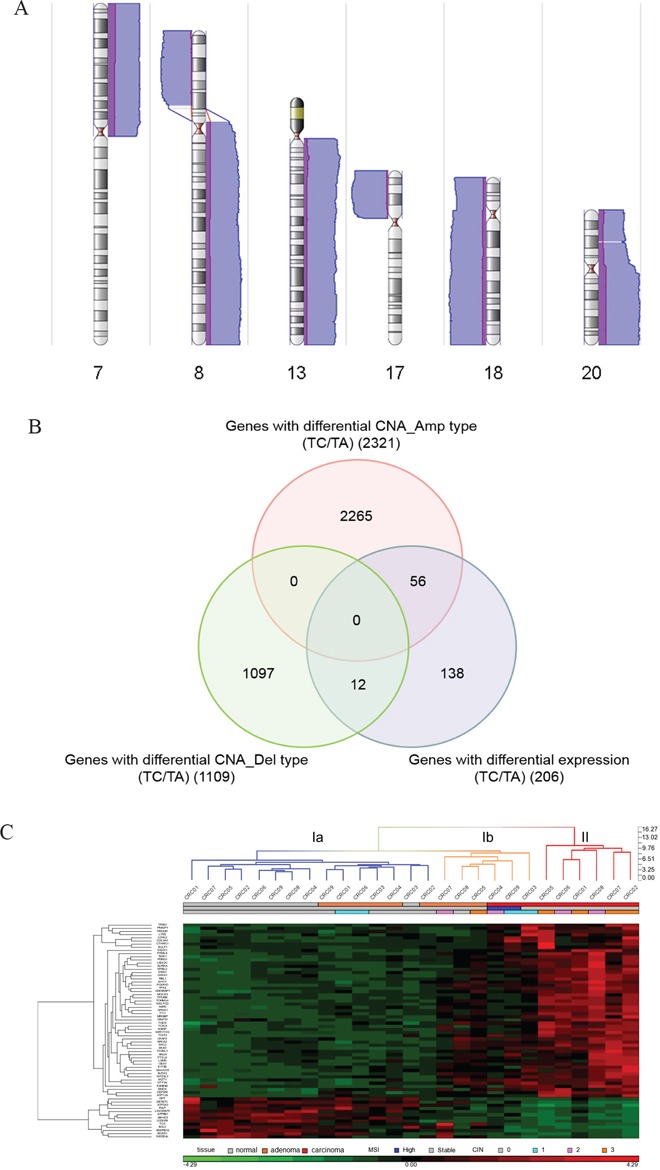
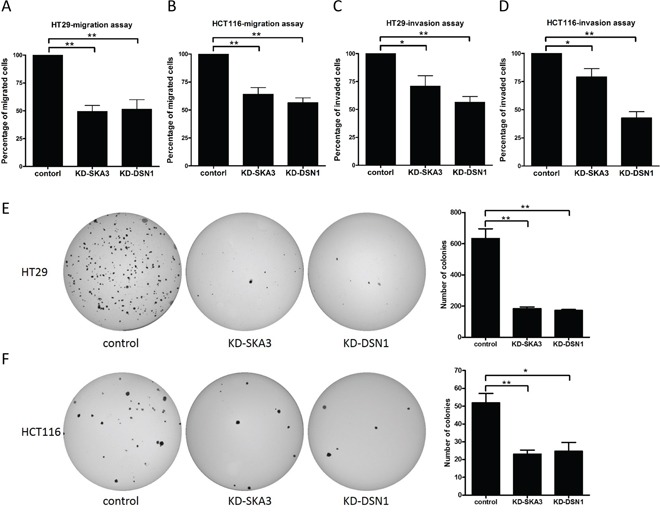
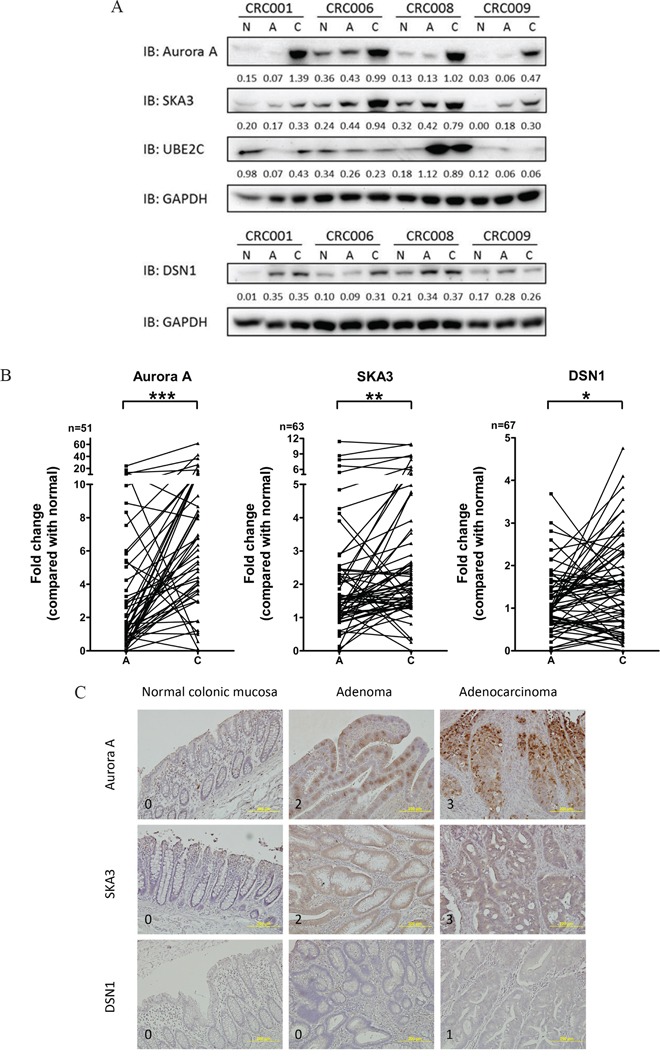
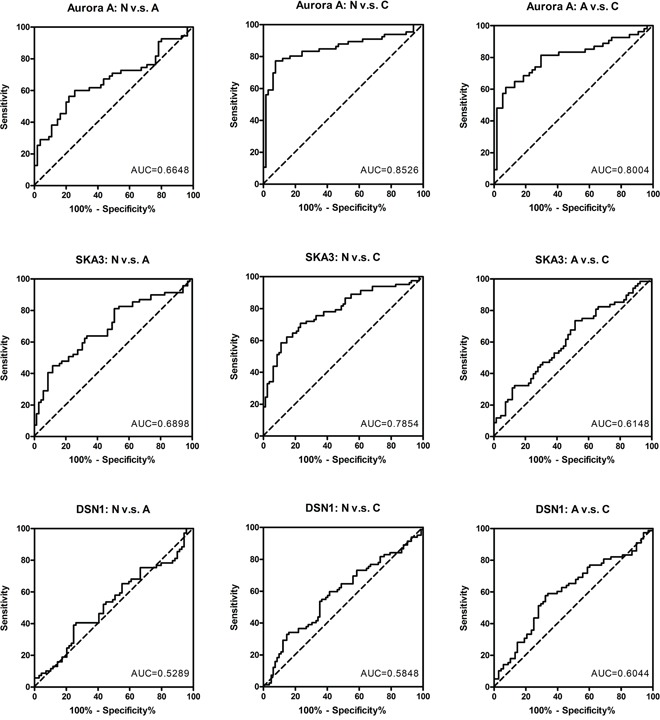
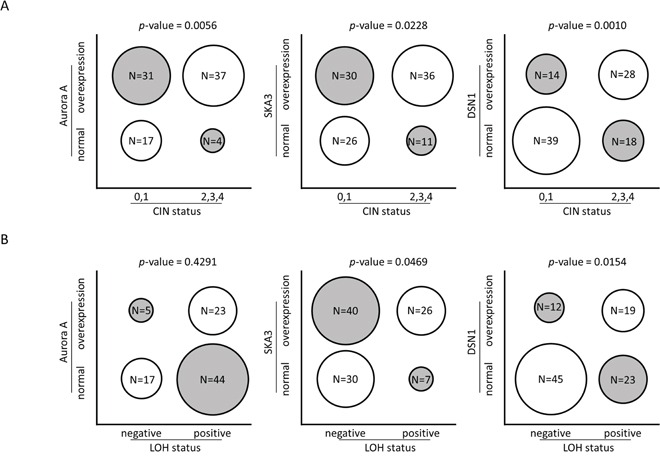
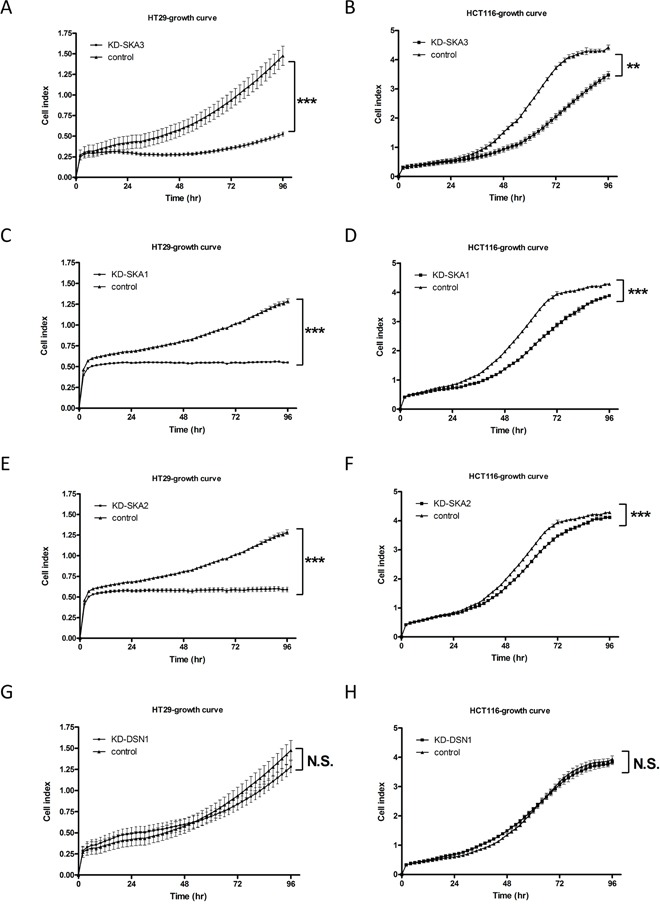
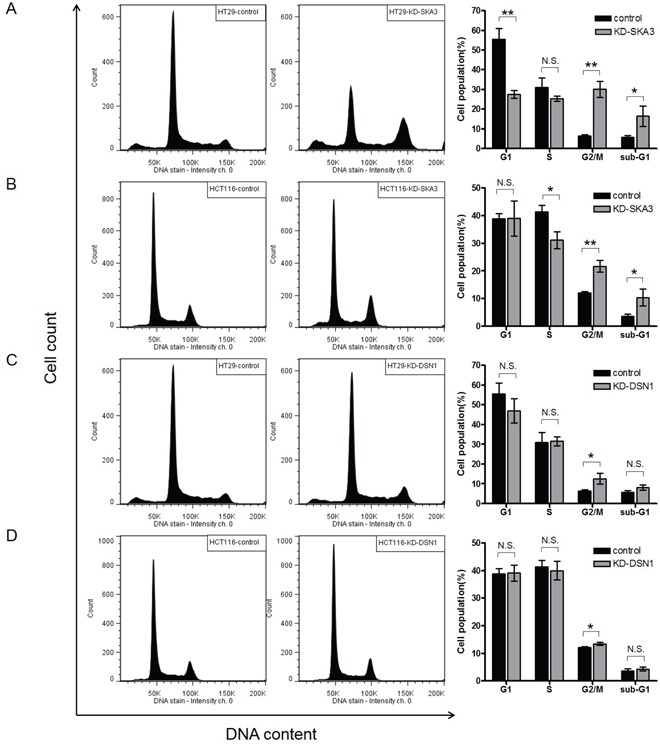
Development of colorectal cancer (CRC) involves sequential transformation of normal mucosal tissues into benign adenomas and then adenomas into malignant tumors. The identification of genes crucial for malignant transformation in colorectal adenomas (CRAs) has been based primarily on cross-sectional observations. In this study, we identified relevant genes using autologous samples. By performing genome-wide SNP genotyping and RNA sequencing analysis of adenocarcinomas, adenomatous polyps, and non-neoplastic colon tissues (referred as tri-part samples) from individual patients, we identified 68 genes with differential copy number alterations and progressively dysregulated expression. Aurora A, SKA3, and DSN1 protein levels were sequentially up-regulated in the samples, and this overexpression was associated with chromosome instability (CIN). Knockdown of SKA3 in CRC cells dramatically reduced cell growth rates and increased apoptosis. Depletion of SKA3 or DSN1 induced G2/M arrest and decreased migration, invasion, and anchorage-independent growth. AURKA and DSN1 are thus critical for chromosome 20q amplification-associated malignant transformation in CRA. Moreover, SKA3 at chromosome 13q was identified as a novel gene involved in promoting malignant transformation. Evaluating the expression of these genes may help identify patients with progressive adenomas, helping to improve treatment.
结直肠癌(CRC)的发展涉及正常黏膜组织依次转变为良性腺瘤,然后腺瘤转变为恶性肿瘤。结直肠腺瘤(CRA)中恶性转化关键基因的鉴定主要基于横断面观察。在本研究中,我们使用自体样本鉴定相关基因。通过对个体患者的腺癌、腺瘤性息肉和非肿瘤性结肠组织(称为三联样本)进行全基因组SNP基因分型和RNA测序分析,我们鉴定出68个具有不同拷贝数改变和逐渐失调表达的基因。Aurora A、SKA3和DSN1蛋白水平在样本中依次上调,这种过表达与染色体不稳定性(CIN)相关。CRC细胞中SKA3的敲低显著降低细胞生长速率并增加细胞凋亡。SKA3或DSN1的缺失诱导G2/M期阻滞并降低迁移、侵袭和非锚定依赖性生长。因此,AURKA和DSN1对于CRA中与20号染色体q臂扩增相关的恶性转化至关重要。此外,13号染色体q臂上的SKA3被鉴定为参与促进恶性转化的新基因。评估这些基因的表达可能有助于识别进展性腺瘤患者,从而有助于改善治疗。