Li Xiaobo, Lv Yang, Hao Jihong, Sun Hao, Gao Na, Zhang Chengcheng, Lu Runze, Wang Shizhi, Yin Lihong, Pu Yuepu, Chen Rui
Key Laboratory of Environmental Medicine Engineering, Ministry of Education, School of Public Health, Southeast University, Nanjing 210009, China.
Department of Histology and Embryology, Hebei North University, Zhangjiakou 075000, China.
Oncotarget. 2016 Jul 19;7(29):45385-45397. doi: 10.18632/oncotarget.9978.
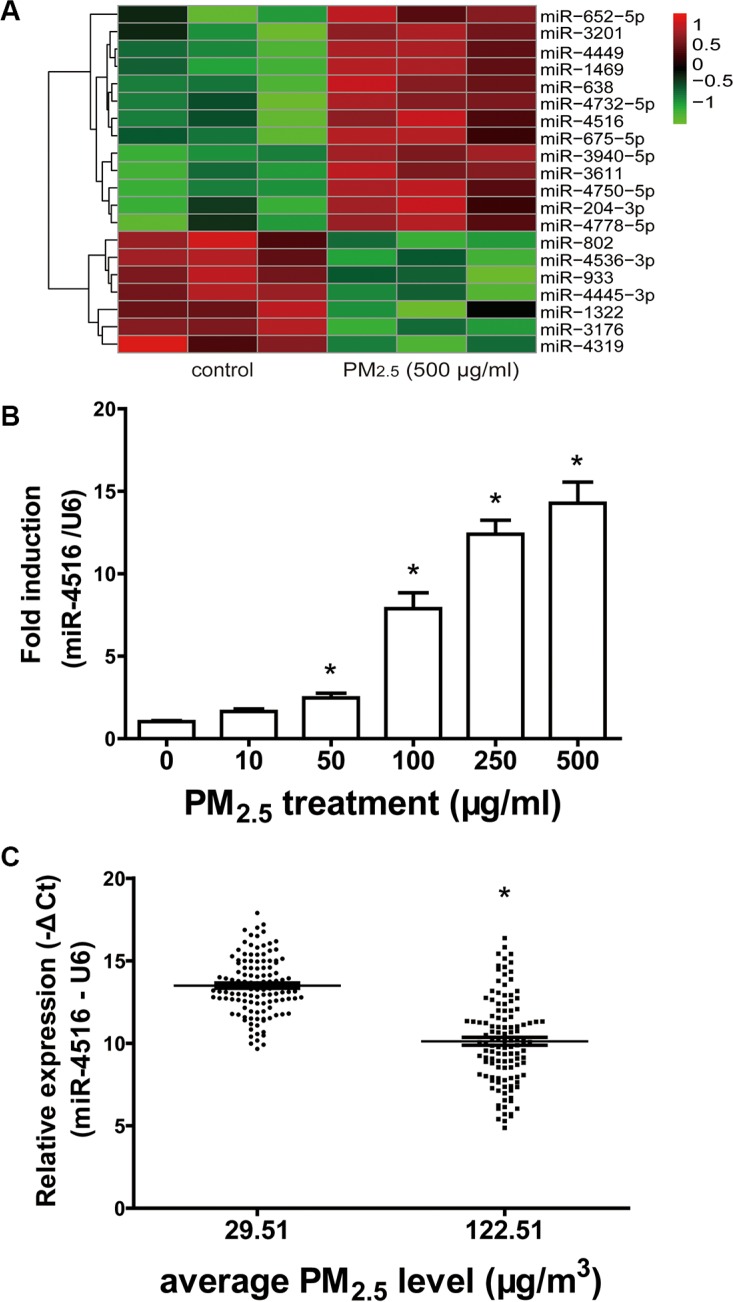
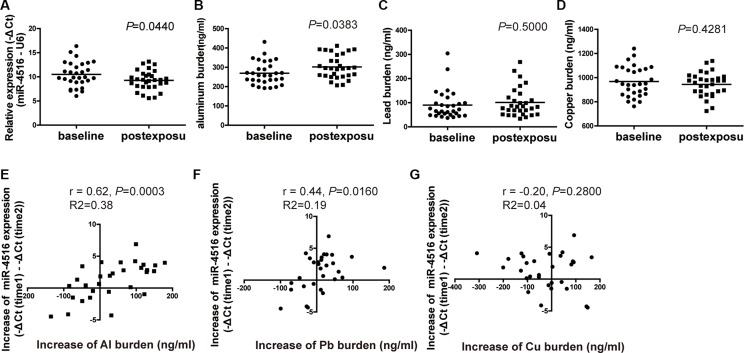
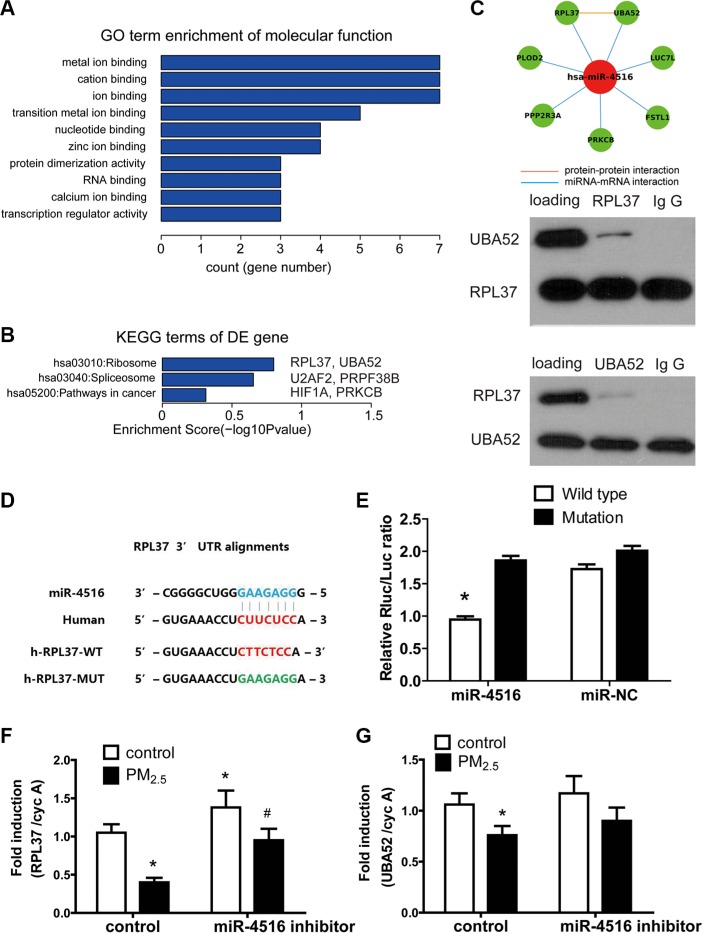
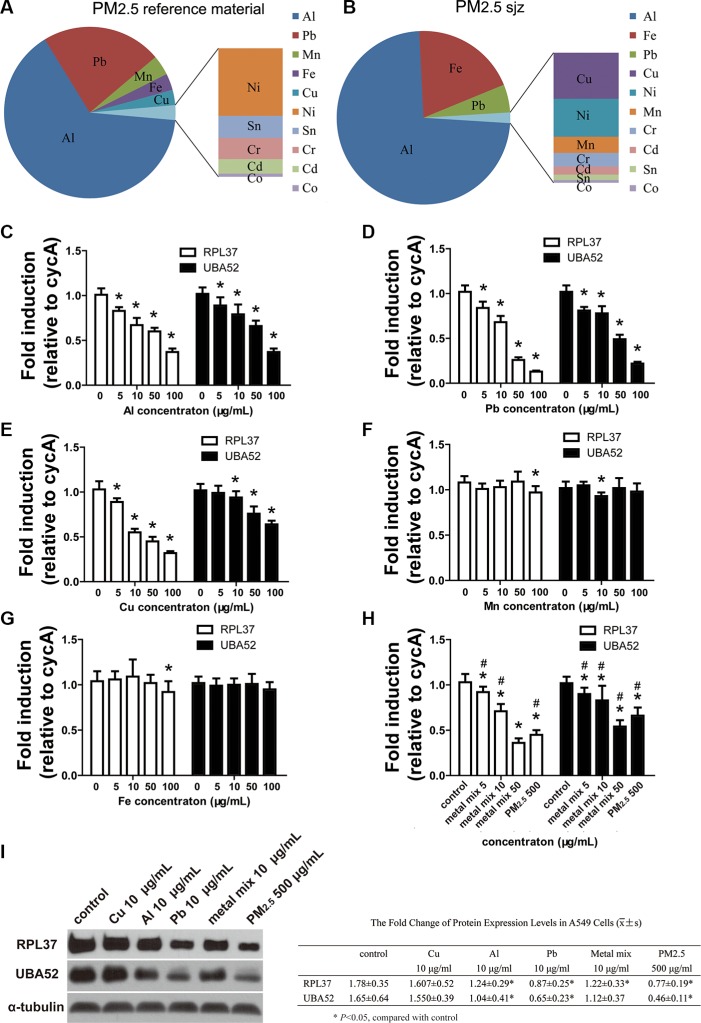
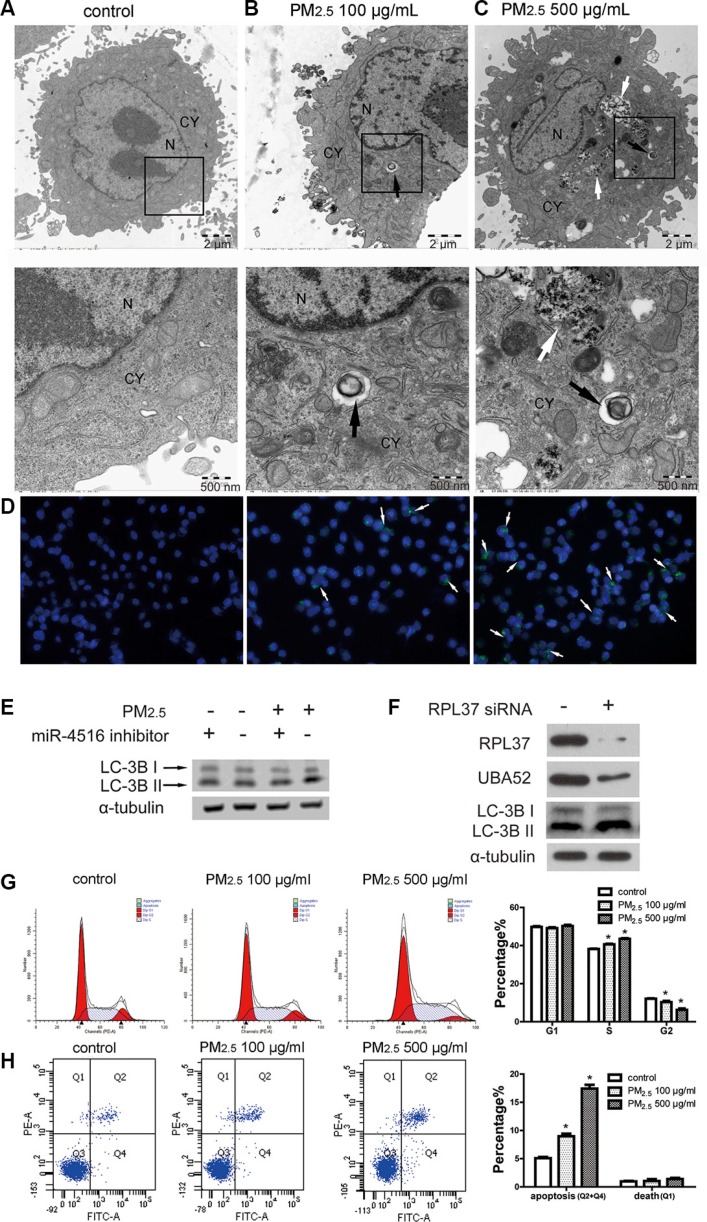
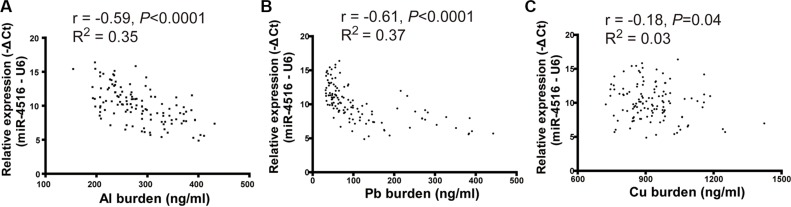
Metals are vital toxic components of fine particulate matter (PM2.5). Cellular responses to exposure to PM2.5 or PM metal components remain unknown. Post-transcriptional profiling and subsequent cell- and individual-based assays implied that the metal ion-binding miR-4516/RPL37/autophagy pathway could play a critical role in cellular responses to PM2.5 and PM metal stresses. miR-4516 was up-regulated in A549 cells exposed to PM2.5 and in the serum of individuals living in a city with moderate air pollution. The expression levels of the miR-4516 target genes, namely, RPL37 and UBA52, were involved in ribosome function and inhibited by exposure to PM2.5 and PM metal components. Autophagy in A549 cells was induced by PM2.5 exposure as a response to decreased RPL37 expression. Moreover, enhanced miR-4516 expression was positively correlated with the augmentation of the internal burden of aluminum and lead in individuals living in a city with moderate air pollution. Hereby, the miR-4516/RPL37/autophagy pathway may represent a novel mechanism that mediates responses to PM metal components.
金属是细颗粒物(PM2.5)中至关重要的有毒成分。细胞对暴露于PM2.5或PM金属成分的反应仍不清楚。转录后谱分析以及随后基于细胞和个体的检测表明,金属离子结合的miR-4516/RPL37/自噬途径可能在细胞对PM2.5和PM金属应激的反应中起关键作用。在暴露于PM2.5的A549细胞以及生活在空气污染中等城市的个体血清中,miR-4516上调。miR-4516靶基因RPL37和UBA52的表达水平与核糖体功能有关,并受到暴露于PM2.5和PM金属成分的抑制。PM2.5暴露通过降低RPL37表达诱导A549细胞自噬。此外,在空气污染中等城市生活的个体中,miR-4516表达增强与铝和铅体内负担增加呈正相关。因此,miR-4516/RPL37/自噬途径可能代表一种介导对PM金属成分反应的新机制。