Nazarian Javad, Mason Gary E, Ho Cheng Ying, Panditharatna Eshini, Kambhampati Madhuri, Vezina L Gilbert, Packer Roger J, Hwang Eugene I
Center for Genetic Medicine Research, Children's National Medical Center, Washington, DC, USA.
Department of Integrative Systems Biology, George Washington University School of Medicine and Health Sciences, Washington, DC, USA.
Oncotarget. 2016 Jul 5;7(27):42837-42842. doi: 10.18632/oncotarget.10034.
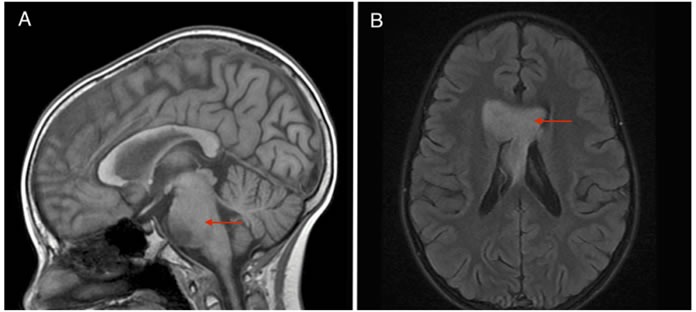
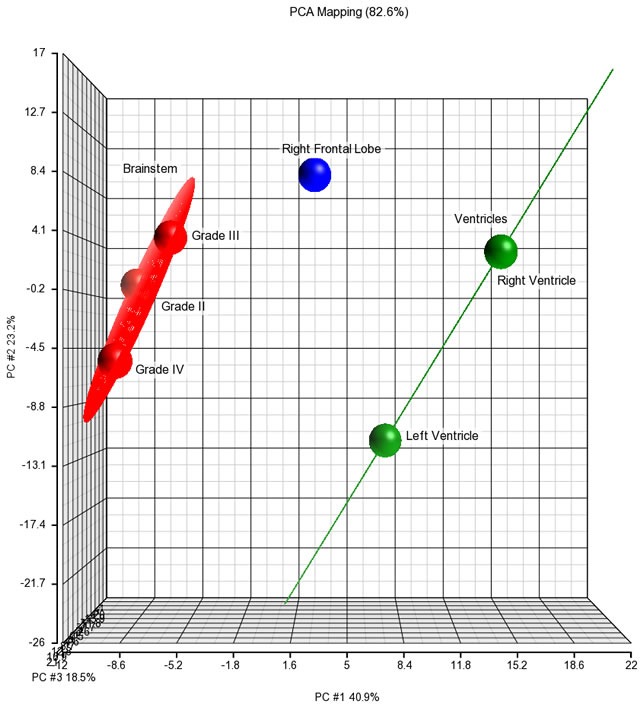
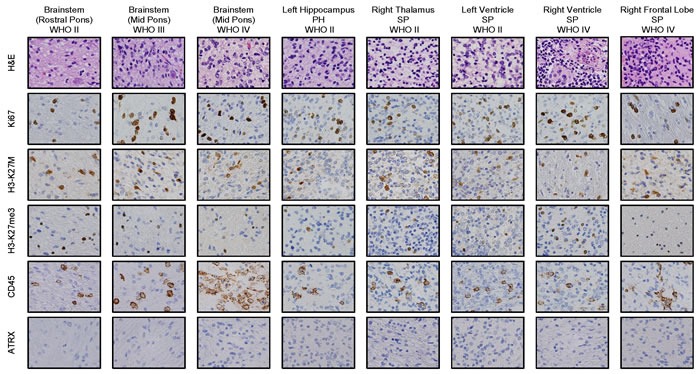
There is no curative treatment for patients with diffuse intrinsic pontine glioma (DIPG). However, with the recent availability of biopsy and autopsy tissue, new data regarding the biologic behavior of this tumor have emerged, allowing greater molecular characterization and leading to investigations which may result in improved therapeutic options. Treatment strategies must address both primary disease sites as well as any metastatic deposits, which may be variably sensitive to a particular approach.In this case report, we present a patient with DIPG treated with irradiation and serial investigational agents. The clinical, pathological and molecular phenotypes of both the progressive primary tumor as well as concomitant metastatic deposits obtained at autopsy are discussed. While some mRNA differences were demonstrated, all analyzed sites of disease shared similar mutational arrangements, suggesting that targeting the mutations of the primary tumor may be effective for all sites of disease.
弥漫性脑桥内生型胶质瘤(DIPG)患者尚无治愈性治疗方法。然而,随着近期活检和尸检组织的可得性,有关该肿瘤生物学行为的新数据不断涌现,使得能够进行更深入的分子特征分析,并引发了可能带来更好治疗选择的研究。治疗策略必须兼顾原发性疾病部位以及任何转移性病灶,这些病灶对特定治疗方法的敏感性可能各不相同。在本病例报告中,我们展示了一名接受放疗和系列研究性药物治疗的DIPG患者。讨论了进行性原发性肿瘤以及尸检时获得的伴随转移性病灶的临床、病理和分子表型。虽然显示出一些mRNA差异,但所有分析的疾病部位都具有相似的突变排列,这表明针对原发性肿瘤的突变进行治疗可能对所有疾病部位都有效。