Wagner S, Benesch M, Berthold F, Gnekow A K, Rutkowski S, Sträter R, Warmuth-Metz M, Kortmann R-D, Pietsch T, Wolff J E A
Department of Pediatric Hematology and Oncology, Klinik St Hedwig, University of Regensburg, Regensburg, Germany.
Br J Cancer. 2006 Oct 23;95(8):991-7. doi: 10.1038/sj.bjc.6603402. Epub 2006 Oct 3.
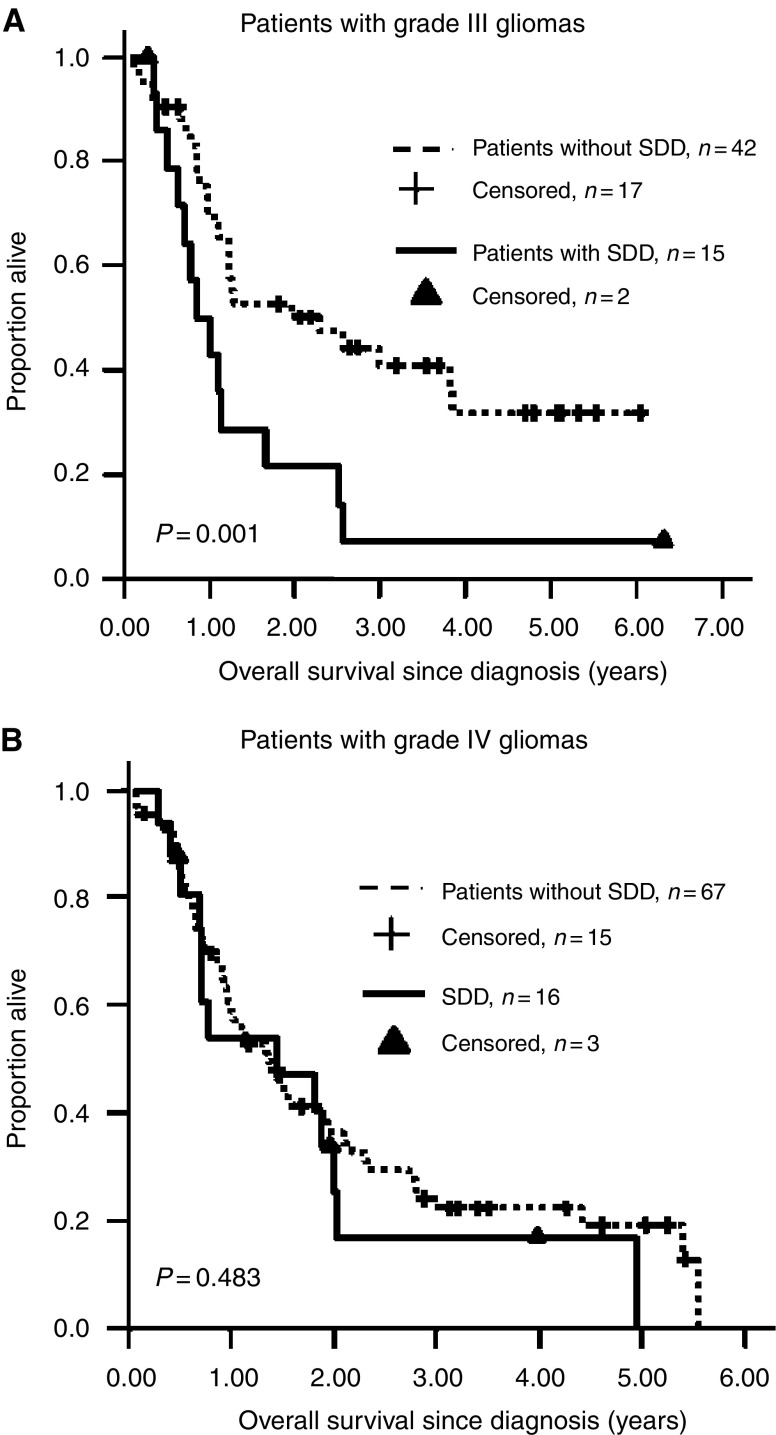
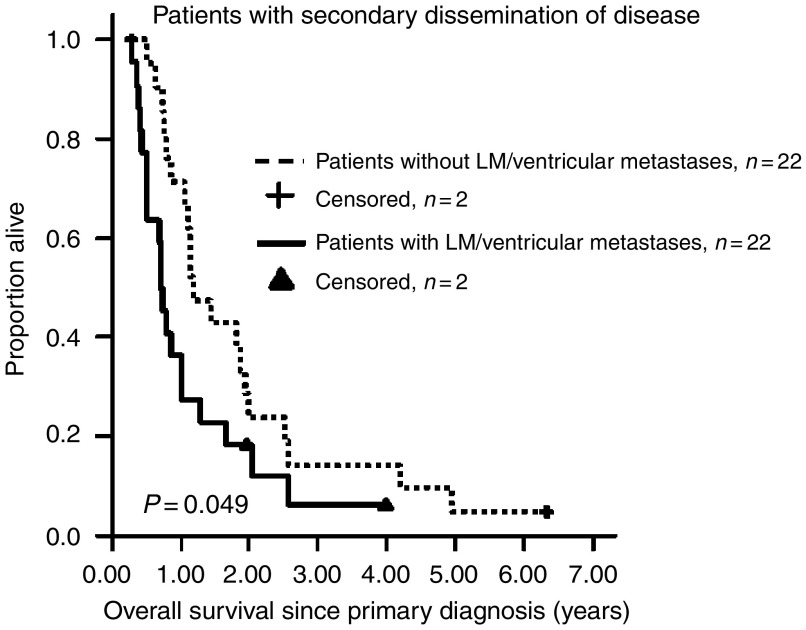
In children, treatment regimen for high-grade gliomas (HGG) and diffuse intrinsic pontine gliomas (DIPG) are generally not stratified according to disease stage. The hypothesis was that secondary disseminating disease (SDD) in children with HGG is related to an even worse outcome. Description of SDD pattern was performed. In total, 270 children with newly diagnosed HGG or DIPG were eligible for retrospective analysis of SDD. Medical and computer records of these patients were reviewed for demographic characteristics, sites of dissemination, prognostic variables. Forty-six (17%) of the 270 patients had developed SDD. The median time to SDD was 8.2 months. The median overall survival (OS) after dissemination was 3.2 months. The SDD was located parenchymal in the supratentorial (34.8%), infratentorial (6.5%), supratentorial and infratentorial (19.6%), spinal (10.9%), spinal and cerebral (6.5%) regions of the CNS, or leptomeningeal (21.7%). For HGG patients, the median OS was shorter among patients with SDD than among patients without SDD (1.02 vs 1.41 years, P=0.0495). In the group of patients with SDD, patients with cerebrospinal fluid dissemination had a worse outcome compared with patients with parenchymal metastases. Summarising, SDD is a negative prognostic factor for patients with HGG outside the pons. Treatment stratification should be considered.
在儿童中,高级别胶质瘤(HGG)和弥漫性脑桥内在胶质瘤(DIPG)的治疗方案通常不会根据疾病阶段进行分层。研究假设是,HGG患儿的继发性播散性疾病(SDD)与更差的预后相关。对SDD模式进行了描述。共有270例新诊断为HGG或DIPG的儿童符合SDD回顾性分析的条件。对这些患者的医疗和计算机记录进行了审查,以了解人口统计学特征、播散部位、预后变量。270例患者中有46例(17%)发生了SDD。发生SDD的中位时间为8.2个月。播散后的中位总生存期(OS)为3.2个月。SDD位于中枢神经系统幕上实质(34.8%)、幕下(6.5%)、幕上和幕下(19.6%)、脊髓(10.9%)、脊髓和脑(6.5%)区域或软脑膜(21.7%)。对于HGG患者,发生SDD的患者中位OS短于未发生SDD的患者(1.02年对1.41年,P=0.0495)。在SDD患者组中,脑脊液播散的患者与实质转移患者相比预后更差。总之,SDD是脑桥外HGG患者的不良预后因素。应考虑治疗分层。