
流感病毒CD8+ T细胞表位的化学修饰可增强其免疫原性,而不考虑免疫显性。
Chemical Modification of Influenza CD8+ T-Cell Epitopes Enhances Their Immunogenicity Regardless of Immunodominance.
作者信息
Rosendahl Huber Sietske K, Luimstra Jolien J, van Beek Josine, Hoppes Rieuwert, Jacobi Ronald H J, Hendriks Marion, Kapteijn Kim, Ouwerkerk Casper, Rodenko Boris, Ovaa Huib, de Jonge Jørgen
机构信息
Centre for Infectious Disease Control (Cib), National Institute for Public Health and the Environment, Bilthoven, the Netherlands.
Division of Cell Biology, Netherlands Cancer Institute, Amsterdam, the Netherlands.
出版信息
PLoS One. 2016 Jun 22;11(6):e0156462. doi: 10.1371/journal.pone.0156462. eCollection 2016.
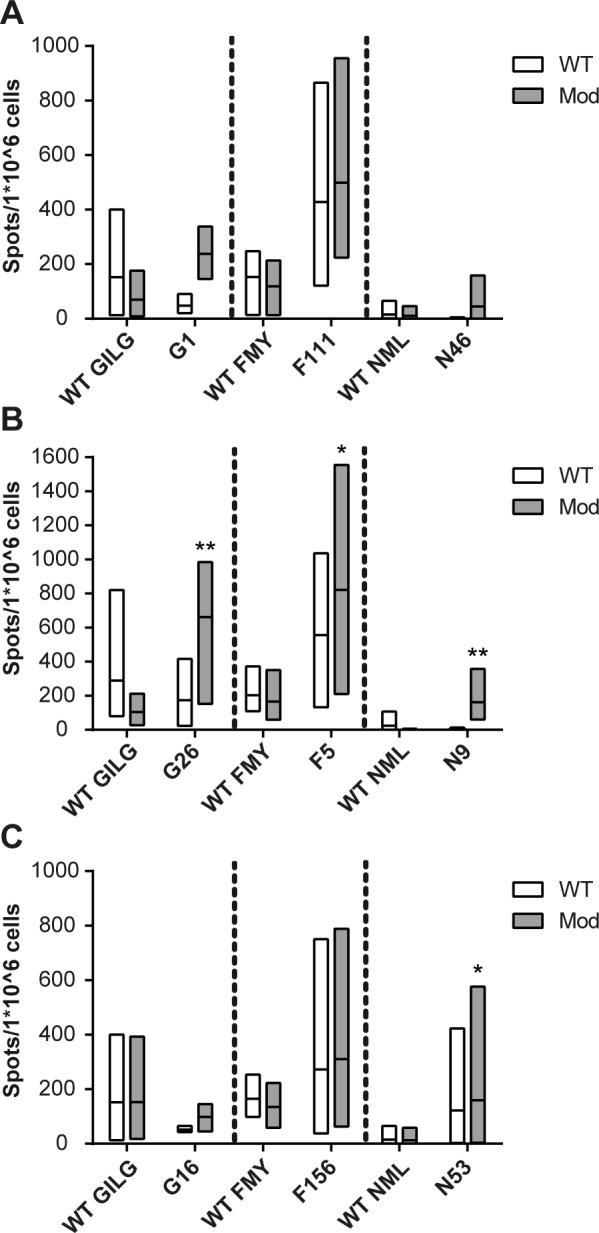
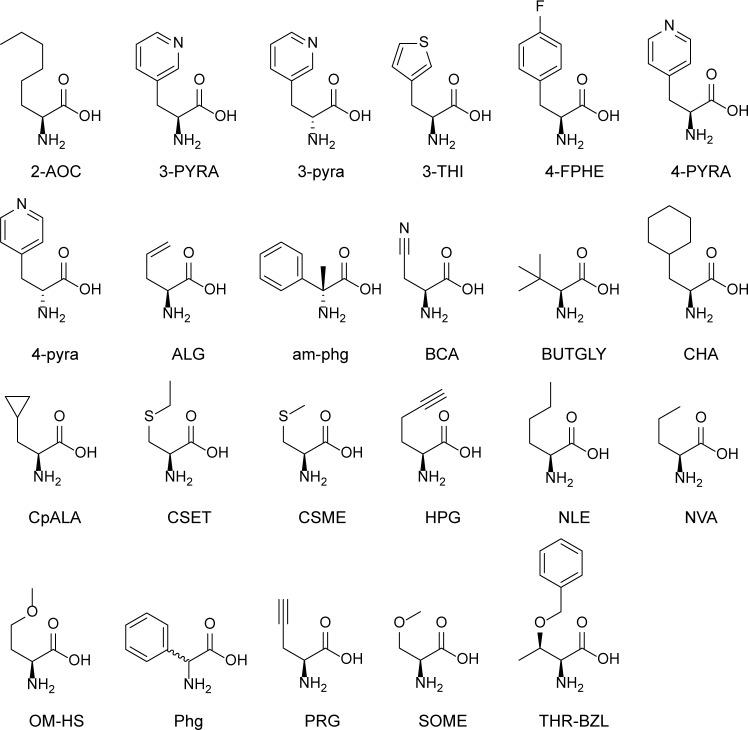
T cells are essential players in the defense against infection. By targeting the MHC class I antigen-presenting pathway with peptide-based vaccines, antigen-specific T cells can be induced. However, low immunogenicity of peptides poses a challenge. Here, we set out to increase immunogenicity of influenza-specific CD8+ T cell epitopes. By substituting amino acids in wild type sequences with non-proteogenic amino acids, affinity for MHC can be increased, which may ultimately enhance cytotoxic CD8+ T cell responses. Since preventive vaccines against viruses should induce a broad immune response, we used this method to optimize influenza-specific epitopes of varying dominance. For this purpose, HLA-A0201 epitopes GILGFVFTL, FMYSDFHFI and NMLSTVLGV were selected in order of decreasing MHC-affinity and dominance. For all epitopes, we designed chemically enhanced altered peptide ligands (CPLs) that exhibited greater binding affinity than their WT counterparts; even binding scores of the high affinity GILGFVFTL epitope could be improved. When HLA-A0201 transgenic mice were vaccinated with selected CPLs, at least 2 out of 4 CPLs of each epitope showed an increase in IFN-γ responses of splenocytes. Moreover, modification of the low affinity epitope NMLSTVLGV led to an increase in the number of mice that responded. By optimizing three additional influenza epitopes specific for HLA-A*0301, we show that this strategy can be extended to other alleles. Thus, enhancing binding affinity of peptides provides a valuable tool to improve the immunogenicity and range of preventive T cell-targeted peptide vaccines.
T细胞是抵御感染的关键参与者。通过基于肽的疫苗靶向MHC I类抗原呈递途径,可以诱导抗原特异性T细胞。然而,肽的低免疫原性构成了一项挑战。在此,我们着手提高流感特异性CD8+ T细胞表位的免疫原性。通过用非蛋白氨基酸取代野生型序列中的氨基酸,可以增加对MHC的亲和力,这最终可能增强细胞毒性CD8+ T细胞反应。由于针对病毒的预防性疫苗应诱导广泛的免疫反应,我们使用这种方法优化了不同优势度的流感特异性表位。为此,按照MHC亲和力和优势度降低的顺序,选择了HLA-A0201表位GILGFVFTL、FMYSDFHFI和NMLSTVLGV。对于所有表位,我们设计了化学增强的改变肽配体(CPL),其表现出比野生型对应物更高的结合亲和力;甚至高亲和力的GILGFVFTL表位的结合分数也能得到改善。当用选定的CPL对HLA-A0201转基因小鼠进行疫苗接种时,每个表位的4种CPL中至少有2种显示脾细胞的IFN-γ反应增加。此外,低亲和力表位NMLSTVLGV的修饰导致有反应的小鼠数量增加。通过优化另外三个针对HLA-A*0301的流感表位,我们表明该策略可以扩展到其他等位基因。因此,提高肽的结合亲和力为改善预防性T细胞靶向肽疫苗的免疫原性和范围提供了一种有价值的工具。


 Zotero 插件