Cao Song, Wendl Michael C, Wyczalkowski Matthew A, Wylie Kristine, Ye Kai, Jayasinghe Reyka, Xie Mingchao, Wu Song, Niu Beifang, Grubb Robert, Johnson Kimberly J, Gay Hiram, Chen Ken, Rader Janet S, Dipersio John F, Chen Feng, Ding Li
McDonnell Genome Institute, Washington University, St. Louis, Missouri 63108, USA.
Department of Genetics, Washington University, St. Louis, Missouri 63108, USA.
Sci Rep. 2016 Jun 24;6:28294. doi: 10.1038/srep28294.
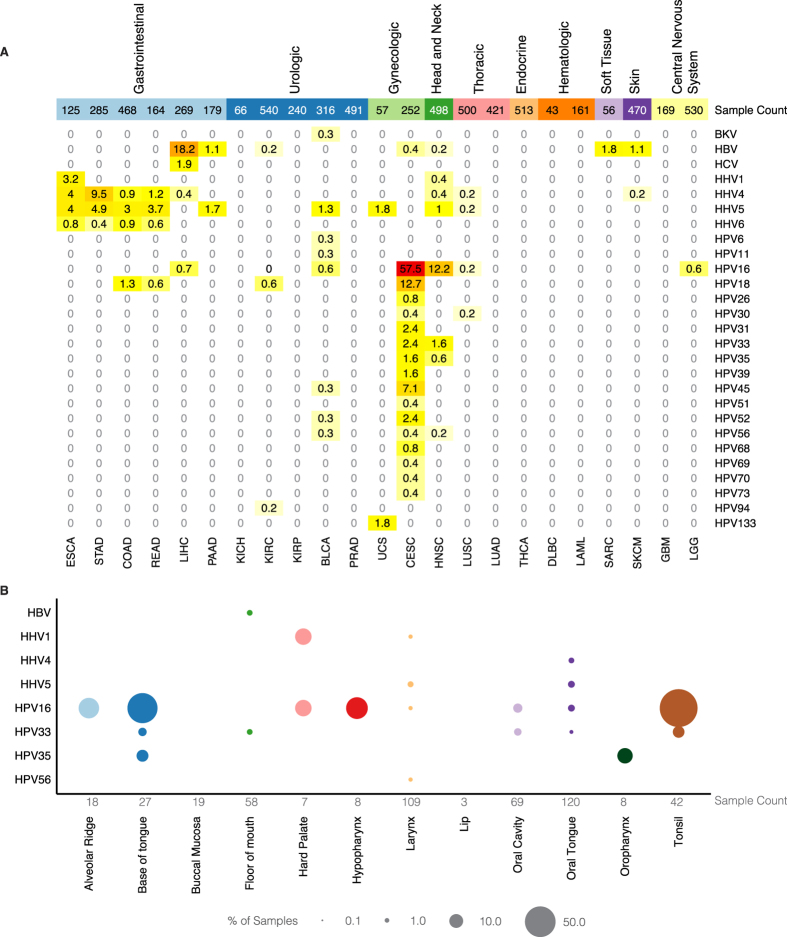
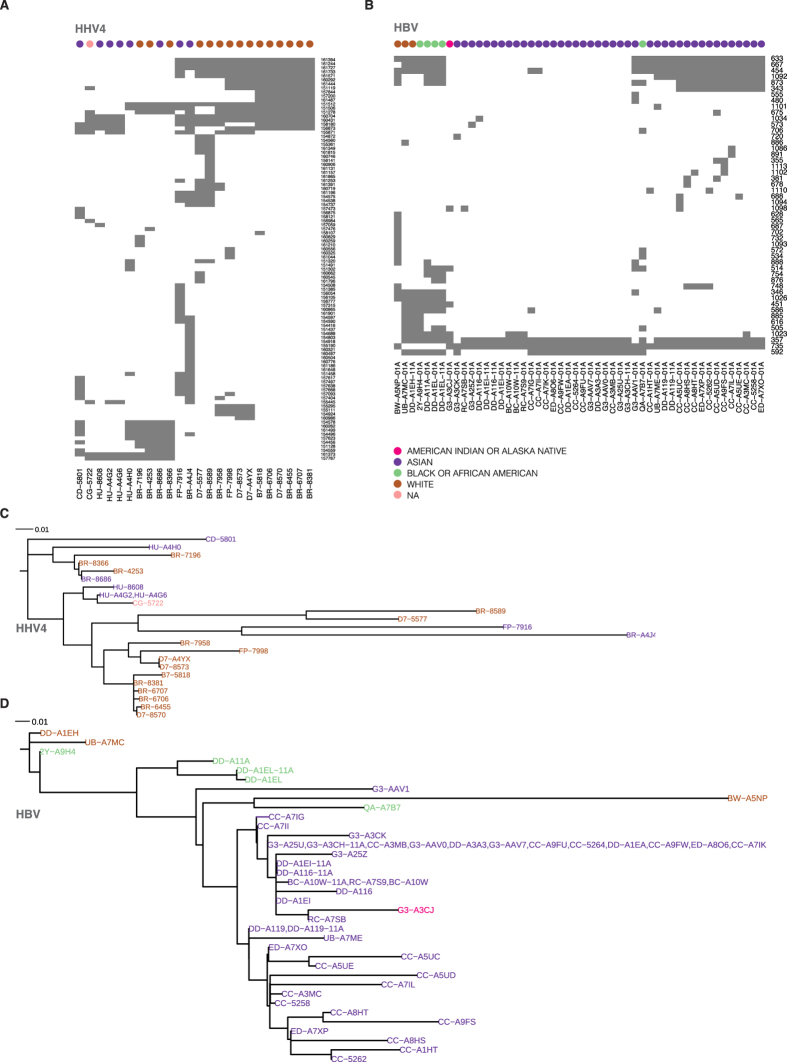
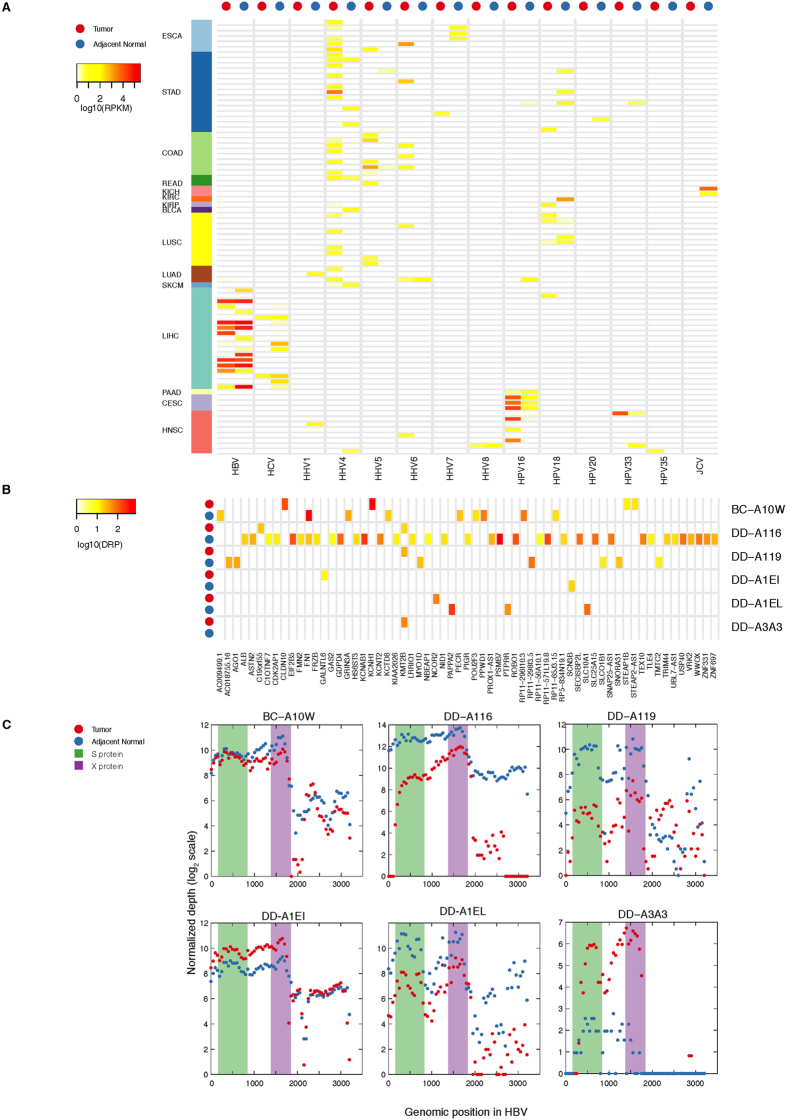
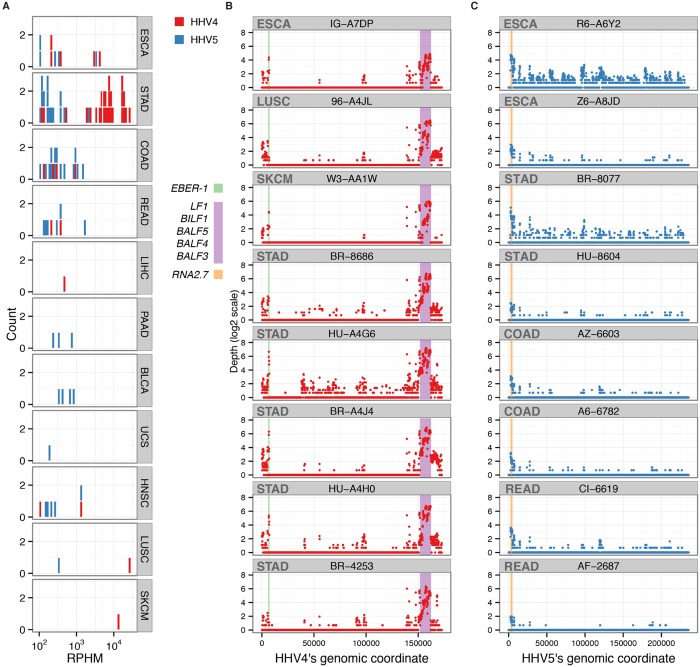
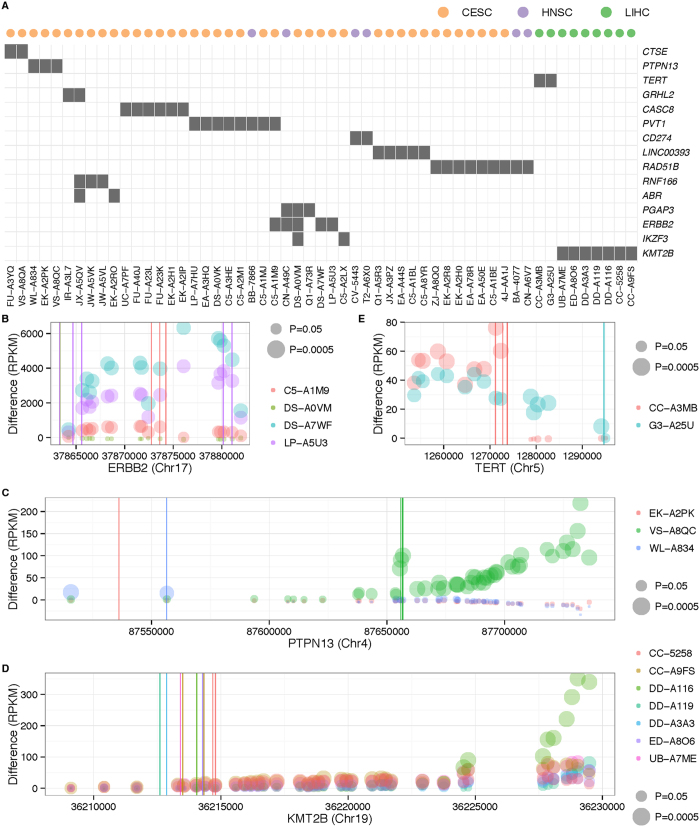
We applied a newly developed bioinformatics system called VirusScan to investigate the viral basis of 6,813 human tumors and 559 adjacent normal samples across 23 cancer types and identified 505 virus positive samples with distinctive, organ system- and cancer type-specific distributions. We found that herpes viruses (e.g., subtypes HHV4, HHV5, and HHV6) that are highly prevalent across cancers of the digestive tract showed significantly higher abundances in tumor versus adjacent normal samples, supporting their association with these cancers. We also found three HPV16-positive samples in brain lower grade glioma (LGG). Further, recurrent HBV integration at the KMT2B locus is present in three liver tumors, but absent in their matched adjacent normal samples, indicating that viral integration induced host driver genetic alterations are required on top of viral oncogene expression for initiation and progression of liver hepatocellular carcinoma. Notably, viral integrations were found in many genes, including novel recurrent HPV integrations at PTPN13 in cervical cancer. Finally, we observed a set of HHV4 and HBV variants strongly associated with ethnic groups, likely due to viral sequence evolution under environmental influences. These findings provide important new insights into viral roles of tumor initiation and progression and potential new therapeutic targets.
我们应用了一种新开发的名为VirusScan的生物信息学系统,来研究23种癌症类型中6813例人类肿瘤和559例相邻正常样本的病毒基础,并鉴定出505个病毒阳性样本,这些样本具有独特的、器官系统和癌症类型特异性分布。我们发现,在消化道癌症中高度普遍的疱疹病毒(如HHV4、HHV5和HHV6亚型)在肿瘤样本中的丰度显著高于相邻正常样本,这支持了它们与这些癌症的关联。我们还在脑低级别胶质瘤(LGG)中发现了3个HPV16阳性样本。此外,在3例肝肿瘤中存在KMT2B基因座处的复发性HBV整合,但在其匹配的相邻正常样本中不存在,这表明病毒整合诱导的宿主驱动基因改变是肝肝细胞癌发生和进展除病毒癌基因表达之外所必需的。值得注意的是,在许多基因中发现了病毒整合,包括宫颈癌中PTPN13处新的复发性HPV整合。最后,我们观察到一组与种族群体密切相关的HHV4和HBV变体,这可能是由于环境影响下的病毒序列进化所致。这些发现为肿瘤发生和进展中的病毒作用以及潜在的新治疗靶点提供了重要的新见解。