Otero-Losada Matilde, Gómez Llambí Hernán, Ottaviano Graciela, Cao Gabriel, Müller Angélica, Azzato Francisco, Ambrosio Giuseppe, Milei José
Institute of Cardiological Research, University of Buenos Aires, National Research Council (ININCA, UBA, CONICET), 1122 Buenos Aires, Argentina.
University of Perugia School of Medicine, 06132 Perugia, Italy.
Mediators Inflamm. 2016;2016:5613056. doi: 10.1155/2016/5613056. Epub 2016 May 31.
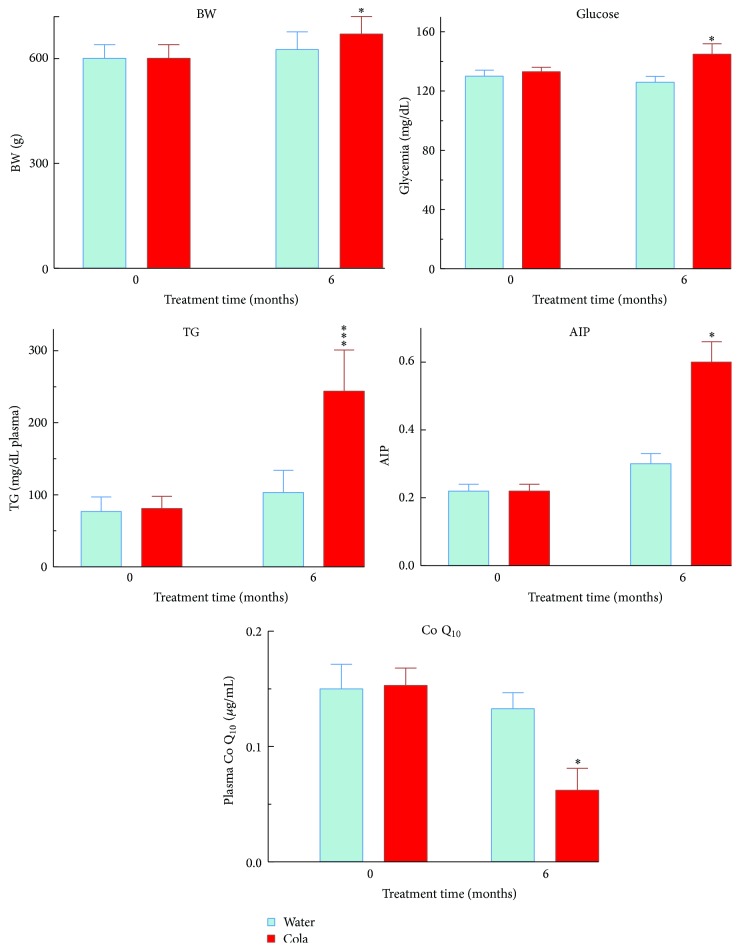
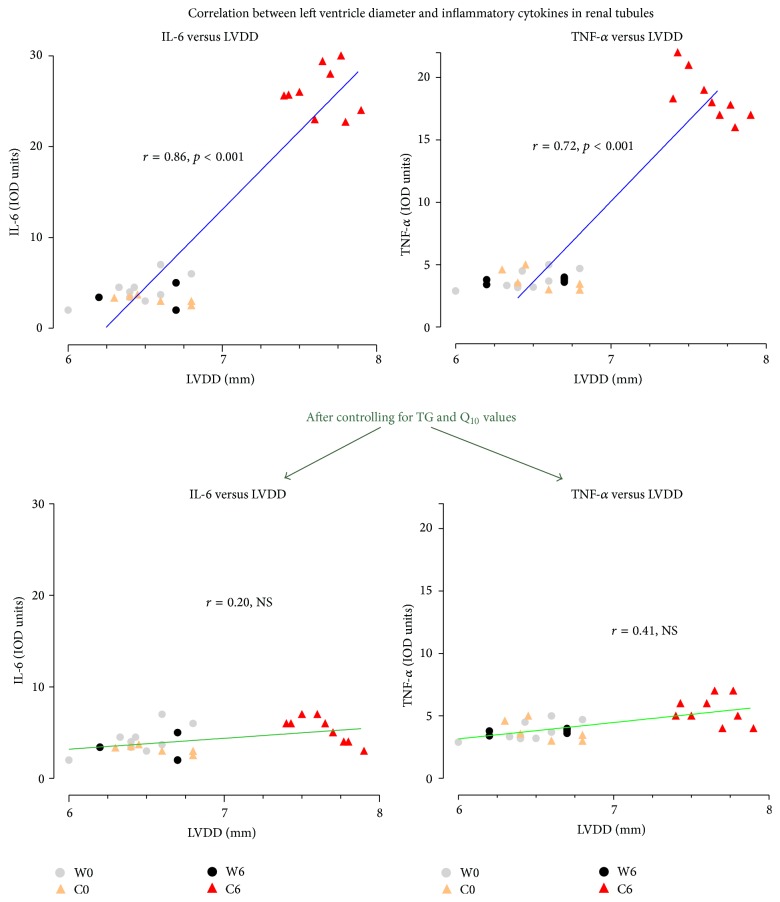
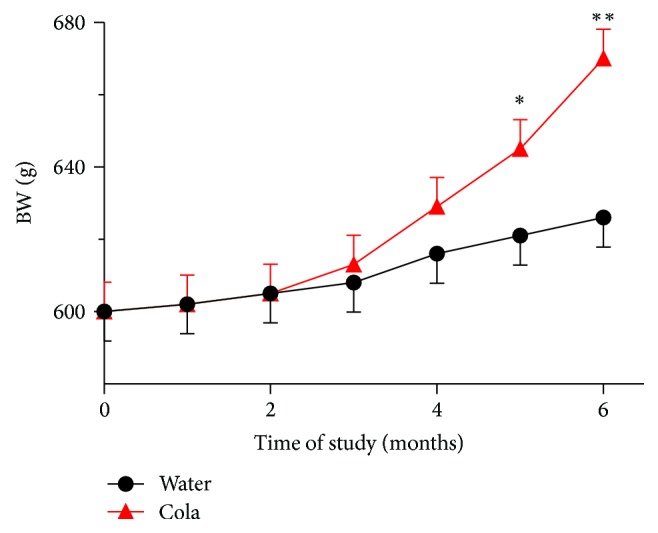
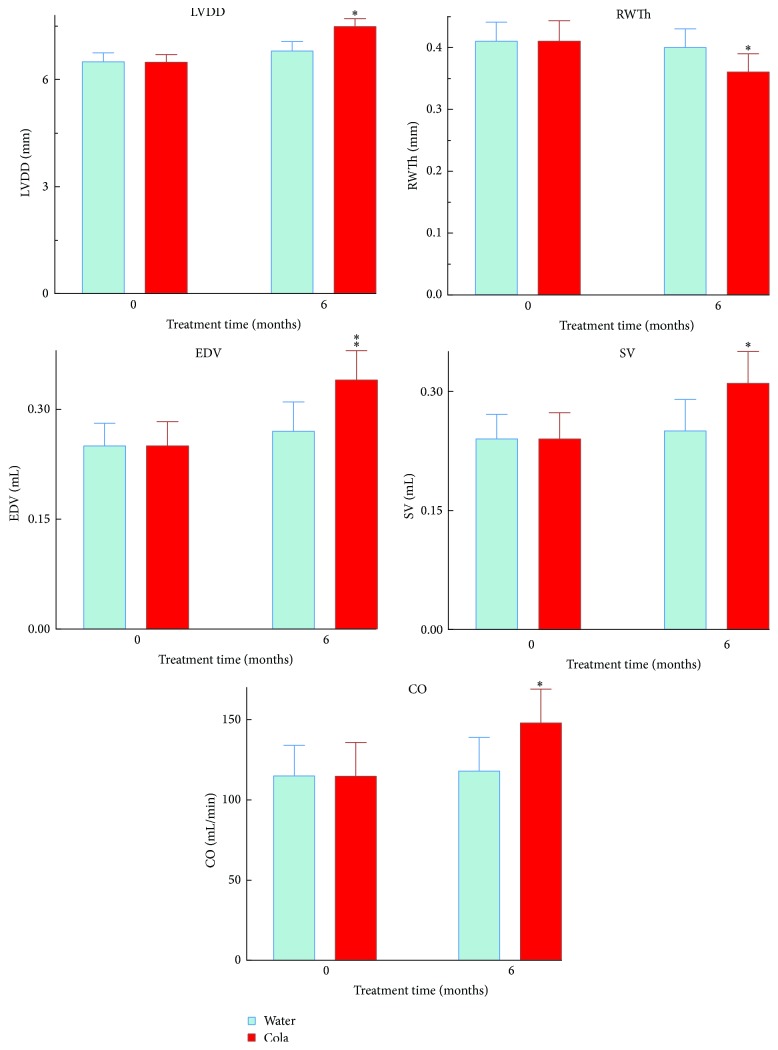
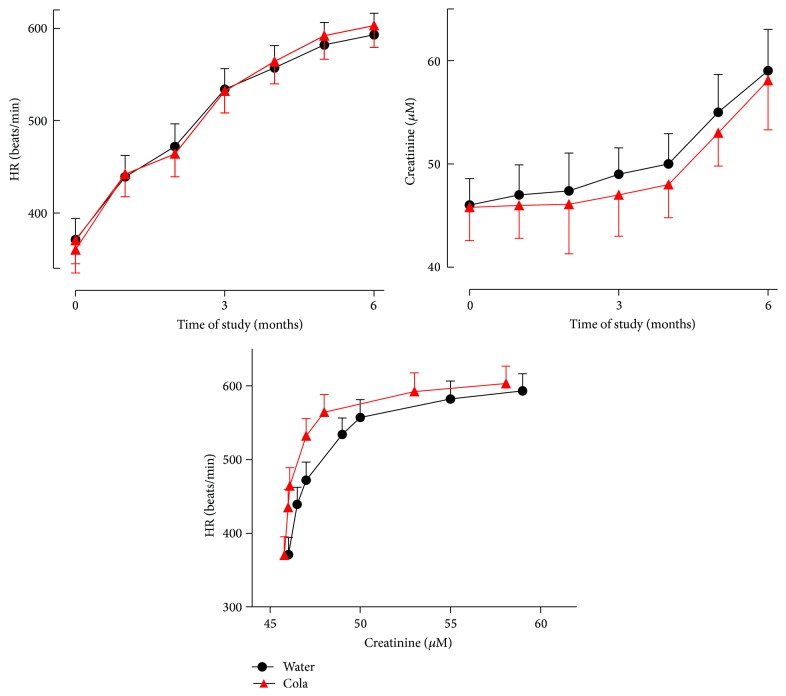
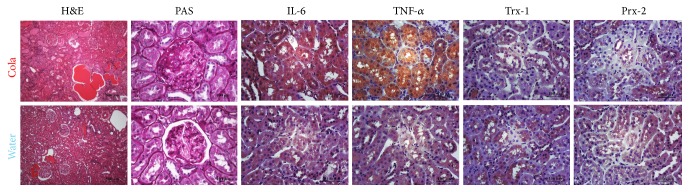
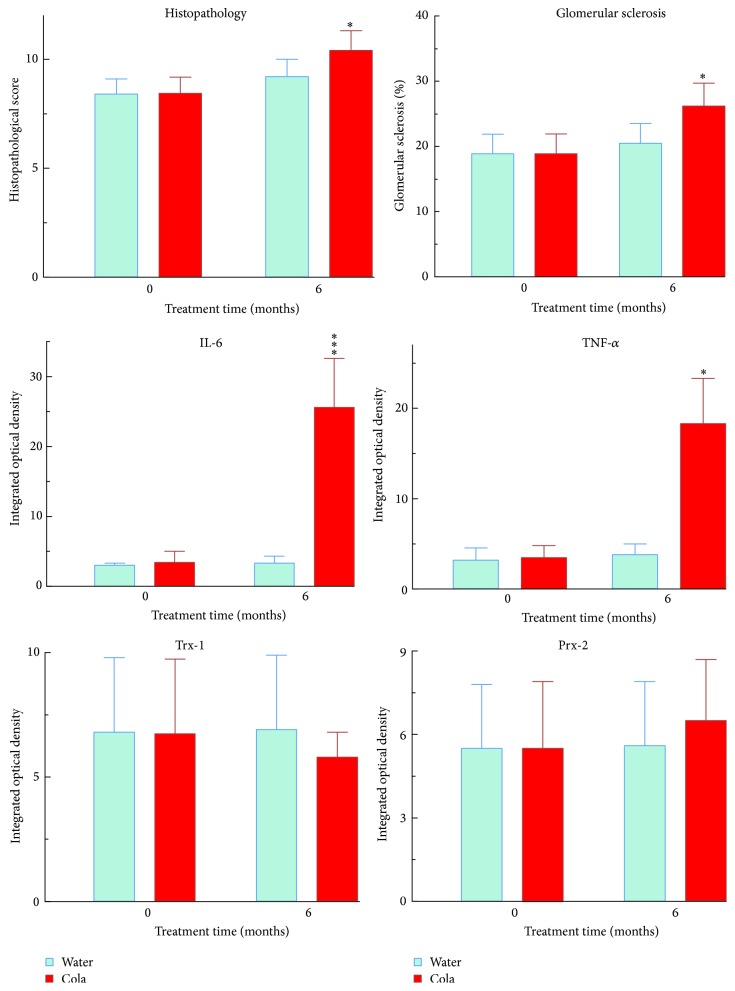
We report experimental evidence confirming renal histopathology, proinflammatory mediators, and oxidative metabolism induced by cola drinking. Male Wistar rats drank ad libitum regular cola (C, n = 12) or tap water (W, n = 12). Measures. Body weight, nutritional data, plasma glucose, cholesterol fractions, TG, urea, creatinine, coenzyme Q10, SBP, and echocardiograms (0 mo and 6 mo). At 6 months euthanasia was performed. Kidneys were processed for histopathology and immunohistochemistry (semiquantitative). Compared with W, C rats showed (I) overweight (+8%, p < 0.05), hyperglycemia (+11%, p < 0.05), hypertriglyceridemia (2-fold, p < 0.001), higher AIP (2-fold, p < 0.01), and lower Q10 level (-55%, p < 0.05); (II) increased LV diastolic diameter (+9%, p < 0.05) and volume (systolic +24%, p < 0.05), posterior wall thinning (-8%, p < 0.05), and larger cardiac output (+24%, p < 0.05); (III) glomerulosclerosis (+21%, p < 0.05), histopathology (+13%, p < 0.05), higher tubular expression of IL-6 (7-fold, p < 0.001), and TNFα (4-fold, p < 0.001). (IV) Correlations were found for LV dimensions with IL-6 (74%, p < 0.001) and TNFα (52%, p < 0.001) and fully abolished after TG and Q10 control. Chronic cola drinking induced cardiac remodeling associated with increase in proinflammatory cytokines and renal damage. Hypertriglyceridemia and oxidative stress were key factors. Hypertriglyceridemic lipotoxicity in the context of defective antioxidant/anti-inflammatory protection due to low Q10 level might play a key role in cardiorenal disorder induced by chronic cola drinking in rats.
我们报告了实验证据,证实饮用可乐会引发肾脏组织病理学变化、促炎介质以及氧化代谢。雄性Wistar大鼠随意饮用常规可乐(C组,n = 12)或自来水(W组,n = 12)。测量指标包括:体重、营养数据、血浆葡萄糖、胆固醇组分、甘油三酯(TG)、尿素、肌酐、辅酶Q10、收缩压(SBP)以及超声心动图(0个月和6个月时)。在6个月时实施安乐死。对肾脏进行组织病理学和免疫组织化学处理(半定量)。与W组相比,C组大鼠表现出:(I)超重(+8%,p < 0.05)、高血糖(+11%,p < 0.05)、高甘油三酯血症(2倍,p < 0.001)、动脉粥样硬化指数(AIP)升高(2倍,p < 0.01)以及辅酶Q10水平降低(-55%,p < 0.05);(II)左心室舒张直径增加(+9%,p < 0.05)和容积增加(收缩期+24%,p < 0.05)、后壁变薄(-8%,p < 0.05)以及心输出量增大(+24%,p < 0.05);(III)肾小球硬化(+21%,p < 0.05)、组织病理学改变(+13%,p < 0.05)、白细胞介素-6(IL-6)的肾小管表达升高(7倍,p < 0.001)以及肿瘤坏死因子α(TNFα)升高(4倍,p < 0.001)。(IV)发现左心室尺寸与IL-6(74%,p < 0.001)和TNFα(52%,p < 0.001)存在相关性,在控制TG和辅酶Q10后这种相关性完全消除。长期饮用可乐会引发心脏重塑,伴有促炎细胞因子增加和肾脏损伤。高甘油三酯血症和氧化应激是关键因素。在由于辅酶Q10水平低导致抗氧化/抗炎保护存在缺陷的情况下,高甘油三酯血症性脂毒性可能在大鼠长期饮用可乐所致的心肾疾病中起关键作用。