Takeda Katsuyuki, Miyahara Nobuaki, Matsubara Shigeki, Taube Christian, Kitamura Kenichi, Hirano Astushi, Tanimoto Mitsune, Gelfand Erwin W
Division of Cell Biology, Department of Pediatrics, National Jewish Health, Denver, CO 80206, U.S.A.
Department of Hematology, Oncology, Allergy and Respiratory Medicine, Okayama University Graduate School of Medicine, Dentistry, and Pharmaceutical Sciences, Okayama 700-8558, Japan.
Immune Netw. 2016 Jun;16(3):165-75. doi: 10.4110/in.2016.16.3.165. Epub 2016 Jun 17.
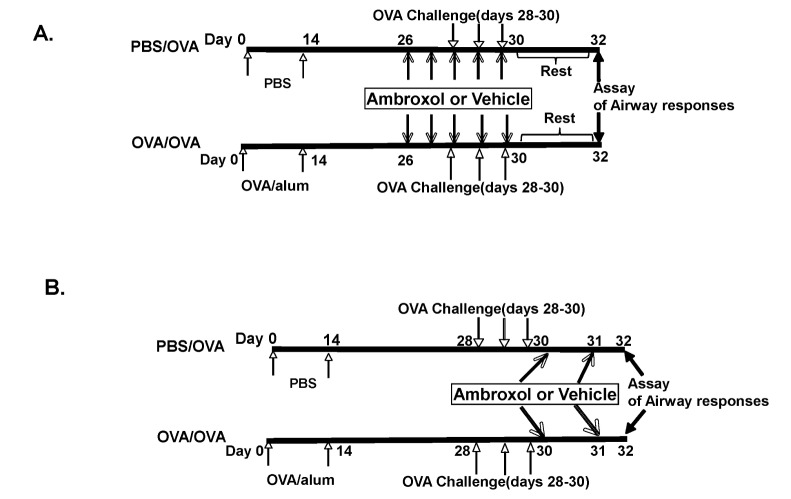
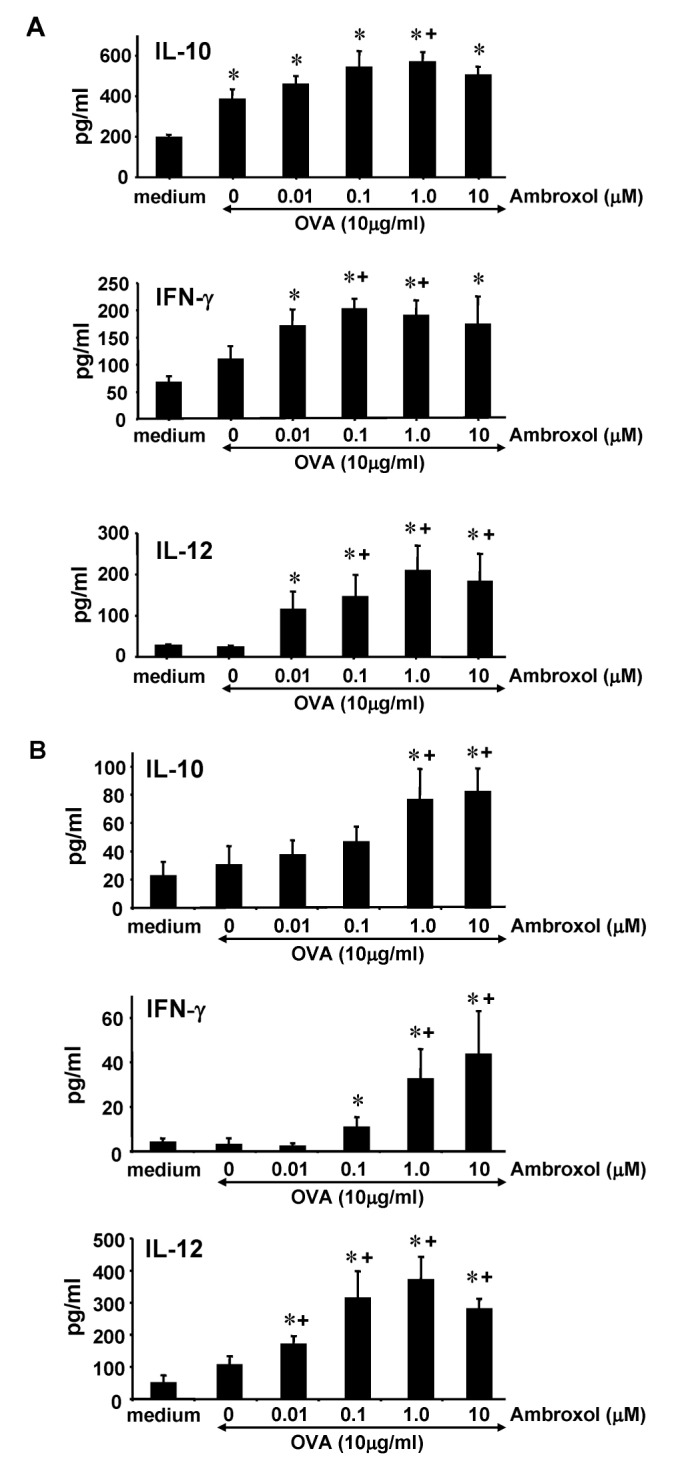
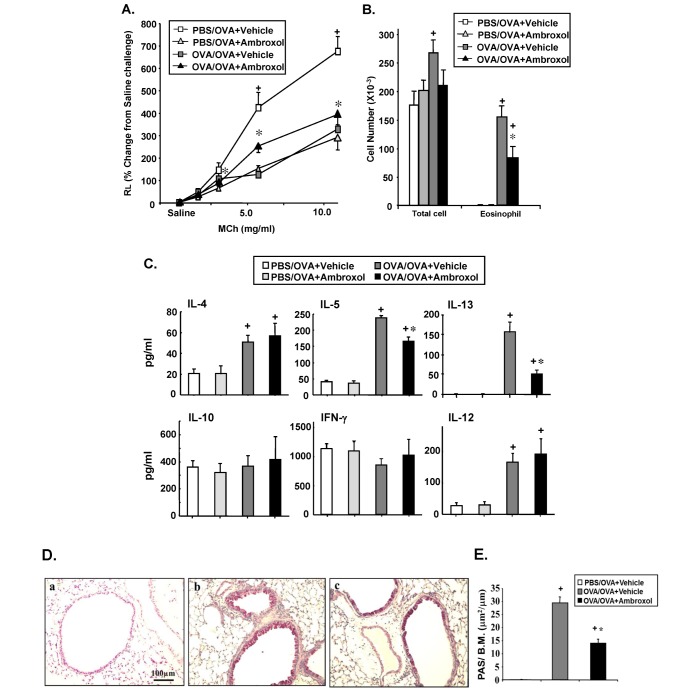
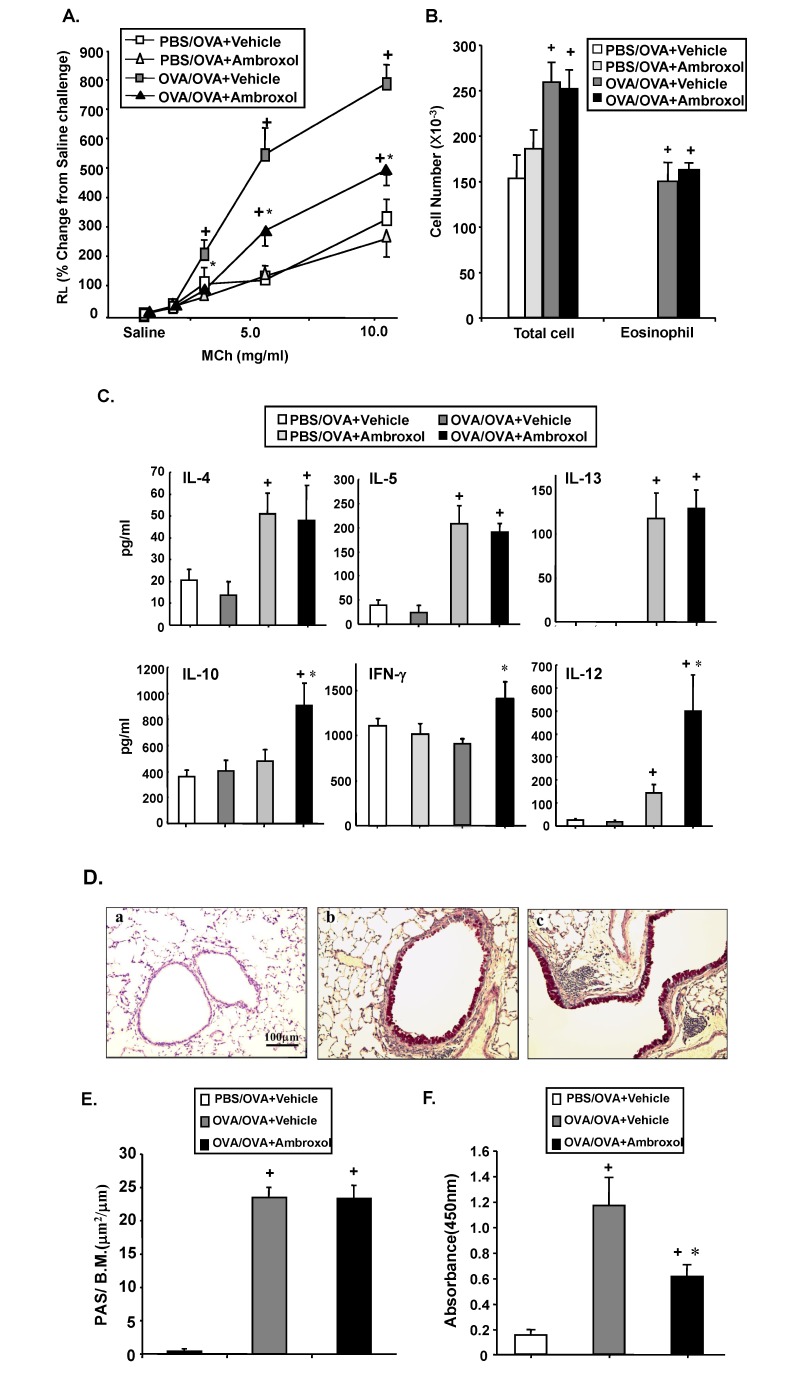
Ambroxol is used in COPD and asthma to increase mucociliary clearance and regulate surfactant levels, perhaps through anti-oxidant and anti-inflammatory activities. To determine the role and effect of ambroxol in an experimental model of asthma, BALB/c mice were sensitized to ovalbumin (OVA) followed by 3 days of challenge. Airway hyperresponsiveness (AHR), lung cell composition and histology, and cytokine and protein carbonyl levels in bronchoalveolar lavage (BAL) fluid were determined. Ambroxol was administered either before the first OVA challenge or was begun after the last allergen challenge. Cytokine production levels from lung mononuclear cells (Lung MNCs) or alveolar macrophages (AM) were also determined. Administration of ambroxol prior to challenge suppressed AHR, airway eosinophilia, goblet cell metaplasia, and reduced inflammation in subepithelial regions. When given after challenge, AHR was suppressed but without effects on eosinophil numbers. Levels of IL-5 and IL-13 in BAL fluid were decreased when the drug was given prior to challenge; when given after challenge, increased levels of IL-10 and IL-12 were detected. Decreased levels of protein carbonyls were detected in BAL fluid following ambroxol treatment after challenge. In vitro, ambroxol increased levels of IL-10, IFN-γ, and IL-12 from Lung MNCs and AM, whereas IL-4, IL-5, and IL-13 production was not altered. Taken together, ambroxol was effective in preventing AHR and airway inflammation through upregulation of Th1 cytokines and protection from oxidative stress in the airways.
氨溴索用于慢性阻塞性肺疾病(COPD)和哮喘,以增加黏液纤毛清除功能并调节表面活性物质水平,这可能是通过其抗氧化和抗炎活性实现的。为了确定氨溴索在哮喘实验模型中的作用和效果,将BALB/c小鼠用卵清蛋白(OVA)致敏,随后进行3天的激发。测定气道高反应性(AHR)、肺细胞组成和组织学,以及支气管肺泡灌洗(BAL)液中的细胞因子和蛋白质羰基水平。氨溴索在首次OVA激发前给药,或在最后一次过敏原激发后开始给药。还测定了肺单核细胞(Lung MNCs)或肺泡巨噬细胞(AM)产生的细胞因子水平。激发前给予氨溴索可抑制AHR、气道嗜酸性粒细胞增多、杯状细胞化生,并减轻上皮下区域的炎症。激发后给药时,AHR受到抑制,但对嗜酸性粒细胞数量无影响。激发前给药时,BAL液中IL-5和IL-13水平降低;激发后给药时,检测到IL-10和IL-12水平升高。激发后氨溴索治疗后,BAL液中蛋白质羰基水平降低。在体外,氨溴索可增加Lung MNCs和AM产生的IL-10、IFN-γ和IL-12水平,而IL-4、IL-5和IL-13的产生未改变。综上所述,氨溴索通过上调Th1细胞因子和保护气道免受氧化应激,有效预防了AHR和气道炎症。