Zheng Wenxin, Skowron Kinga B, Namm Jukes P, Burnette Byron, Fernandez Christian, Arina Ainhoa, Liang Hua, Spiotto Michael T, Posner Mitchell C, Fu Yang-Xin, Weichselbaum Ralph R
Department of Radiation and Cellular Oncology, University of Chicago, Chicago, IL, USA.
The Ludwig Center for Metastasis Research, University of Chicago, Chicago, IL, USA.
Oncotarget. 2016 Jul 12;7(28):43039-43051. doi: 10.18632/oncotarget.9915.
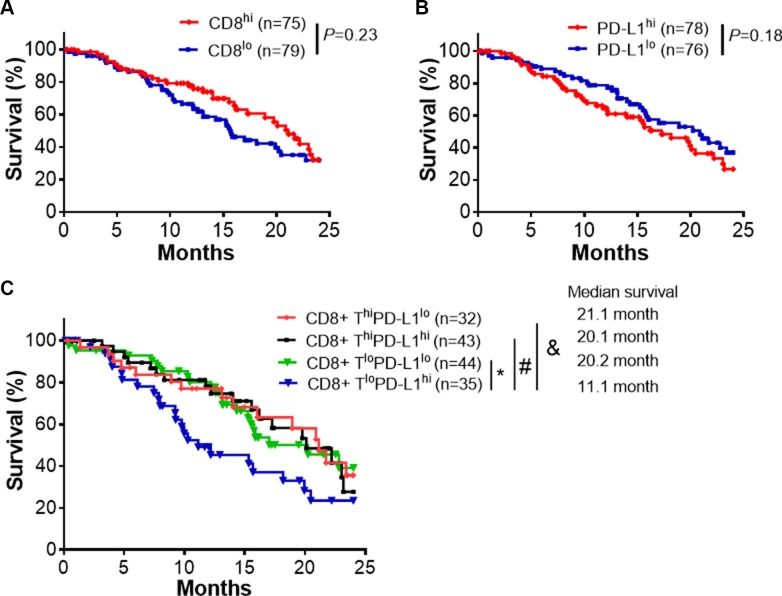
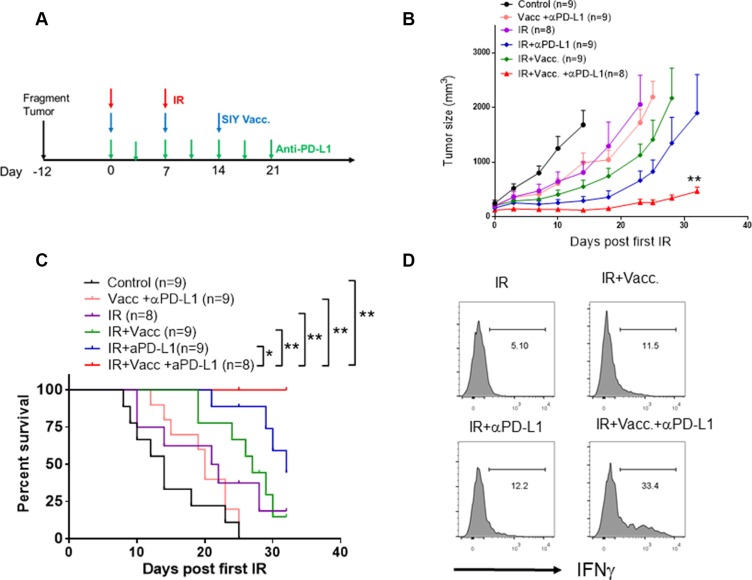
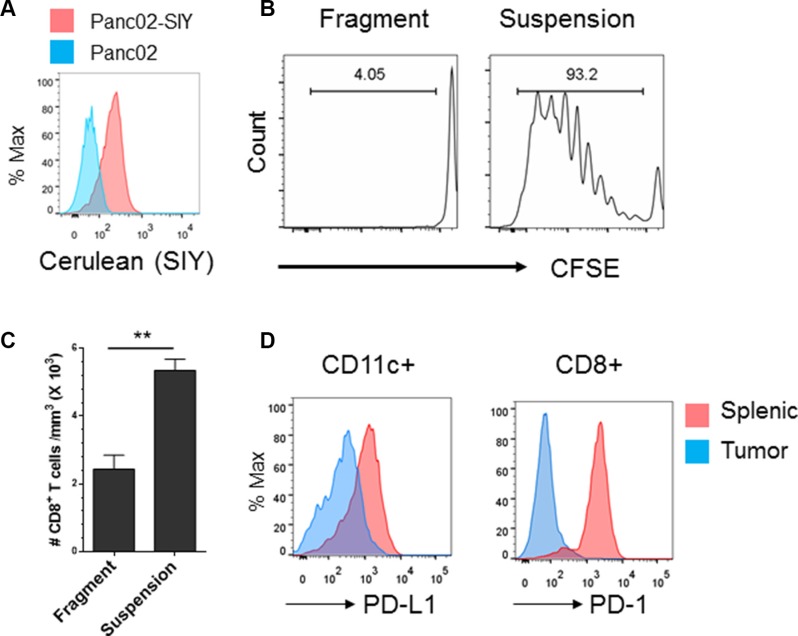
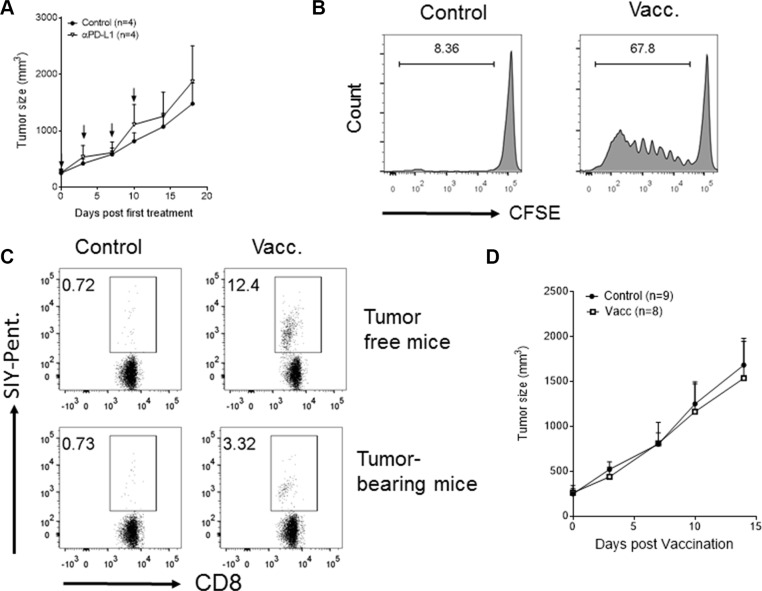
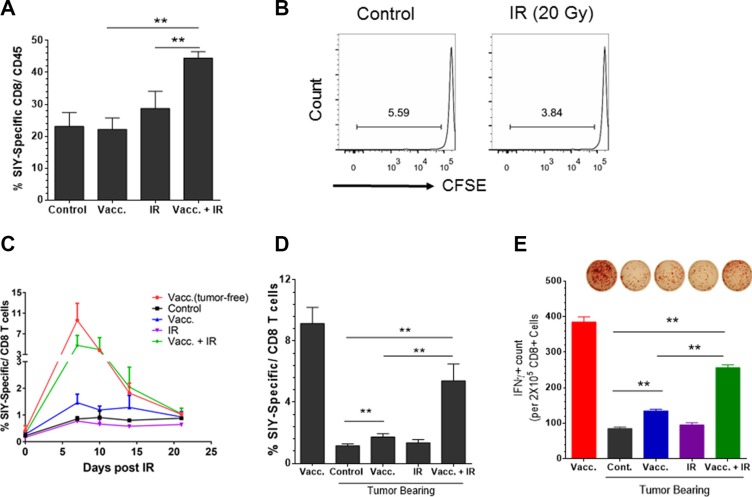
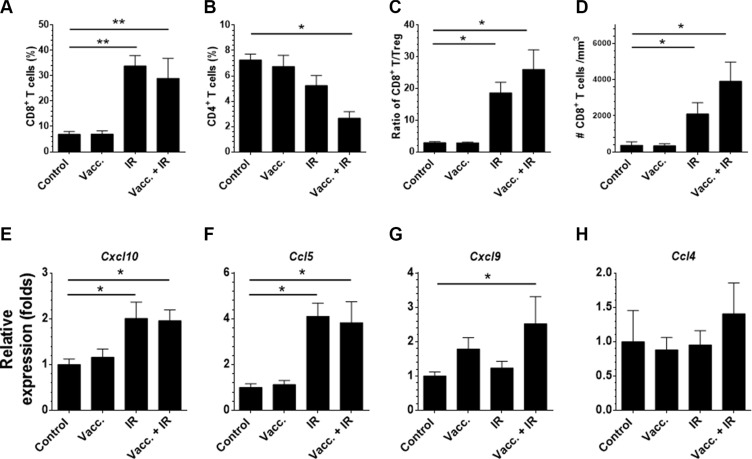
The majority of cancer patients respond poorly to either vaccine or checkpoint blockade, and even to the combination of both. They are often resistant to high doses of radiation therapy as well. We examined prognostic markers of immune cell infiltration in pancreatic cancer. Patients with low CD8+ T cell infiltration and high PD-L1 expression (CD8+ TloPD-L1hi) experienced poor outcomes. We developed a mouse tumor fragment model with a trackable model antigen (SIYRYYGL or SIY) to mimic CD8+ TloPD-L1hi cancers. Tumors arising from fragments contained few T cells, even after vaccination. Fragment tumors responded poorly to PD-L1 blockade, SIY vaccination or radiation individually. By contrast, local ionizing radiation coupled with vaccination increased CD8+ T cell infiltration that was associated with upregulation of CXCL10 and CCL5 chemokines in the tumor, but demonstrated modest inhibition of tumor growth. The addition of an anti-PD-L1 antibody enhanced the effector function of tumor-infiltrating T cells, leading to significantly improved tumor regression and increased survival compared to vaccination and radiation. These results indicate that sequential combination of radiation, vaccination and checkpoint blockade converts non-T cell-inflamed cancers to T cell-inflamed cancers, and mediates regression of established pancreatic tumors with an initial CD8+ TloPD-L1hi phenotype. This study has opened a new strategy for shifting "cold" to hot tumors that will respond to immunotherapy.
大多数癌症患者对疫苗或免疫检查点阻断治疗反应不佳,甚至对两者联合治疗也反应欠佳。他们通常对高剂量放射治疗也有抗性。我们研究了胰腺癌中免疫细胞浸润的预后标志物。CD8 + T细胞浸润低且PD-L1表达高(CD8 + TloPD-L1hi)的患者预后较差。我们开发了一种带有可追踪模型抗原(SIYRYYGL或SIY)的小鼠肿瘤片段模型,以模拟CD8 + TloPD-L1hi癌症。即使接种疫苗后,由肿瘤片段产生的肿瘤中T细胞也很少。片段肿瘤对PD-L1阻断、SIY疫苗接种或单独放疗反应不佳。相比之下,局部电离辐射与疫苗接种相结合可增加CD8 + T细胞浸润,这与肿瘤中CXCL10和CCL5趋化因子的上调有关,但对肿瘤生长的抑制作用较小。添加抗PD-L1抗体可增强肿瘤浸润T细胞的效应功能,与疫苗接种和放疗相比,可显著改善肿瘤消退并延长生存期。这些结果表明,放疗、疫苗接种和免疫检查点阻断的序贯联合可将非T细胞浸润性癌症转变为T细胞浸润性癌症,并介导具有初始CD8 + TloPD-L1hi表型的已建立胰腺肿瘤的消退。这项研究为将“冷”肿瘤转变为对免疫疗法有反应的“热”肿瘤开辟了一种新策略。