Xie Xitao, Yi Zhengping, Sinha Sandeep, Madan Meenu, Bowen Benjamin P, Langlais Paul, Ma Danjun, Mandarino Lawrence, Meyer Christian
Center for Metabolic Biology, Arizona State University, Tempe, Arizona, USA.
Department of Pharmaceutical Sciences, Eugene Applebaum College of Pharmacy/Health Sciences, Wayne State University, Detroit, Michigan, USA.
Obesity (Silver Spring). 2016 Jul;24(7):1506-14. doi: 10.1002/oby.21528.
To provide a more global view of adipocyte changes in human insulin resistance by proteomics analyses.
Baseline biopsies of abdominal subcutaneous adipose tissue were obtained from 23 subjects without diabetes. Euglycemic clamps were used to divide subjects into an insulin-resistant group (IR, N = 10) and an insulin-sensitive (IS, N = 13) group, which were of similar age and gender but unequal adiposity (greater in IR). Proteins of isolated adipocytes were quantified by mass spectrometry using normalized spectral abundance factors.
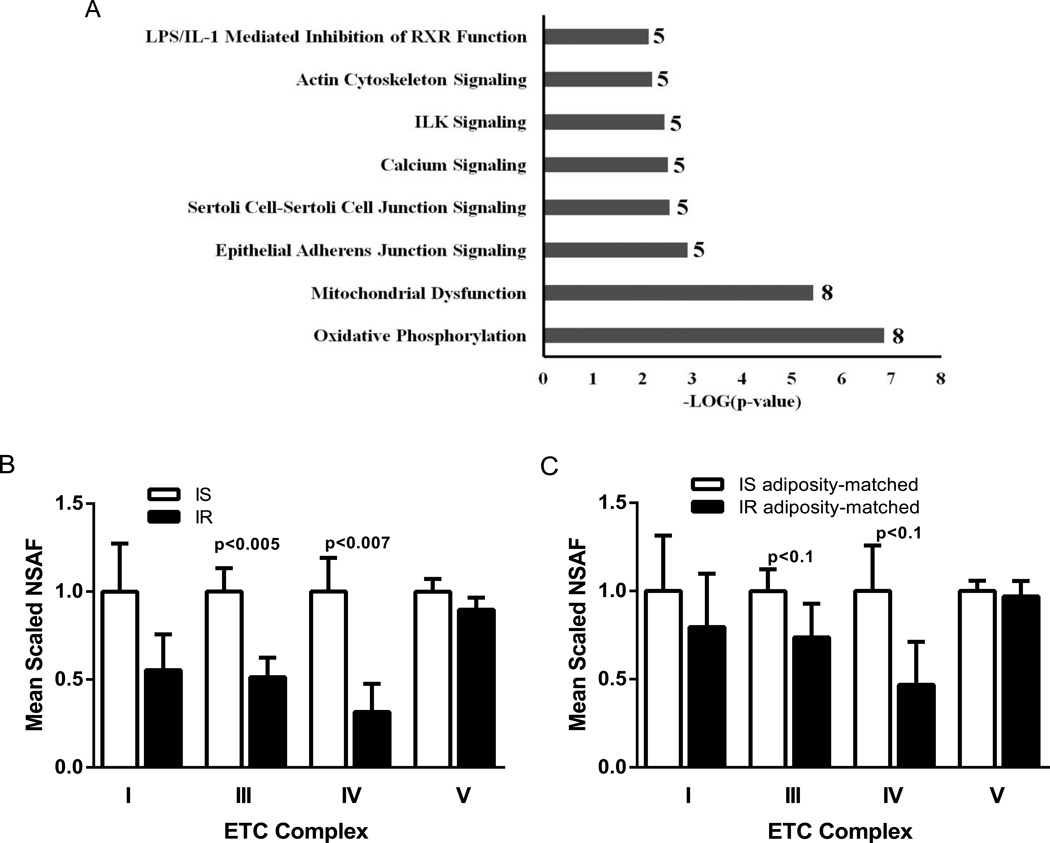
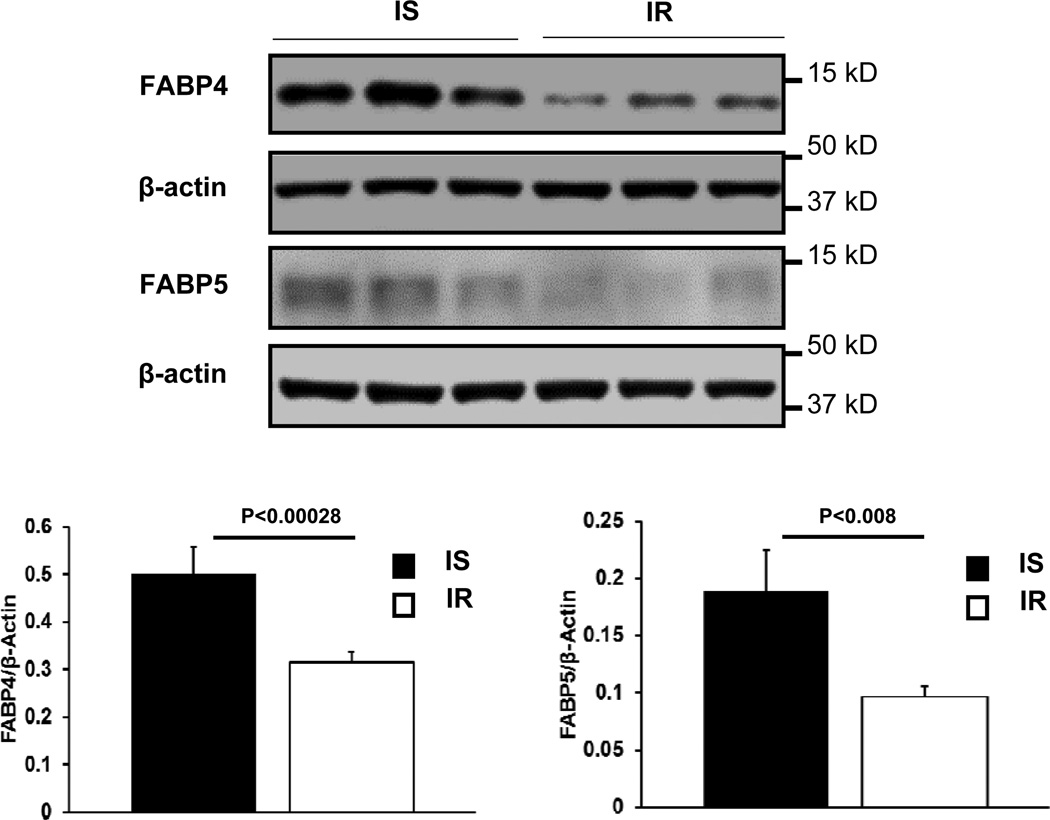
Of 1,245 proteins assigned, 30 were detected in at least 12 of the 23 subjects that differed significantly in abundance ≥1.5-fold between IR and IS. IR displayed a pattern of increased cytoskeletal proteins and decreased mitochondrial proteins and FABP4 and FABP5. In subgroup analyses of adiposity-matched subjects, several of these changes were less pronounced in IR, but the abundance of proteins related to lipid metabolism and the unfolded/misfolded protein response were significantly and unfavorably altered.
These results confirm lower abundance of mitochondrial proteins and suggest increased cytoskeletal proteins and decreased FABP4 and FABP5 in subcutaneous adipocytes of typical IR individuals. Changes in proteins related to lipid metabolism and the unfolded/misfolded protein may discriminate IR and IS individuals of equal adiposity.
通过蛋白质组学分析更全面地了解人类胰岛素抵抗中脂肪细胞的变化。
从23名无糖尿病受试者获取腹部皮下脂肪组织的基线活检样本。采用正常血糖钳夹技术将受试者分为胰岛素抵抗组(IR,N = 10)和胰岛素敏感组(IS,N = 13),两组年龄和性别相似,但肥胖程度不同(IR组更高)。使用标准化光谱丰度因子通过质谱法定量分离脂肪细胞中的蛋白质。
在指定的1245种蛋白质中,在23名受试者中的至少12名中检测到30种蛋白质,这些蛋白质在IR组和IS组之间的丰度差异显著≥1.5倍。IR组显示细胞骨架蛋白增加、线粒体蛋白以及FABP4和FABP5减少的模式。在肥胖匹配受试者的亚组分析中,其中一些变化在IR组中不太明显,但与脂质代谢和未折叠/错误折叠蛋白反应相关的蛋白质丰度发生了显著且不利的改变。
这些结果证实了线粒体蛋白丰度较低,并表明典型IR个体的皮下脂肪细胞中细胞骨架蛋白增加,FABP4和FABP5减少。与脂质代谢和未折叠/错误折叠蛋白相关的蛋白质变化可能区分肥胖程度相同的IR组和IS组个体。