Han Hyun Ho, Kim Baek Gil, Lee Joo Hyun, Kang Suki, Kim Ji Eun, Cho Nam Hoon
Brain Korea 21 Plus Project for Medical ScienceYonsei University College of Medicine, Seoul, South Korea Department of PathologyYonsei University College of Medicine, Seoul, South Korea.
Department of PathologyYonsei University College of Medicine, Seoul, South Korea.
Endocr Relat Cancer. 2016 Aug;23(8):609-23. doi: 10.1530/ERC-16-0086. Epub 2016 Jun 27.
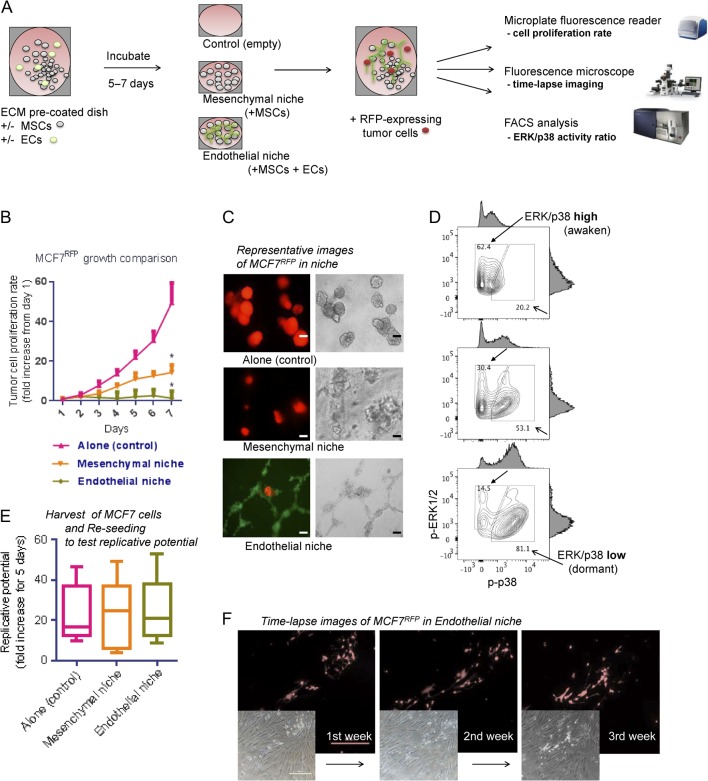
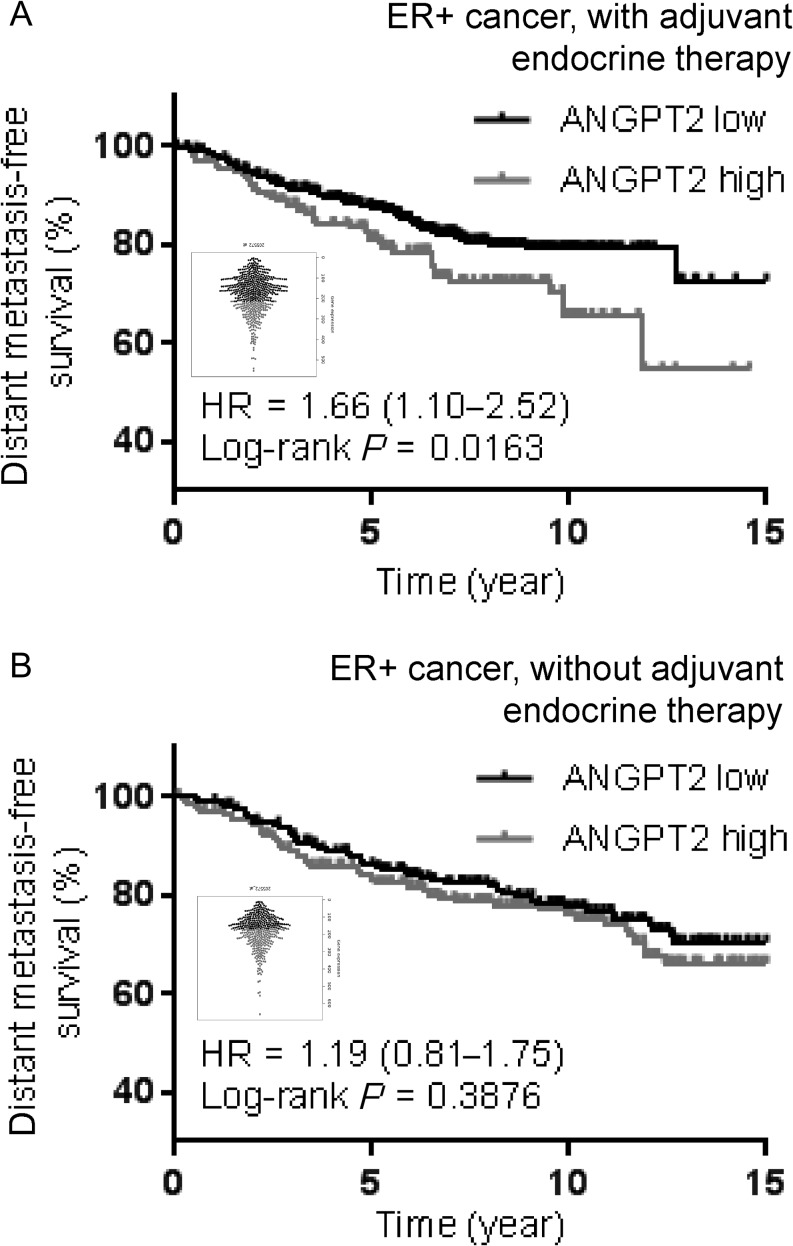
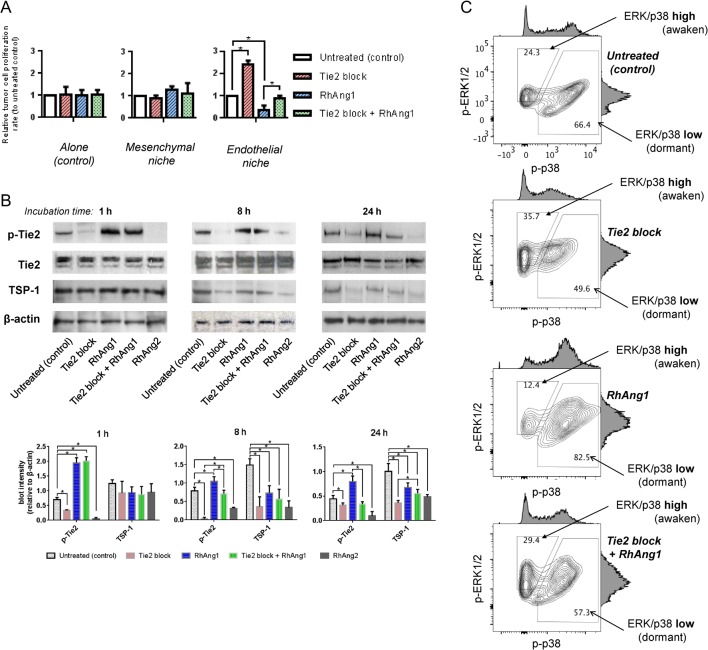
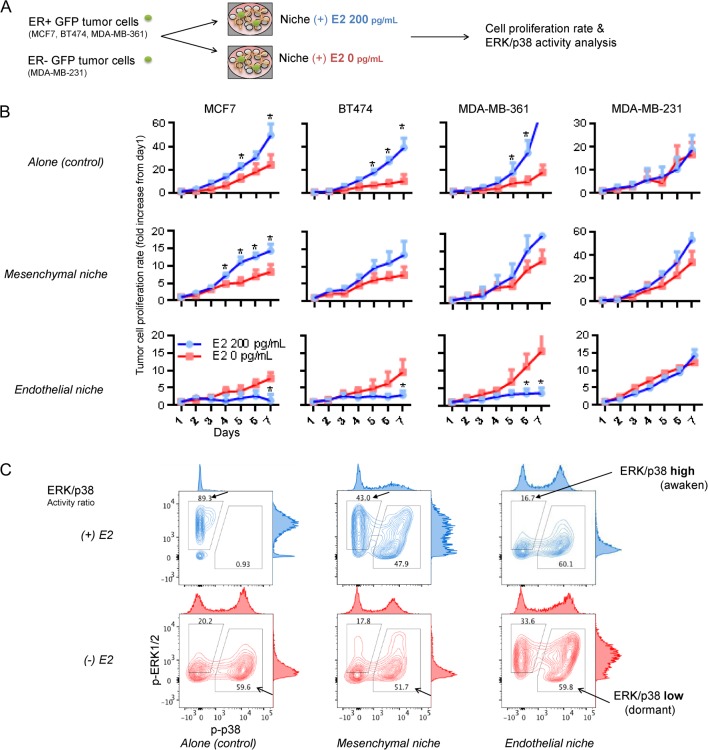
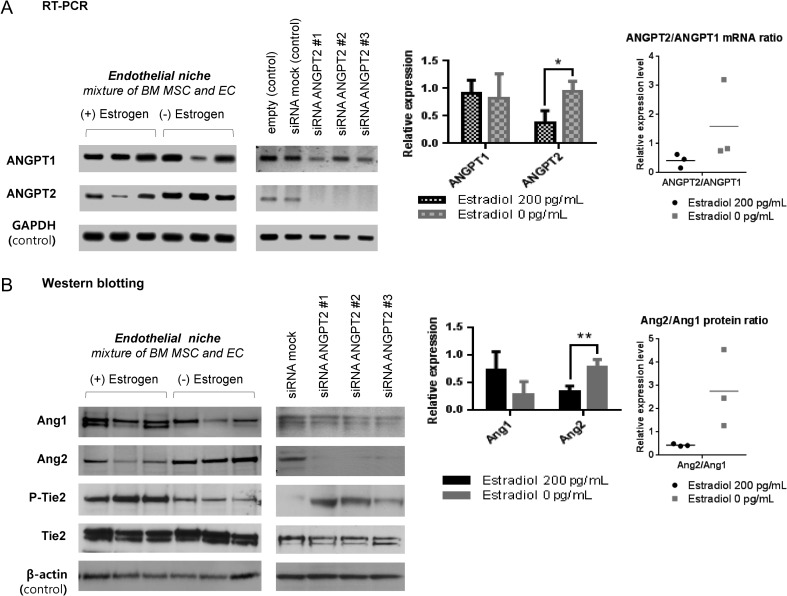
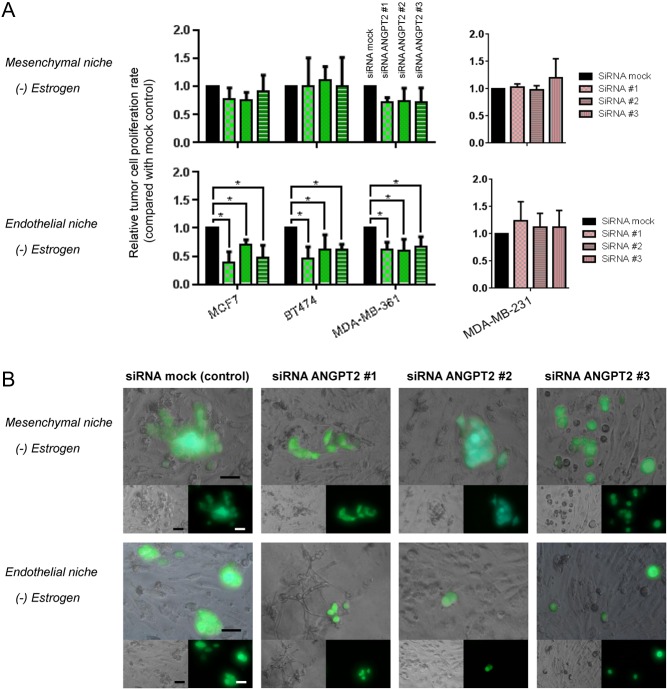
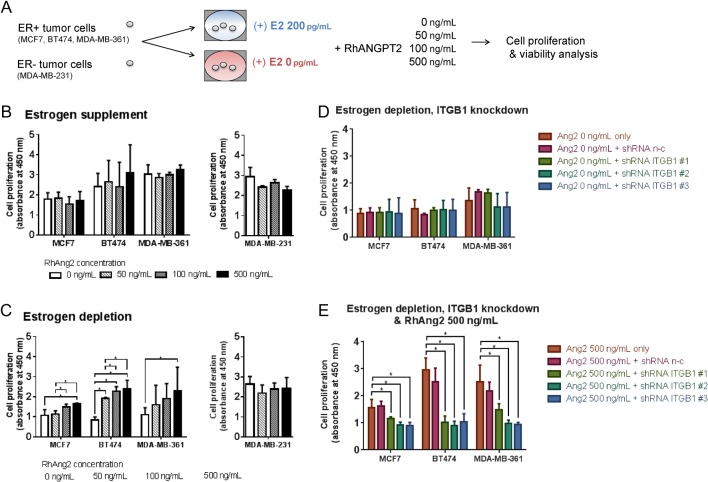
In estrogen receptor-positive (ER+) breast cancer, it is recognized that metastases may develop after a long period of dormancy. Bone marrow (BM) vascular niche is where the dormant tumor cells are most likely to reside. So far, it is not fully understood why the dormant tumor cells become proliferative and eventually generate tumor. We hypothesized that therapeutic or menopause-related estrogen depletion may be the switch behind dormant ER+ tumor cell awakening in BM. We utilized an existing experimental model of BM endothelial niche that can simulate ER+ tumor cell dormancy to test our hypothesis. In results, estrogen depletion paradoxically promoted ER+ tumor cell proliferation in the BM endothelial niche, and their molecular phenotype shifted from dormant to awaken. Following estrogen depletion, the BM niche cells produced angiopoietin-2 (ANGPT2), which destabilized niche endothelium by interfering ANGPT1/Tie2 signaling, and promoted ER+ tumor cell survival under estrogen deficiency via cell surface integrin &1. Knockdown of ANGPT2 completely negated ER+ tumor cell awakening in the niche. Furthermore, ANGPT2 expression in ER+ tumor human samples was associated with increased risk of distant metastasis only in those who underwent adjuvant estrogen depletion therapy, not in those who did not undergo adjuvant therapy. In conclusion, we demonstrate that ANGPT2 signaling activated after estrogen depletion paradoxically triggers ER+ tumor cell awakening from dormancy in their BM niche, partly indirectly via endothelial Tie2 receptor and partly directly via tumor cell surface integrin &1.
在雌激素受体阳性(ER+)乳腺癌中,人们认识到转移可能在长期休眠后发生。骨髓(BM)血管微环境是休眠肿瘤细胞最可能驻留的地方。到目前为止,尚不完全清楚为什么休眠肿瘤细胞会增殖并最终形成肿瘤。我们假设治疗性或绝经相关的雌激素耗竭可能是BM中休眠ER+肿瘤细胞苏醒的背后原因。我们利用现有的能够模拟ER+肿瘤细胞休眠的BM内皮微环境实验模型来检验我们的假设。结果显示,雌激素耗竭反而促进了BM内皮微环境中ER+肿瘤细胞的增殖,并且它们的分子表型从休眠转变为苏醒。雌激素耗竭后,BM微环境细胞产生血管生成素-2(ANGPT2),其通过干扰ANGPT1/Tie2信号使微环境内皮不稳定,并通过细胞表面整合素&1在雌激素缺乏的情况下促进ER+肿瘤细胞存活。敲低ANGPT2完全消除了微环境中ER+肿瘤细胞的苏醒。此外,ER+肿瘤人类样本中ANGPT2的表达仅在接受辅助雌激素耗竭治疗的患者中与远处转移风险增加相关,而在未接受辅助治疗的患者中则不然。总之,我们证明雌激素耗竭后激活的ANGPT2信号反而触发了BM微环境中ER+肿瘤细胞从休眠中苏醒,部分是通过内皮Tie2受体间接实现,部分是通过肿瘤细胞表面整合素&1直接实现。