Conlan Sean, Park Morgan, Deming Clayton, Thomas Pamela J, Young Alice C, Coleman Holly, Sison Christina, Weingarten Rebecca A, Lau Anna F, Dekker John P, Palmore Tara N, Frank Karen M, Segre Julia A
National Human Genome Research Institute, Bethesda, Maryland, USA.
National Institutes of Health Intramural Sequencing Center (NISC), Rockville, Maryland, USA.
mBio. 2016 Jun 28;7(3):e00742-16. doi: 10.1128/mBio.00742-16.
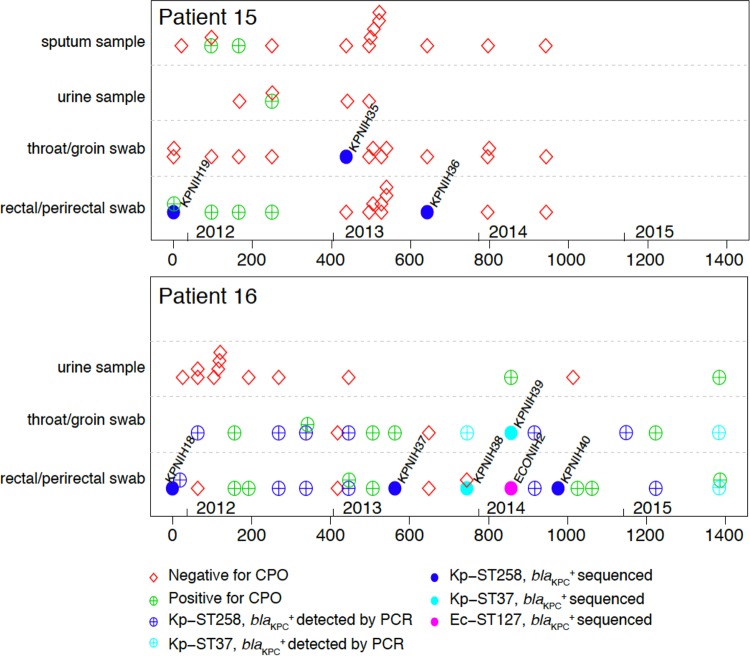
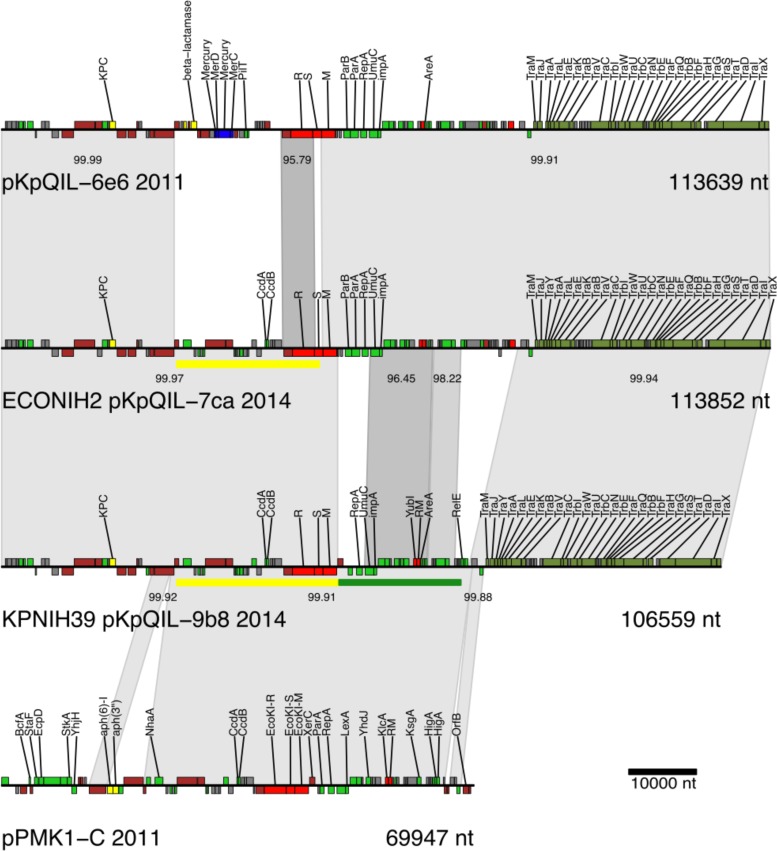
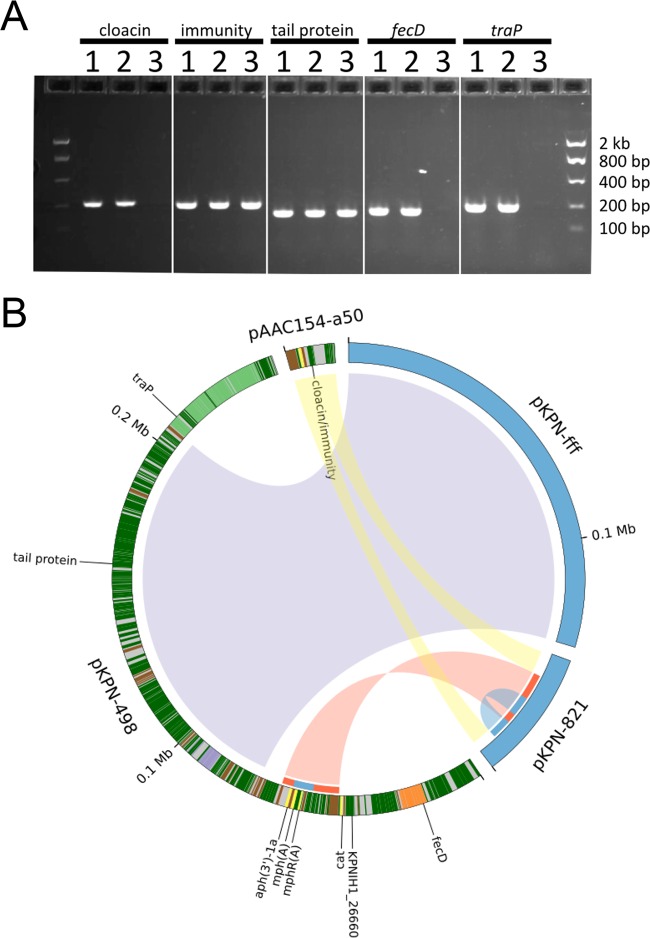
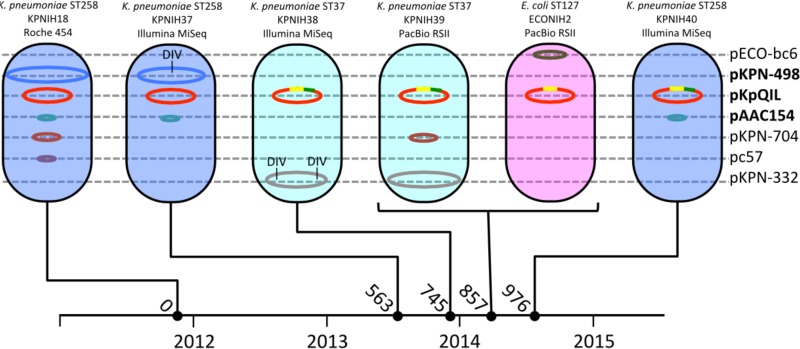
Carbapenem-resistant Klebsiella pneumoniae strains are formidable hospital pathogens that pose a serious threat to patients around the globe due to a rising incidence in health care facilities, high mortality rates associated with infection, and potential to spread antibiotic resistance to other bacterial species, such as Escherichia coli Over 6 months in 2011, 17 patients at the National Institutes of Health (NIH) Clinical Center became colonized with a highly virulent, transmissible carbapenem-resistant strain of K. pneumoniae Our real-time genomic sequencing tracked patient-to-patient routes of transmission and informed epidemiologists' actions to monitor and control this outbreak. Two of these patients remained colonized with carbapenemase-producing organisms for at least 2 to 4 years, providing the opportunity to undertake a focused genomic study of long-term colonization with antibiotic-resistant bacteria. Whole-genome sequencing studies shed light on the underlying complex microbial colonization, including mixed or evolving bacterial populations and gain or loss of plasmids. Isolates from NIH patient 15 showed complex plasmid rearrangements, leaving the chromosome and the blaKPC-carrying plasmid intact but rearranging the two other plasmids of this outbreak strain. NIH patient 16 has shown continuous colonization with blaKPC-positive organisms across multiple time points spanning 2011 to 2015. Genomic studies defined a complex pattern of succession and plasmid transmission across two different K. pneumoniae sequence types and an E. coli isolate. These findings demonstrate the utility of genomic methods for understanding strain succession, genome plasticity, and long-term carriage of antibiotic-resistant organisms.
In 2011, the NIH Clinical Center had a nosocomial outbreak involving 19 patients who became colonized or infected with blaKPC-positive Klebsiella pneumoniae Patients who have intestinal colonization with blaKPC-positive K. pneumoniae are at risk for developing infections that are difficult or nearly impossible to treat with existing antibiotic options. Two of those patients remained colonized with blaKPC-positive Klebsiella pneumoniae for over a year, leading to the initiation of a detailed genomic analysis exploring mixed colonization, plasmid recombination, and plasmid diversification. Whole-genome sequence analysis identified a variety of changes, both subtle and large, in the blaKPC-positive organisms. Long-term colonization of patients with blaKPC-positive Klebsiella pneumoniae creates new opportunities for horizontal gene transfer of plasmids encoding antibiotic resistance genes and poses complications for the delivery of health care.
耐碳青霉烯类肺炎克雷伯菌菌株是可怕的医院病原体,由于其在医疗机构中的发病率不断上升、感染相关的高死亡率以及将抗生素耐药性传播给其他细菌物种(如大肠杆菌)的可能性,对全球患者构成严重威胁。在2011年的6个多月里,美国国立卫生研究院(NIH)临床中心的17名患者被一种高毒力、可传播的耐碳青霉烯类肺炎克雷伯菌菌株定植。我们的实时基因组测序追踪了患者之间的传播途径,并为流行病学家监测和控制此次疫情的行动提供了信息。其中两名患者被产碳青霉烯酶的生物体定植至少2至4年,这为开展针对抗生素耐药细菌长期定植的重点基因组研究提供了机会。全基因组测序研究揭示了潜在的复杂微生物定植情况,包括混合或不断演变的细菌群体以及质粒的获得或丢失。来自NIH患者15的分离株显示出复杂的质粒重排,染色体和携带blaKPC的质粒保持完整,但该疫情菌株的另外两个质粒发生了重排。NIH患者16在2011年至2015年的多个时间点均显示被blaKPC阳性生物体持续定植。基因组研究确定了两种不同肺炎克雷伯菌序列类型和一株大肠杆菌分离株之间复杂的演替模式和质粒传播情况。这些发现证明了基因组方法在理解菌株演替、基因组可塑性以及抗生素耐药生物体长期携带方面的实用性。
2011年,NIH临床中心发生了一起医院感染暴发,涉及19名被blaKPC阳性肺炎克雷伯菌定植或感染的患者。被blaKPC阳性肺炎克雷伯菌肠道定植的患者有发生感染的风险,而现有抗生素选择难以或几乎无法治疗这些感染。其中两名患者被blaKPC阳性肺炎克雷伯菌定植超过一年,这促使开展了一项详细的基因组分析,探索混合定植、质粒重组和质粒多样化。全基因组序列分析在blaKPC阳性生物体中发现了各种细微和重大的变化。blaKPC阳性肺炎克雷伯菌在患者中的长期定植为编码抗生素耐药基因的质粒水平基因转移创造了新机会,并给医疗保健带来了并发症。