Hanouni Mona, Bernal Gilberto, McBride Shaemion, Narvaez Vincent Reginald F, Ibe Basil O
Division of Neonatology, Department of Pediatrics, Los Angeles Biomedical Research Institute at Harbor-UCLA Medical Center, Torrance, California.
Division of Neonatology, Department of Pediatrics, Los Angeles Biomedical Research Institute at Harbor-UCLA Medical Center, Torrance, California
Physiol Rep. 2016 Jun;4(12). doi: 10.14814/phy2.12840.
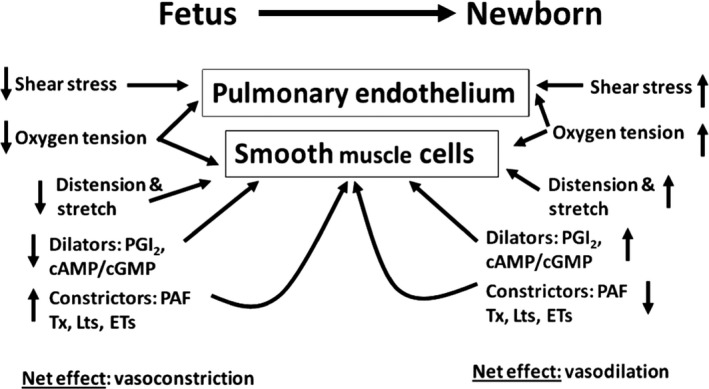
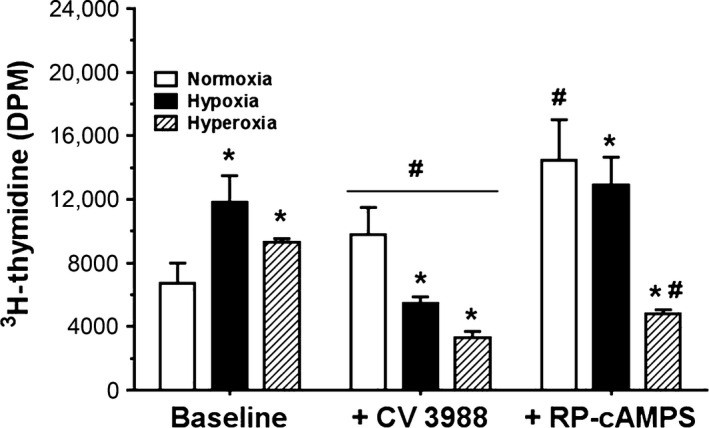
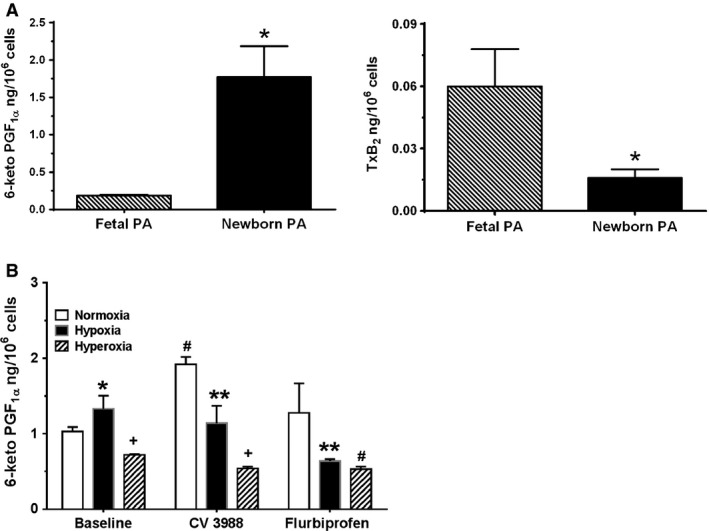
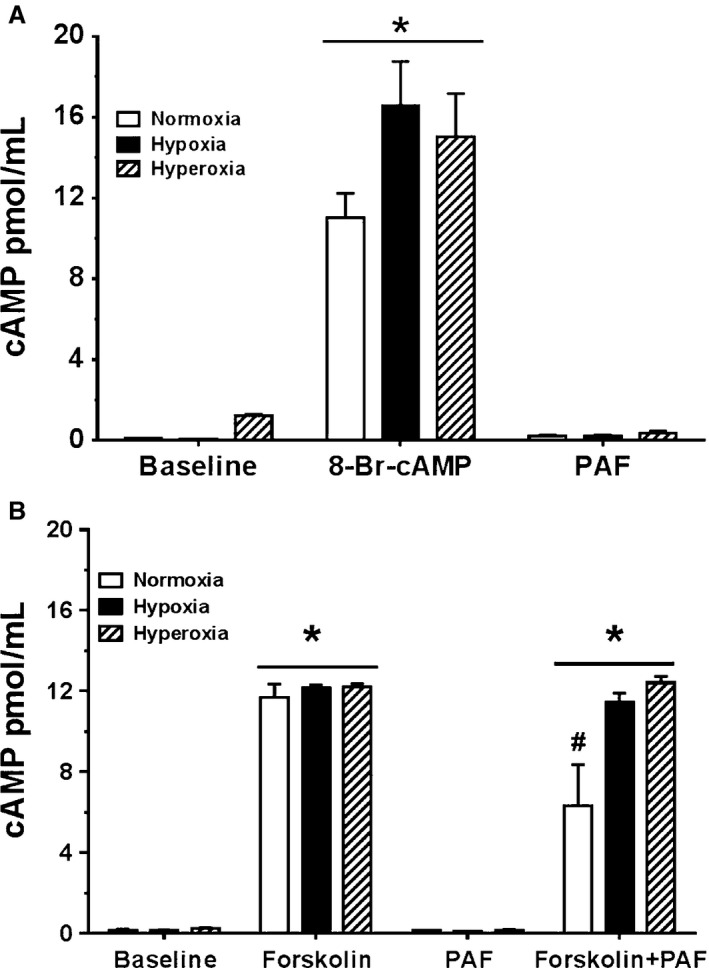
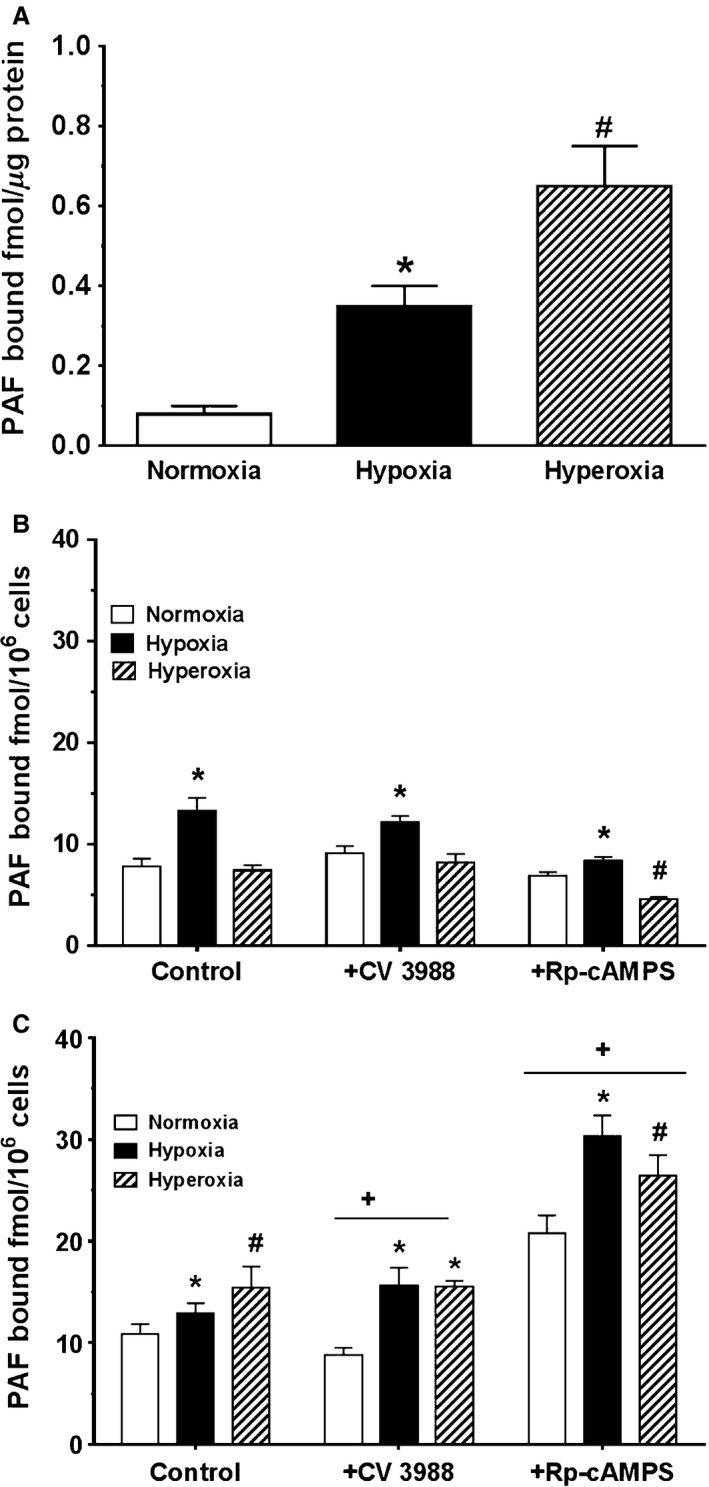
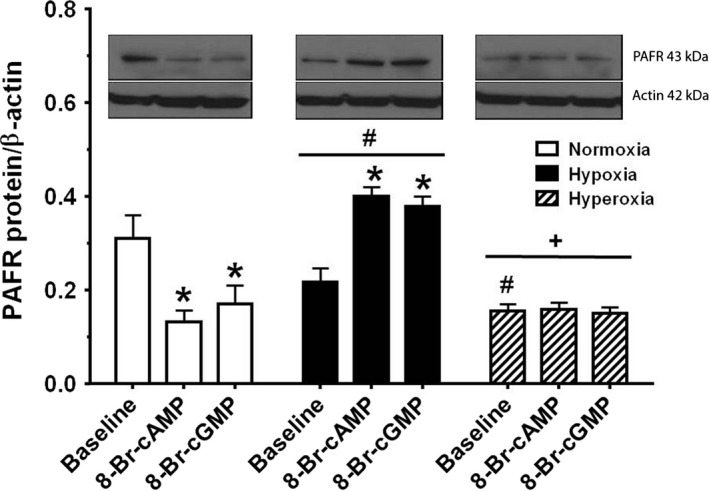
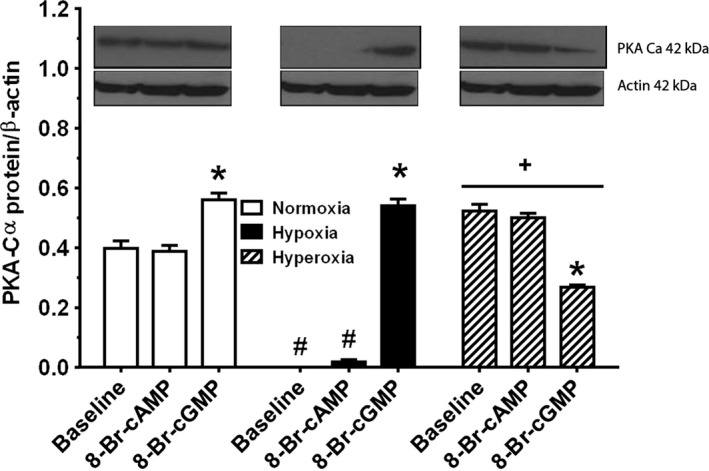
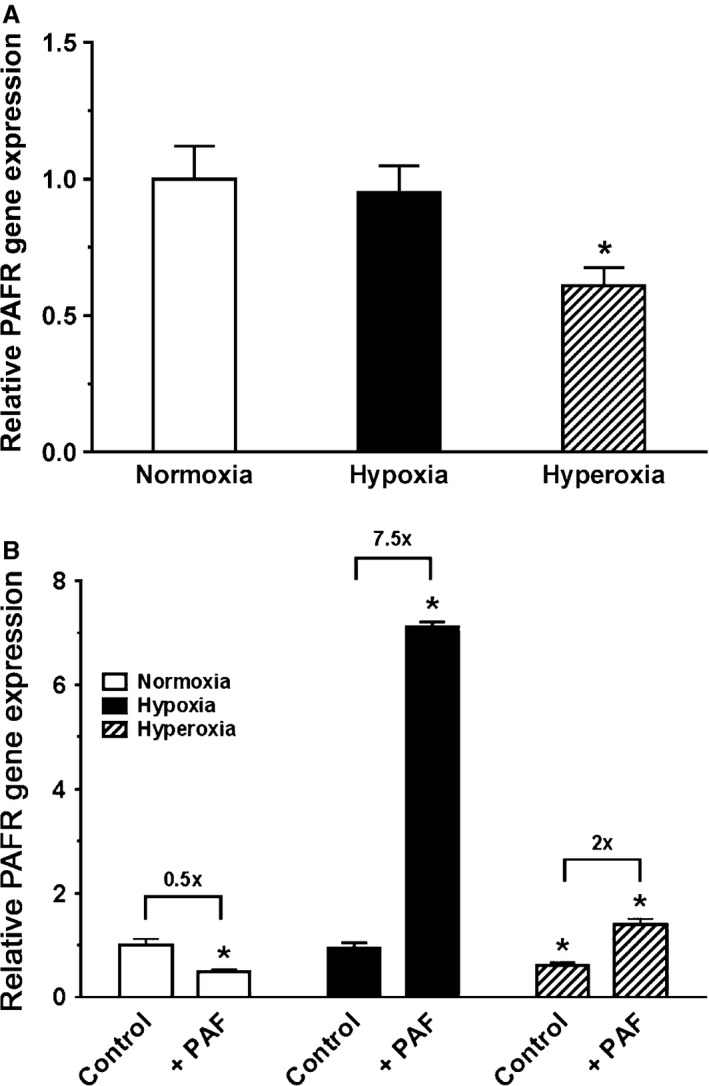
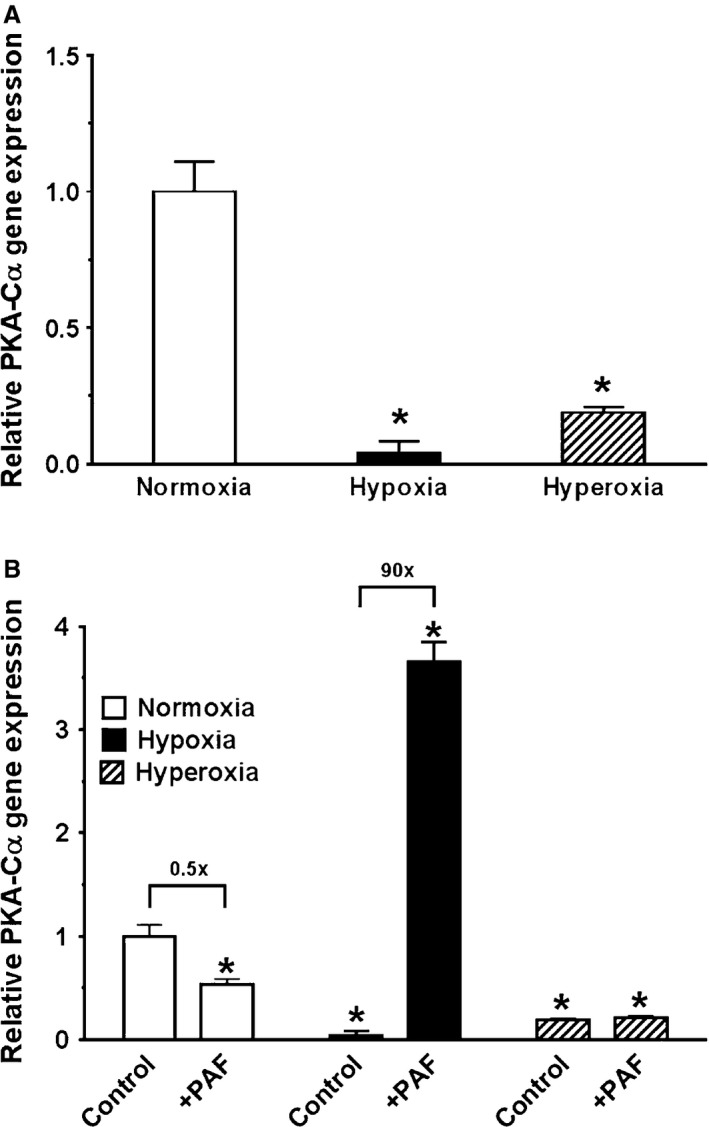
Platelet-activating factor (PAF) acting via its receptor (PAFR) is implicated in the pathogenesis of persistent pulmonary hypertension of the newborn (PPHN). Effects of long-term oxygen therapy on newborn lung are not well understood; therefore, we studied the effect of oxygen tension on ovine newborn pulmonary artery smooth muscle cells (NBPASMC). Our global hypothesis is that PPHN results from failure of newborn lamb pulmonary system to downregulate PAFR activity or to upregulate vasodilatory cyclic nucleotides (Cnucs) activity. NBPASMC from newborns 6-12 days old were studied in vitro at three different oxygen tensions (pO2, [Torr]: hypoxia, <40; normoxia, 80-100; and hyperoxia, >100 Torr often clinically imposed upon newborns with PPHN) PAFR- and Cnucs mediated effects were determined. PAFR and PKA Cα mRNA expression as well as prostacyclin, thromboxane, cAMP production, and DNA synthesis was studied to assess PAFR-mediated hypertrophy and/or hyperplasia. Hypoxia and hyperoxia increased specific PAFR binding. PAF treatment during hyperoxia increased PAFR gene, but decreased PKA-Cα gene expression. Hypoxia and hyperoxia increased NBPASMC proliferation via PAFR signaling. Baseline prostacyclin level was ninefold greater than in fetal PASMC, whereas baseline thromboxane was sevenfold less suggesting greater postnatal cyclooxygenase activity in NBPASMC PAF decreased, while forskolin and 8-Br-cAMP increased cAMP production. Decrease of PAFR effects by Cnucs indicates that normal newborn PA physiology favors vasodilator pathways to minimize PAF-induced hypertrophy or hyperplasia. We speculate that failure of newborn lung to anchor downregulation of vasoconstrictors with upregulation of vasodilators leads to PPHN.
血小板活化因子(PAF)通过其受体(PAFR)发挥作用,与新生儿持续性肺动脉高压(PPHN)的发病机制有关。长期氧疗对新生肺的影响尚不清楚;因此,我们研究了氧张力对新生羊肺动脉平滑肌细胞(NBPASMC)的影响。我们的总体假设是,PPHN是由于新生羔羊肺系统未能下调PAFR活性或上调血管舒张性环核苷酸(Cnucs)活性所致。对6 - 12日龄新生儿的NBPASMC在三种不同氧张力(pO2,[托]:低氧,<40;常氧,80 - 100;高氧,>100托,临床上常用于患有PPHN的新生儿)下进行体外研究,测定PAFR和Cnucs介导的效应。研究PAFR和PKA Cα mRNA表达以及前列环素、血栓素、cAMP产生和DNA合成,以评估PAFR介导的肥大和/或增生。低氧和高氧增加了PAFR特异性结合。高氧期间PAF处理增加了PAFR基因,但降低了PKA - Cα基因表达。低氧和高氧通过PAFR信号通路增加了NBPASMC增殖。基线前列环素水平比胎儿PASMC高9倍,而基线血栓素水平低7倍,提示NBPASMC中产后环氧化酶活性更高。PAF降低,而福斯高林和8 - Br - cAMP增加cAMP产生。Cnucs对PAFR效应的降低表明,正常新生儿肺动脉生理有利于血管舒张途径,以尽量减少PAF诱导的肥大或增生。我们推测,新生肺未能将血管收缩剂的下调与血管舒张剂的上调相锚定,导致了PPHN。