Ulvmar Maria H, Mäkinen Taija
Department of Immunology, Genetics and Pathology, Uppsala University, Dag Hammarskjöldsväg 20, 752 85 Uppsala, Sweden.
Department of Immunology, Genetics and Pathology, Uppsala University, Dag Hammarskjöldsväg 20, 752 85 Uppsala, Sweden
Cardiovasc Res. 2016 Sep;111(4):310-21. doi: 10.1093/cvr/cvw175. Epub 2016 Jun 29.
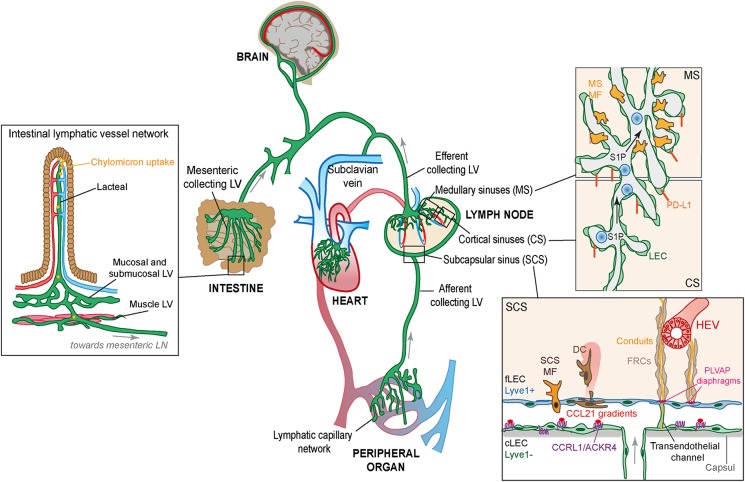
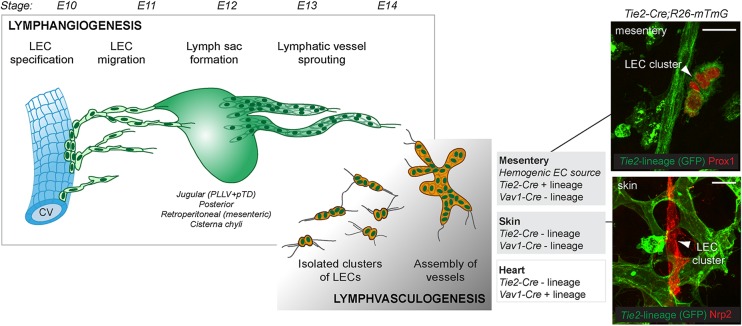
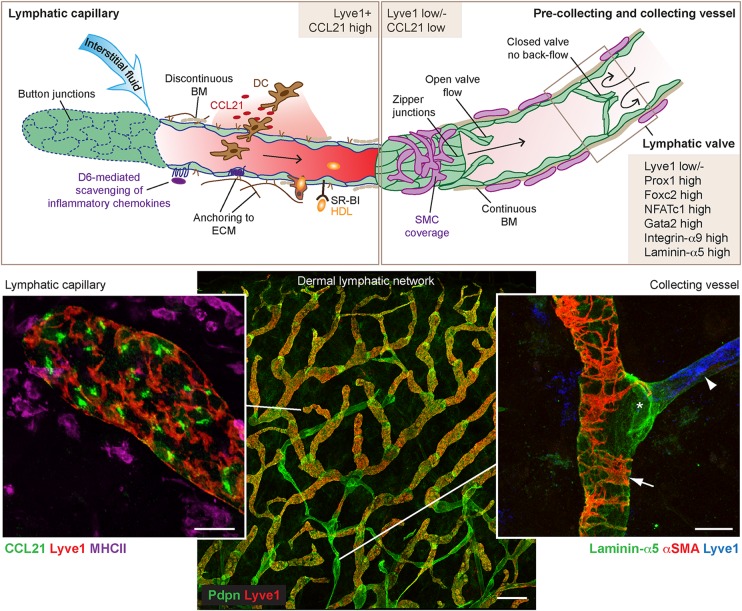
Lymphatic vessels have historically been viewed as passive conduits for fluid and immune cells, but this perspective is increasingly being revised as new functions of lymphatic vessels are revealed. Emerging evidence shows that lymphatic endothelium takes an active part in immune regulation both by antigen presentation and expression of immunomodulatory genes. In addition, lymphatic vessels play an important role in uptake of dietary fat and clearance of cholesterol from peripheral tissues, and they have been implicated in obesity and arteriosclerosis. Lymphatic vessels within different organs and in different physiological and pathological processes show a remarkable plasticity and heterogeneity, reflecting their functional specialization. In addition, lymphatic endothelial cells (LECs) of different organs were recently shown to have alternative developmental origins, which may contribute to the development of the diverse lymphatic vessel and endothelial functions seen in the adult. Here, we discuss recent developments in the understanding of heterogeneity within the lymphatic system considering the organ-specific functional and molecular specialization of LECs and their developmental origin.
淋巴管在历史上一直被视为液体和免疫细胞的被动通道,但随着淋巴管新功能的揭示,这一观点正日益受到修正。新出现的证据表明,淋巴管内皮通过抗原呈递和免疫调节基因的表达,在免疫调节中发挥积极作用。此外,淋巴管在膳食脂肪摄取和外周组织胆固醇清除中起重要作用,并且与肥胖和动脉硬化有关。不同器官内以及不同生理和病理过程中的淋巴管表现出显著的可塑性和异质性,反映了它们的功能特化。此外,最近发现不同器官的淋巴管内皮细胞(LEC)具有不同的发育起源,这可能有助于成年期出现的各种淋巴管和内皮功能的发展。在此,我们结合LEC的器官特异性功能和分子特化及其发育起源,讨论淋巴管系统异质性认识方面的最新进展。