Department of Neurosurgery, Neurosurgery Pain Research Institute, Johns Hopkins University School of Medicine, Baltimore, MD, 21205, USA.
Department of Biological Chemistry, Johns Hopkins University School of Medicine, Baltimore, MD, 21205, USA.
Sci Rep. 2016 Jul 1;6:28899. doi: 10.1038/srep28899.
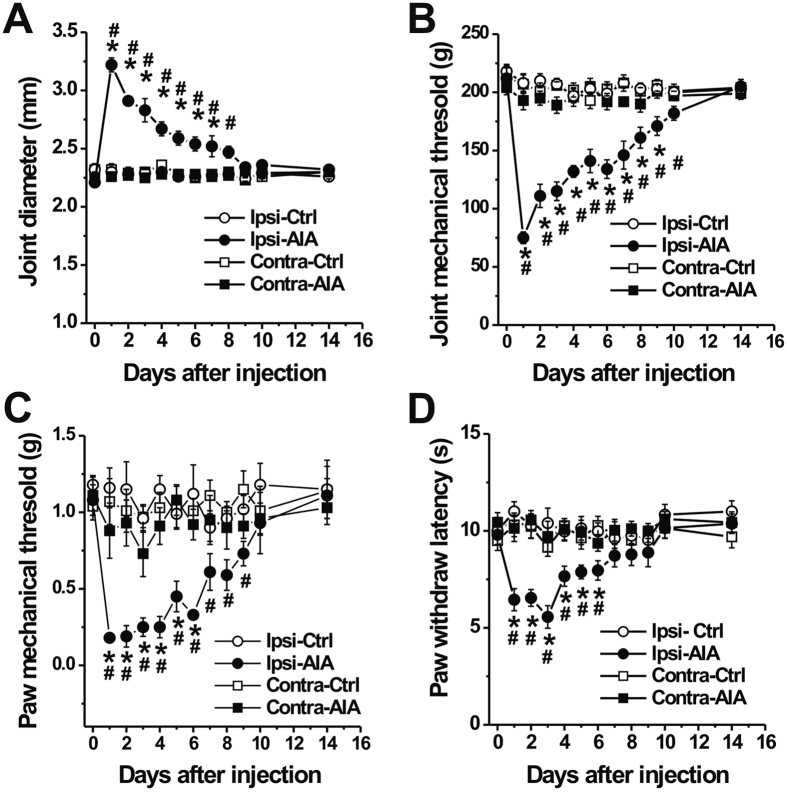
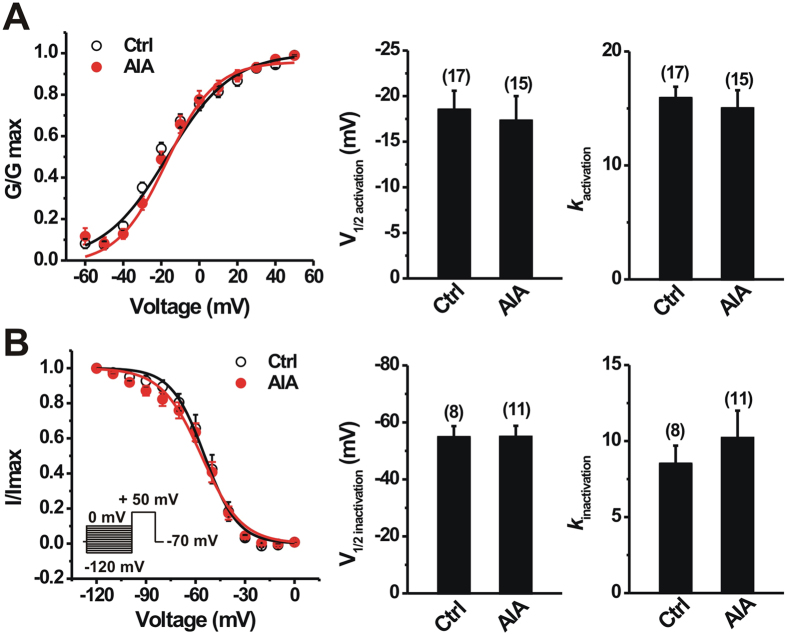
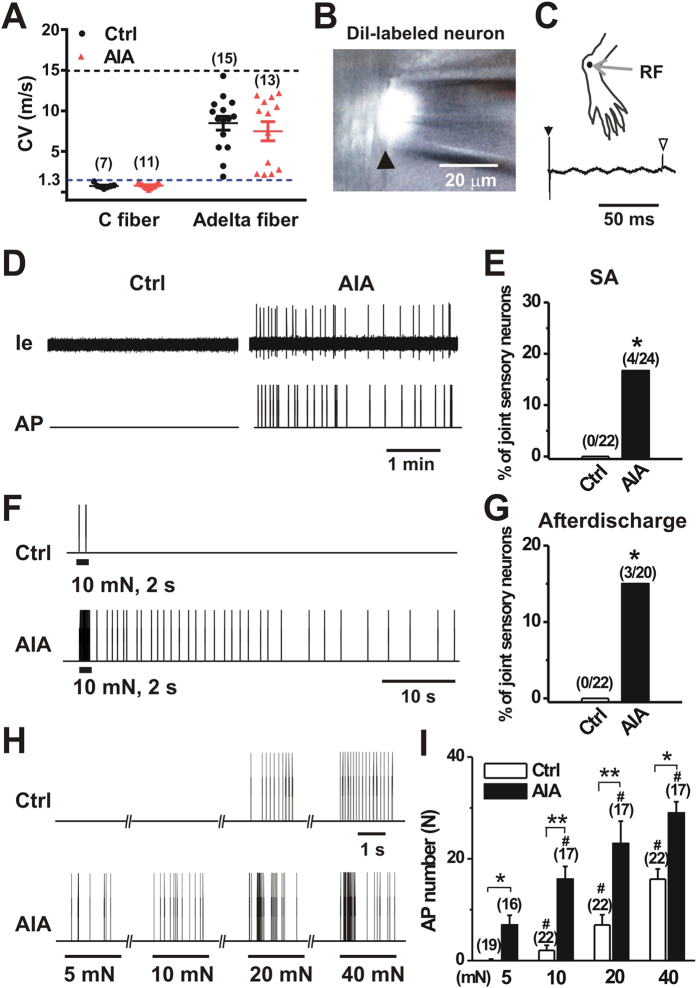
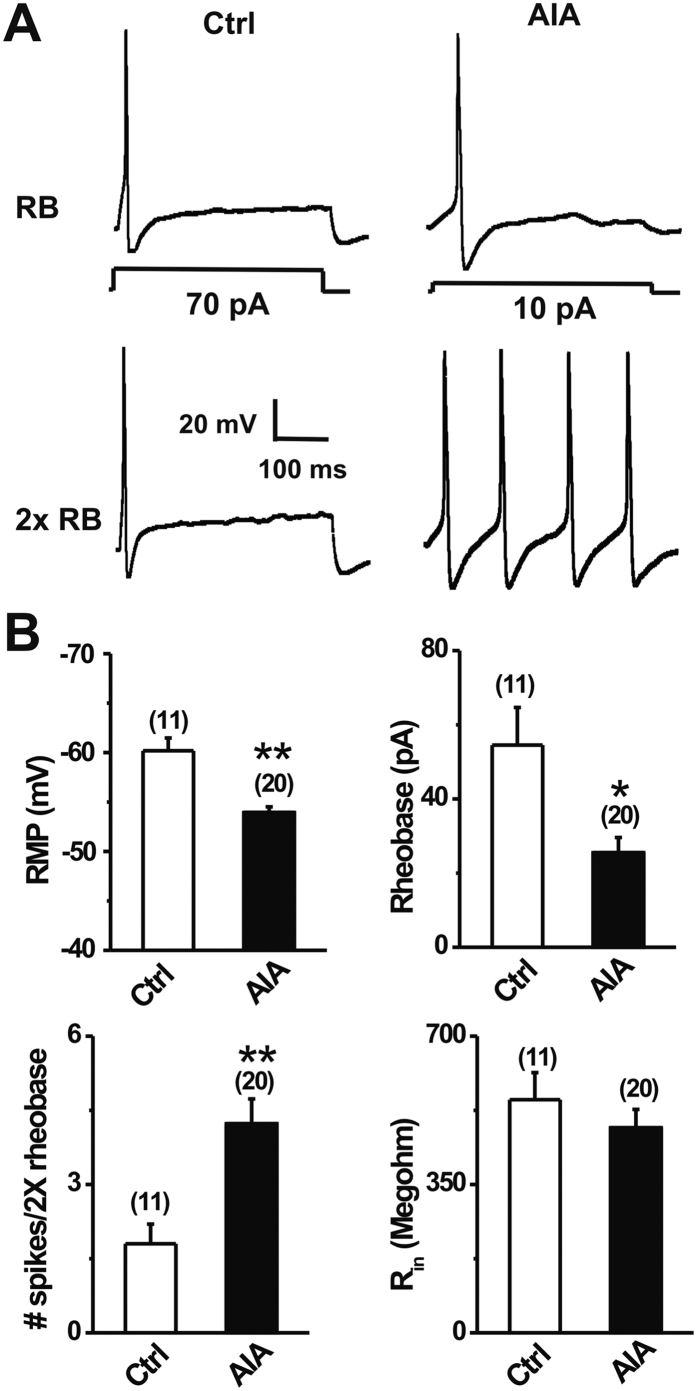
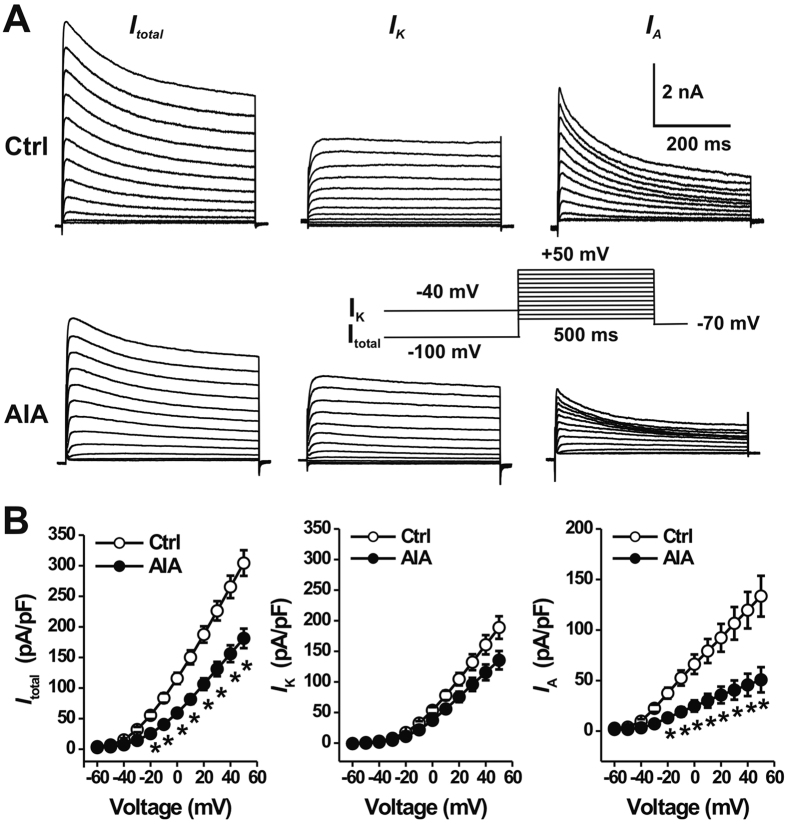
Pain is a dominant symptom of rheumatoid arthritis (RA) and its adequate treatment represents a major unmet need. However, the cellular mechanisms that drive arthritis pain are largely unexplored. Here, we examined the changes in the activity of joint sensory neurons and the associated ionic mechanisms using an animal model of antigen-induced arthritis (AIA). Methylated-bovine serum albumin (mBSA), but not vehicle challenge, in the ankle of previously immunized mice produced time-dependent symptoms of arthritis, including joint inflammation, primary mechanical hyperalgesia in the ipsilateral ankle, and secondary mechanical and heat hyperalgesia in the ipsilateral hindpaw. In vivo electrophysiological recordings revealed that Dil-labeled joint sensory neurons in AIA mice exhibited a greater incidence of spontaneous activity, mechanically evoked after-discharges, and/or increased responses to mechanical stimulation of their receptive fields, compared to control animals. Whole-cell recordings in vitro showed that AIA enhanced the excitability of joint sensory neurons. These signs of neuronal hyperexcitability were associated with a significant reduction in the density of A-type K(+) currents. Thus, our data suggest that neuronal hyperexcitability, brought about in part by reduced A-type K(+) currents, may contribute to pain-related behaviors that accompany antigen-induced arthritis and/or other antigen-mediated diseases.
疼痛是类风湿关节炎(RA)的主要症状,其充分治疗是一个主要的未满足需求。然而,驱动关节炎疼痛的细胞机制在很大程度上尚未得到探索。在这里,我们使用抗原诱导关节炎(AIA)的动物模型研究了关节感觉神经元活性的变化及其相关的离子机制。在先前免疫的小鼠的踝关节中,甲胎蛋白(mBSA)而不是载体挑战会产生关节炎的时间依赖性症状,包括关节炎症、同侧踝关节的原发性机械性痛觉过敏以及同侧后爪的继发性机械性和热痛觉过敏。体内电生理记录显示,与对照动物相比,AIA 小鼠的 Dil 标记关节感觉神经元表现出自发性活动、机械诱发后放电和/或对其感受野机械刺激的反应增加的发生率更高。体外全细胞记录显示,AIA 增强了关节感觉神经元的兴奋性。神经元过度兴奋的这些迹象与 A 型钾(K+)电流密度的显著降低有关。因此,我们的数据表明,神经元过度兴奋,部分是由 A 型 K+电流减少引起的,可能与伴随抗原诱导性关节炎和/或其他抗原介导疾病的疼痛相关行为有关。