Kim Min-Jin, Yang Kyong-Wol, Kim Sang Suk, Park Suk Man, Park Kyung Jin, Kim Kwang Sik, Choi Young Hun, Cho Kwang Keun, Lee Nam Ho, Hyun Chang-Gu
Cosmetic Center Science, Department of Chemistry, Jeju National University, Ara-1-dong, Jeju 690-756, Korea.
Jeju Love Co., Ltd., 542-5 Haengwon-ri, Gujwa-eup, Jeju 695-975, Korea; Animal Resources Technology, Kyungnam University of Science and Technology, Jinju 660-758, Korea.
EXCLI J. 2013 Nov 7;12:933-42. eCollection 2013.
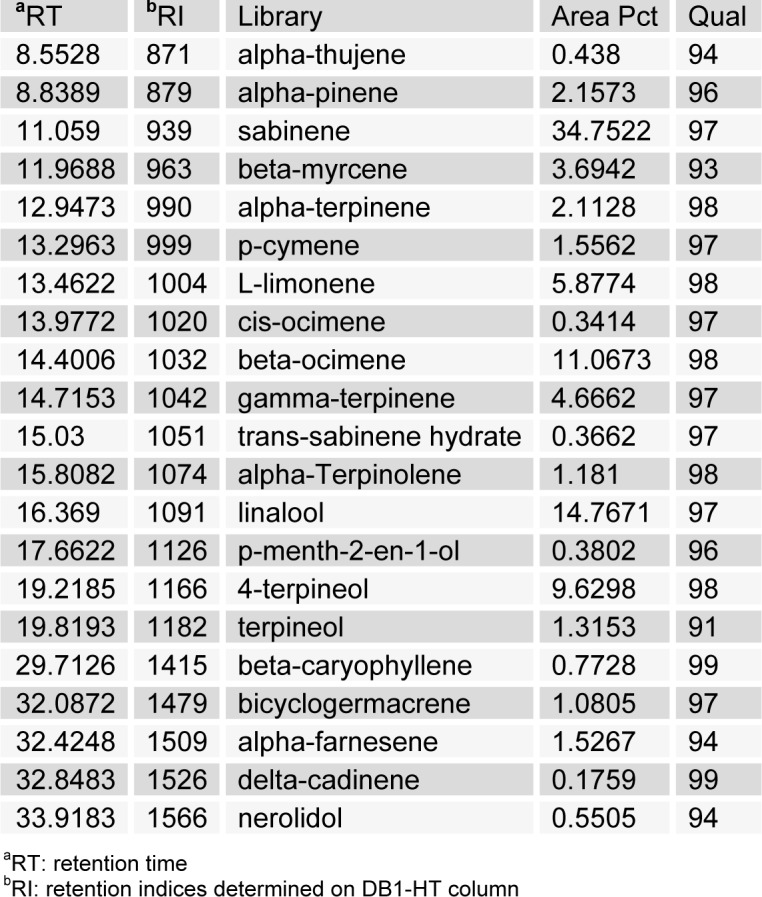
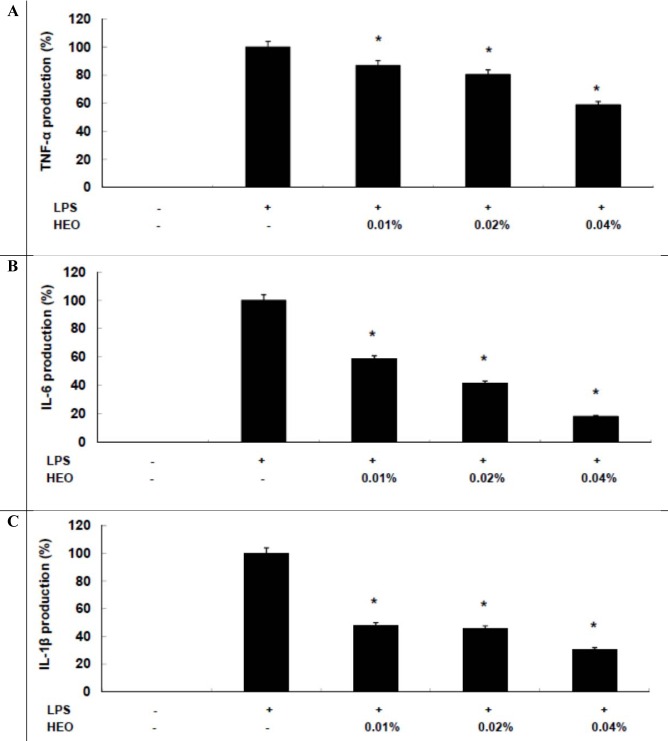
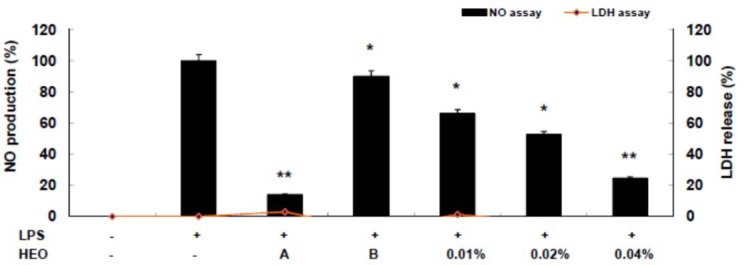
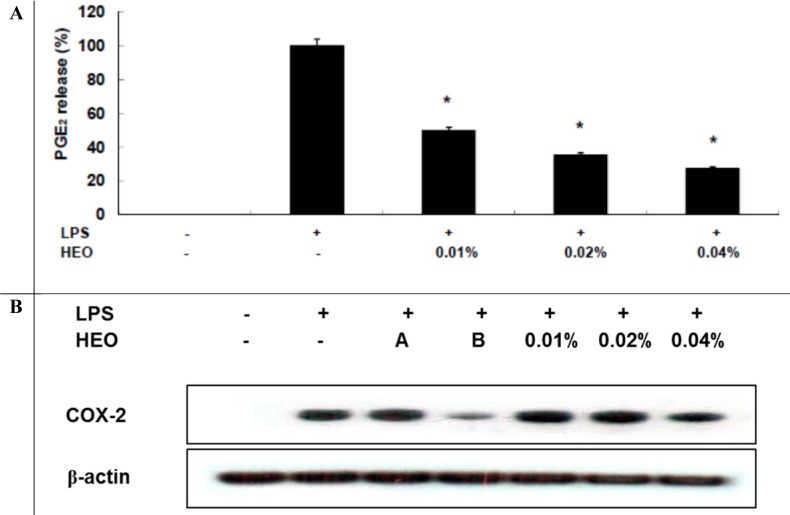
A number of essential oils derived from plants are claimed to have several medicinal functions, including anti-cancer and anti-inflammation effects. However, the chemical composition and biological activities of flower-derived components have not been sufficiently characterized. Therefore, we investigated the composition of essential oils from Hallabong flower [(Citrus unshiu Marcov × Citrus sinensis Osbeck) × Citrus reticulata Blanco] and their anti-inflammatory effects. Hydro-distilled essential oils (HEOs) were analyzed using gas chromatography-mass spectrometry (GC-MS). In total, 21 components were identified, representing more than 98 % of the oils, with sabinene (34.75 %), linalool (14.77 %), β-ocimene (11.07 %), 4-terpineol (9.63 %), l-limonene (5.88 %), and γ-terpinene (4.67 %) as the main components. In the present study, we also investigated the anti-inflammatory effects of HEOs on lipopolysaccharide (LPS)-stimulated RAW 264.7 macrophage cells. HEOs were found to inhibit nitric oxide (NO) and prostaglandin E2 (PGE2) production and to suppress the LPS-induced expression of cyclooxygenase-2 (COX-2) protein. In addition, HEOs downregulated the production of the inflammatory cytokines, tumor necrosis factor (TNF)-α, interleukin (IL)-6, and IL-1β (IC50 values are 0.05 %, 0.02 %, and 0.01 %, respectively). On the basis of these results, we suggest that HEOs can be considered potential anti-inflammatory candidates for therapeutic use in humans.
许多源自植物的精油据称具有多种药用功能,包括抗癌和抗炎作用。然而,花源成分的化学成分和生物活性尚未得到充分表征。因此,我们研究了韩国济州岛柑橘花[(温州蜜柑×甜橙)×宽皮柑橘]精油的成分及其抗炎作用。采用气相色谱-质谱联用仪(GC-MS)分析水蒸馏精油(HEOs)。共鉴定出21种成分,占精油总量的98%以上,主要成分为桧烯(34.75%)、芳樟醇(14.77%)、β-罗勒烯(11.07%)、4-松油醇(9.63%)、L-柠檬烯(5.88%)和γ-松油烯(4.67%)。在本研究中,我们还研究了HEOs对脂多糖(LPS)刺激的RAW 264.7巨噬细胞的抗炎作用。发现HEOs可抑制一氧化氮(NO)和前列腺素E2(PGE2)的产生,并抑制LPS诱导的环氧化酶-2(COX-2)蛋白表达。此外,HEOs下调了炎性细胞因子肿瘤坏死因子(TNF)-α、白细胞介素(IL)-6和IL-1β的产生(IC50值分别为0.05%、0.02%和0.01%)。基于这些结果,我们认为HEOs可被视为人类治疗用途的潜在抗炎候选物。