Erickson-Bhatt Sarah J, Roman Manuela, Gonzalez Jean, Nunez Annie, Kiszonas Richard, Lopez-Penalver Cristina, Godavarty Anuradha
Dept. of Biomedical Engineering, Florida International University, 10555 West Flagler St. EC2610, Miami, FL, USA 33174.
Dept. of Breast Radiology, Sylvester Comprehensive Cancer Center, 1475 N.W. 12th Ave., Miami, FL, USA 33136.
Biomed Phys Eng Express. 2015 Dec;1(4). doi: 10.1088/2057-1976/1/4/045001. Epub 2015 Oct 23.
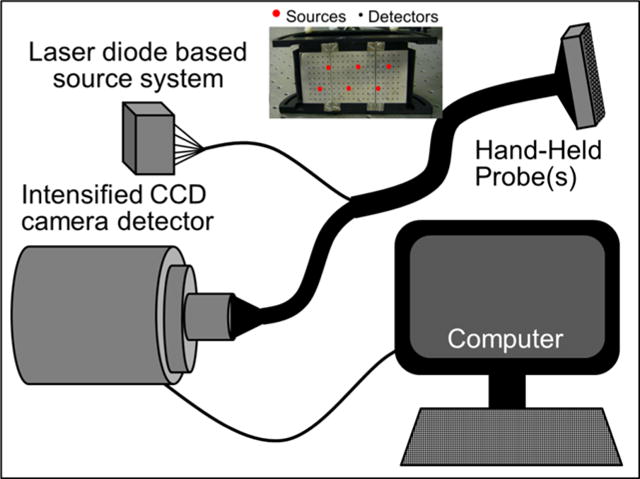
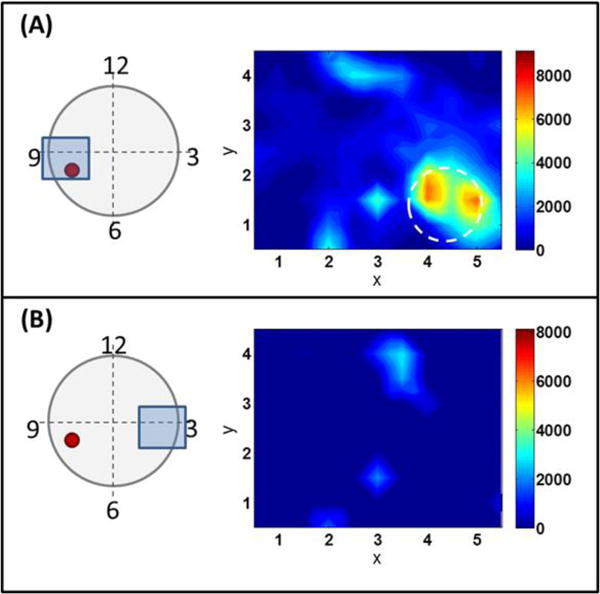
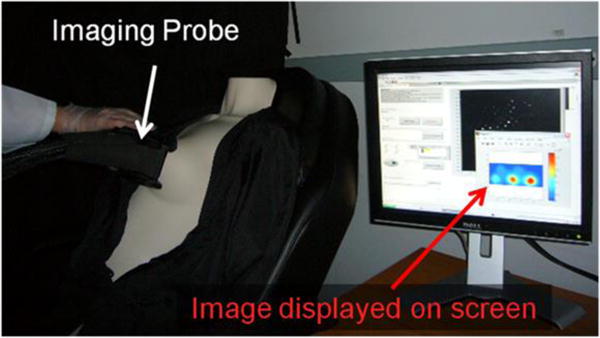
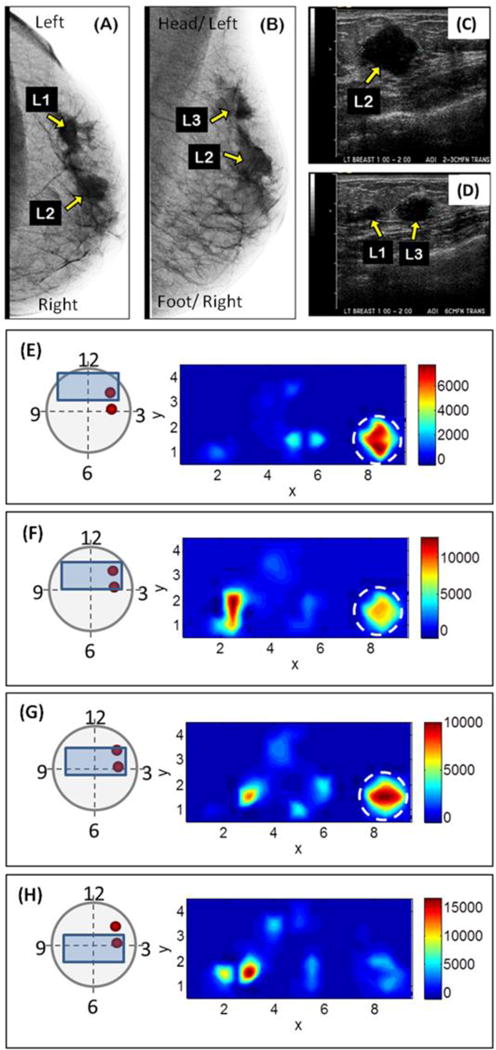
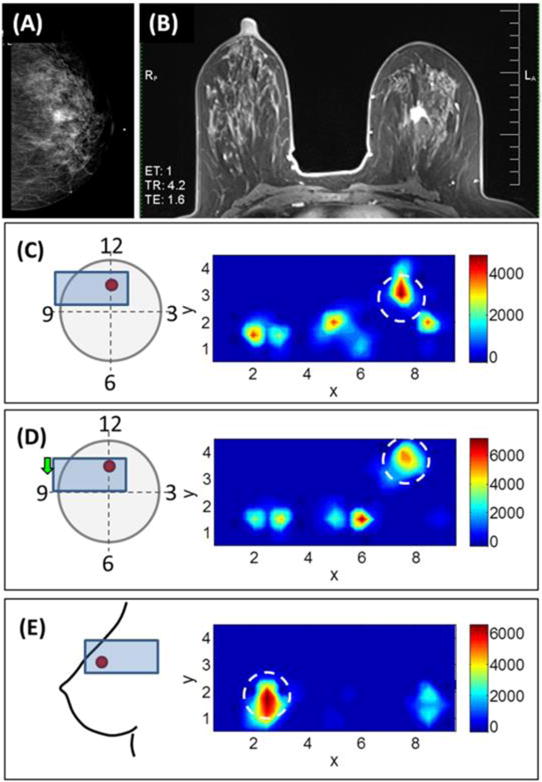
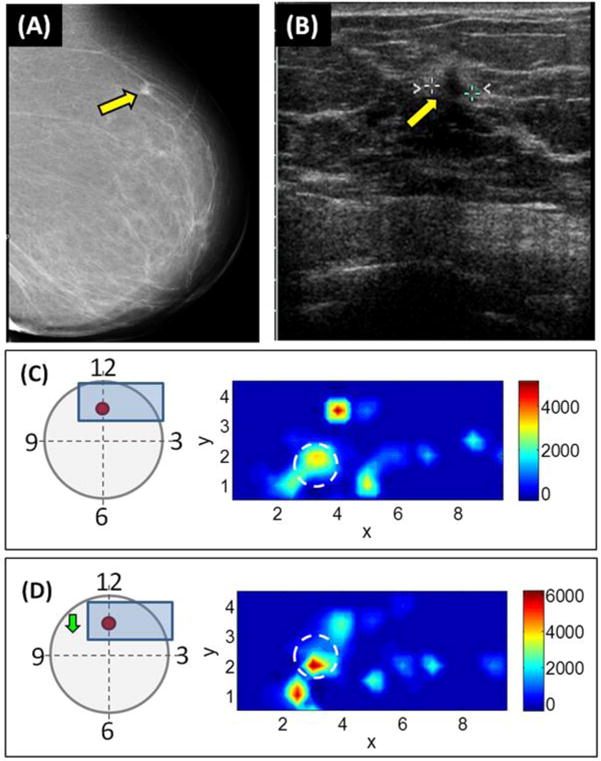
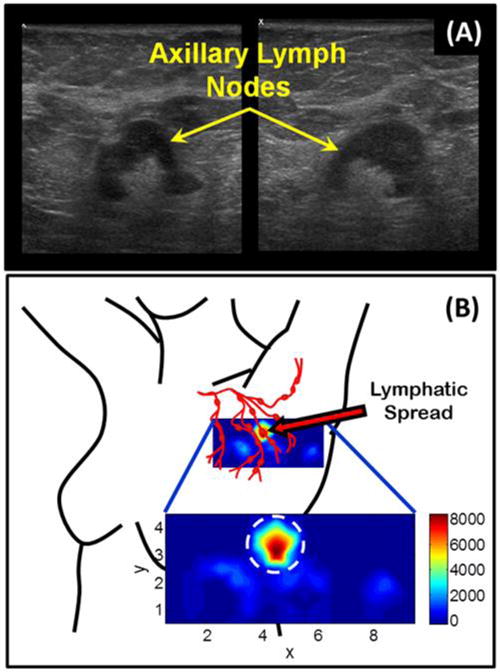
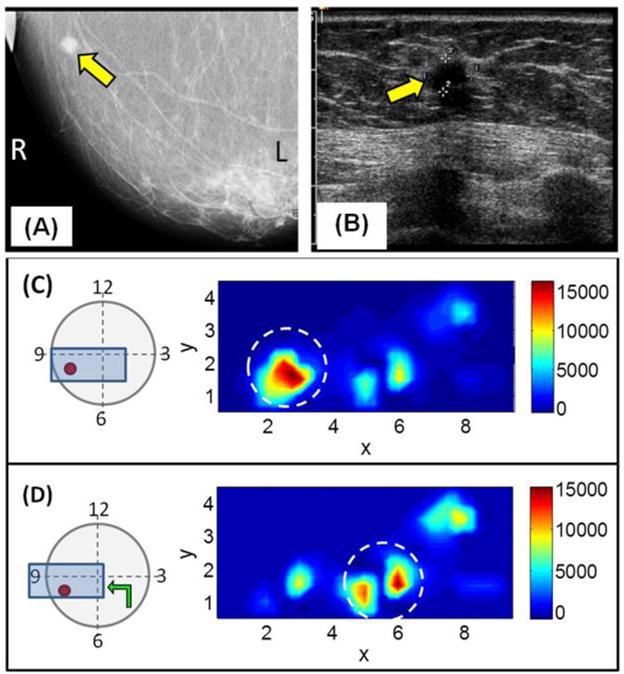
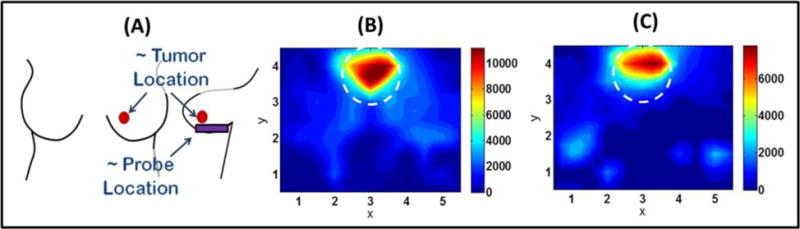
X-ray mammography, the current gold standard for breast cancer detection, has a 20% false-negative rate (cancer is undetected) and increases in younger women with denser breast tissue. Diffuse optical imaging (DOI) is a safe (nonionizing), and relatively inexpensive method for noninvasive imaging of breast cancer in human subjects (including dense breast tissues) by providing physiological information (e.g. oxy- and deoxy- hemoglobin concentration). At the Optical Imaging Laboratory, a hand-held optical imager has been developed which employs a breast contourable probe head to perform simultaneous illumination and detection of large surfaces towards near real-time imaging of human breast cancer. Gen-1 and gen-2 versions of the handheld optical imager have been developed and previously demonstrated imaging in tissue phantoms and healthy human subjects. Herein, the hand-held optical imagers are applied towards imaging of breast cancer subjects in an attempt to determine the ability of the imager to detect breast tumors. Five female human subjects (ages 51-74) diagnosed with breast cancer were imaged with the gen-1 optical imager prior to surgical intervention. One of the subjects was also imaged with the gen-2 optical imager. Both imagers use 785 nm laser diode sources and ICCD camera detectors to generate 2D surfaces maps of total hemoglobin absorption. The subjects lay in supine position and images were collected at various locations on both the ipsilateral (tumor-containing) and contralateral (non-tumor containing) breasts. The optical images (2D surface maps of optical absorption due to total hemoglobin concentration) show regions of higher intensity at the tumor location, which is indicative of increased vasculature and higher blood content due to the presence of the tumor. Additionally, a preliminary result indicates the potential to image lymphatic spread. This study demonstrates the potential of the hand-held optical devices to noninvasively image breast cancer in human subjects.
X线乳房摄影是目前乳腺癌检测的金标准,其假阴性率为20%(癌症未被检测到),并且在乳腺组织致密的年轻女性中该比例会更高。漫射光学成像(DOI)是一种安全(非电离)且相对廉价的方法,可通过提供生理信息(如氧合血红蛋白和脱氧血红蛋白浓度)对人体(包括致密乳腺组织)的乳腺癌进行无创成像。在光学成像实验室,已开发出一种手持式光学成像仪,它采用可贴合乳房的探头对大表面进行同时照明和检测,以实现对人类乳腺癌的近实时成像。已开发出第一代和第二代手持式光学成像仪,之前已在组织模型和健康人体受试者中展示了其成像效果。在此,将手持式光学成像仪应用于乳腺癌受试者的成像,以试图确定该成像仪检测乳腺肿瘤的能力。五名被诊断为乳腺癌的女性受试者(年龄51 - 74岁)在手术干预前用第一代光学成像仪进行了成像。其中一名受试者还用第二代光学成像仪进行了成像。两种成像仪均使用785 nm激光二极管光源和ICCD相机探测器来生成总血红蛋白吸收的二维表面图。受试者仰卧,在同侧(含肿瘤)和对侧(不含肿瘤)乳房的不同位置采集图像。光学图像(由于总血红蛋白浓度导致的光学吸收二维表面图)显示肿瘤位置处强度较高的区域,这表明由于肿瘤的存在,血管分布增加且血液含量更高。此外,初步结果表明有对淋巴扩散进行成像的潜力。这项研究证明了手持式光学设备对人体乳腺癌进行无创成像的潜力。