Ahmad Manzoor, Hassan Mukhtiar, Khalid Anwar, Tariq Imran, Asad Muhammad Hassham Hassan Bin, Samad Abdul, Mahmood Qaisar, Murtaza Ghulam
Department of Biochemistry, Faculty of Health Sciences, Hazara University, Mansehra, Khyber Pakhtunkhwa 21120, Pakistan.
Department of Biochemistry, Faculty of Health Sciences, Hazara University, Mansehra, Khyber Pakhtunkhwa 21120, Pakistan; Department of Pharmacy, COMSATS Institute of Information Technology, Abbottabad 22060, Pakistan.
Biomed Res Int. 2016;2016:6068429. doi: 10.1155/2016/6068429. Epub 2016 Jun 5.
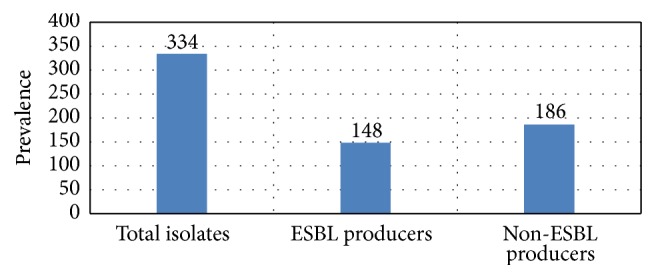
Majority of gram negative pathogenic bacteria are responsible for extended spectrum β-lactamases (ESBLs) production, which show resistance to some newer generation of antibiotics. The study was aimed at evaluating the prevalence of ESBL and antibiotic susceptibility pattern of Pseudomonas isolates collected during 2010 to 2014 from tertiary care hospitals of Peshawar, Pakistan. Out of 3450 samples, 334 Pseudomonas spp. isolates comprised of 232 indoor and 102 outdoor patients were obtained from different specimens and their susceptibility pattern was determined against 20 antibiotics. Antimicrobial susceptibility testing was carried out using the Kirby-Bauer agar diffusion method and ESBL production was detected by Synergy Disc Diffusion technique. The mean age group of the patients was 29.9 + 9.15 years. Meronem showed best activity (91.02%) from class carbapenem, β-lactam and β-lactamase inhibitors exhibited 69.16% activity, and doxycycline had a diminished activity (10.18%) to Pseudomonas spp. Outdoor isolates were more resistant than the indoor and during the course of the study the sensitivity rate of antibiotics was gradually reducing. ESBL production was observed in 44.32% while the remaining was non-ESBL. The moderate active antibiotics were amikacin (50.7%), SCF (51.4%), TZP (52.7%), and MXF (54.1%) among ESBL producing isolates. Lack of antibiotic policy, irrational uses (3GCs particularly), and the emergence of antibiotic resistant organisms in hospitals may be causes of high antibiotic resistance.
大多数革兰氏阴性病原菌会产生超广谱β-内酰胺酶(ESBLs),这些酶对一些新一代抗生素具有抗性。本研究旨在评估2010年至2014年期间从巴基斯坦白沙瓦三级医院收集的假单胞菌分离株中ESBL的流行情况及抗生素敏感性模式。在3450份样本中,从不同标本中获得了334株假单胞菌属分离株,其中包括232例室内患者和102例室外患者,并测定了它们对20种抗生素的敏感性模式。采用 Kirby-Bauer 琼脂扩散法进行抗菌药物敏感性试验,通过协同纸片扩散技术检测ESBL的产生。患者的平均年龄组为29.9±9.15岁。美罗培南在碳青霉烯类中表现出最佳活性(91.02%),β-内酰胺类和β-内酰胺酶抑制剂表现出69.16%的活性,而强力霉素对假单胞菌属的活性降低(10.18%)。室外分离株比室内分离株更具抗性,并且在研究过程中抗生素的敏感率逐渐降低。观察到44.32%的菌株产生ESBL,其余为非ESBL菌株。在产生ESBL的分离株中,中度活性的抗生素有阿米卡星(50.7%)、SCF(51.4%)、TZP(52.7%)和MXF(54.1%)。缺乏抗生素政策、不合理使用(尤其是第三代头孢菌素)以及医院中出现抗生素耐药菌可能是抗生素耐药性高的原因。