Aboelnaga Asmaa, Hagar Mohamed, Soliman Saied M
Department of Chemistry, Faculty of Science, Taibah University, Yanbu branch, Yanbu 00000, Saudi Arabia.
Department of Chemistry, Faculty of Women for Arts, Science and Education, Ain Shams University, Heliopolis, Cairo 11757, Egypt.
Molecules. 2016 Jun 29;21(7):848. doi: 10.3390/molecules21070848.
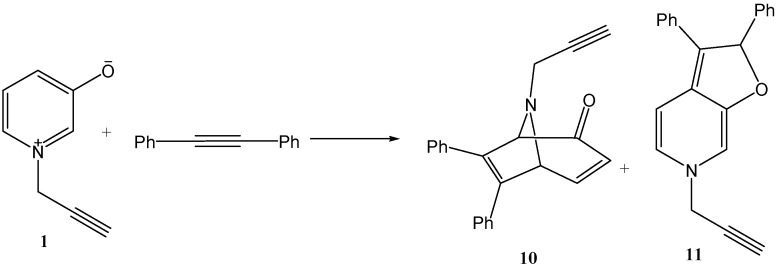
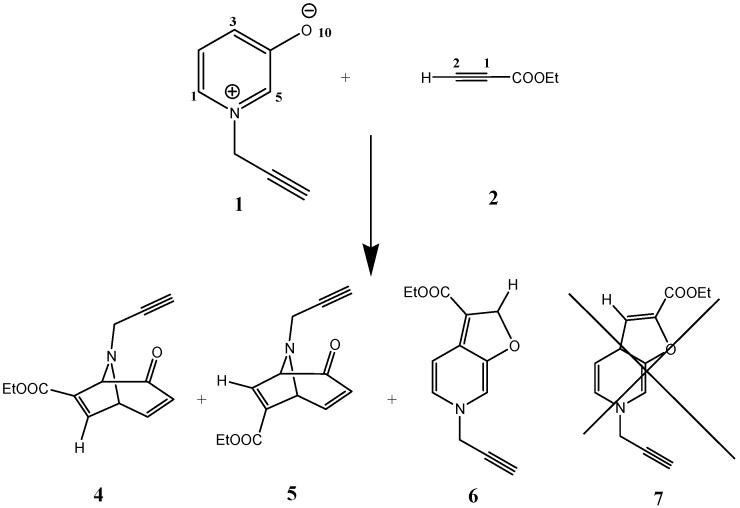
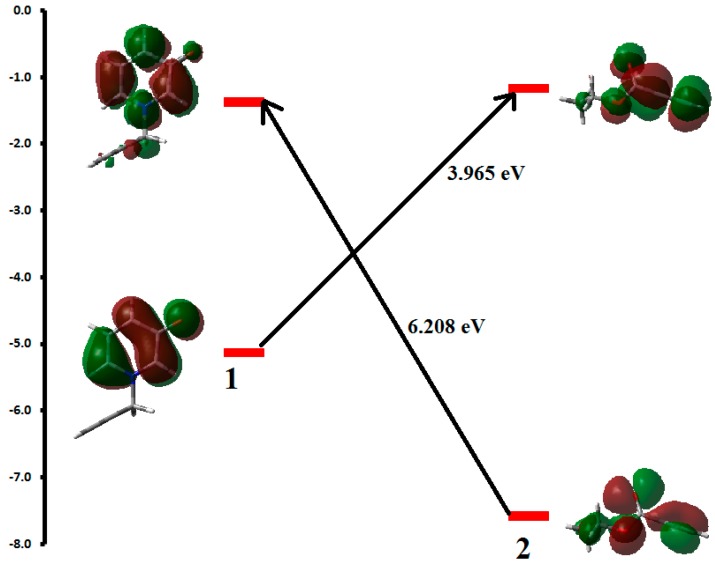
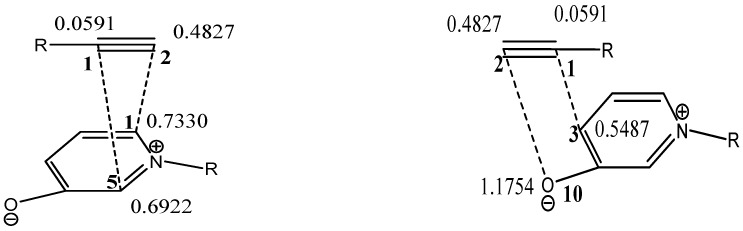
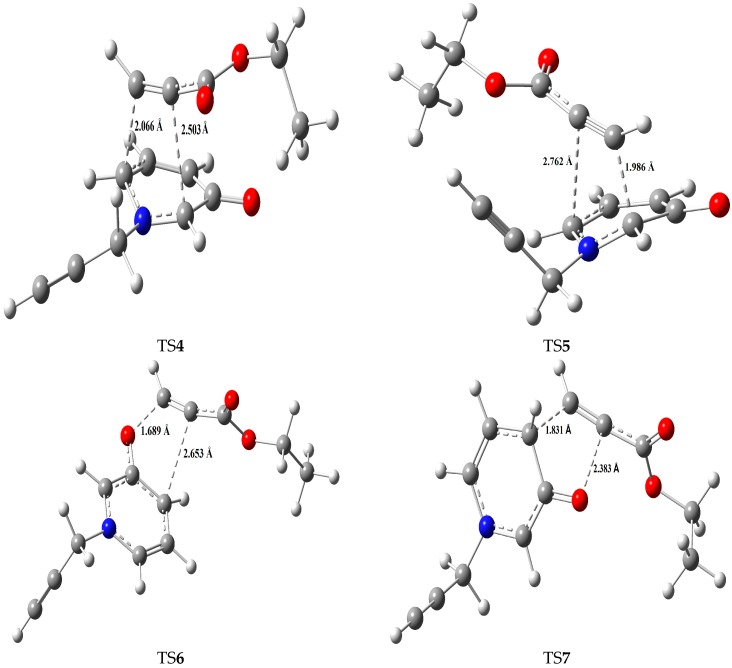
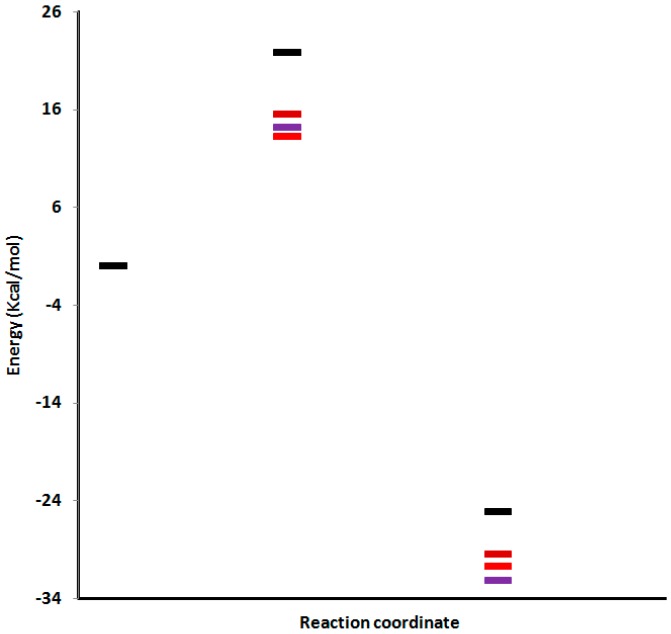
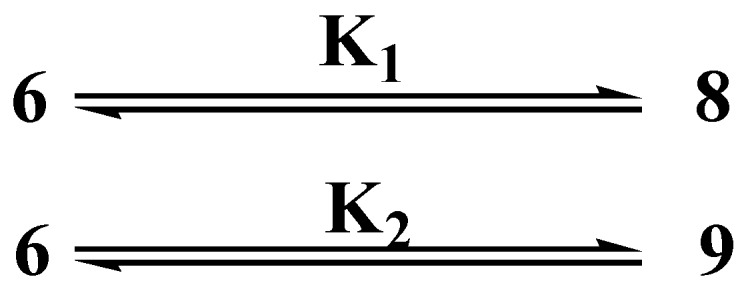
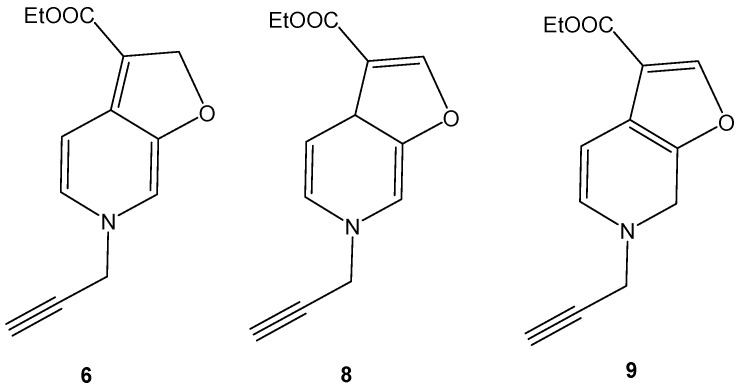
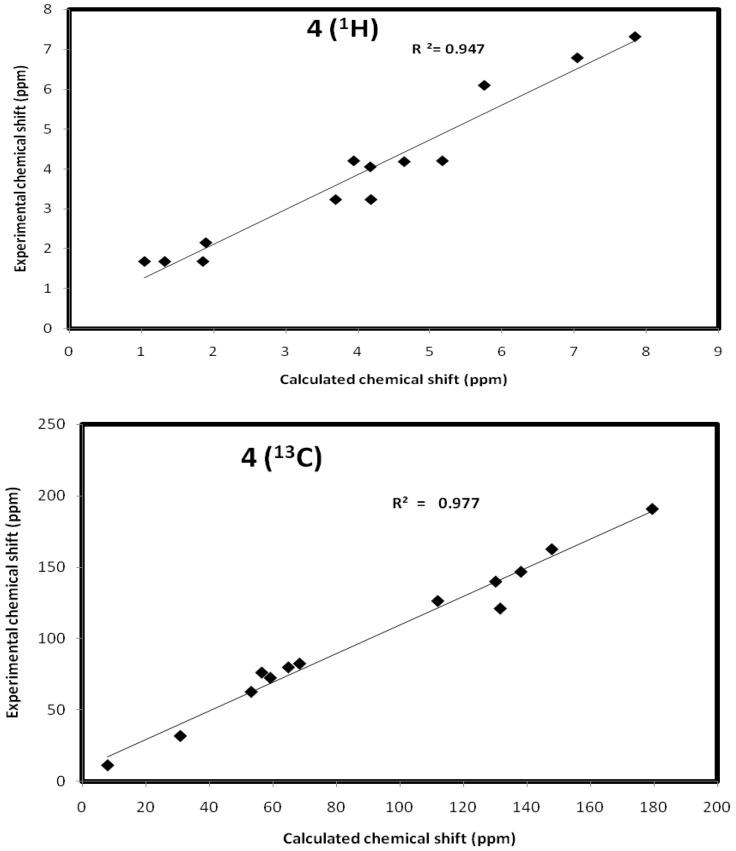
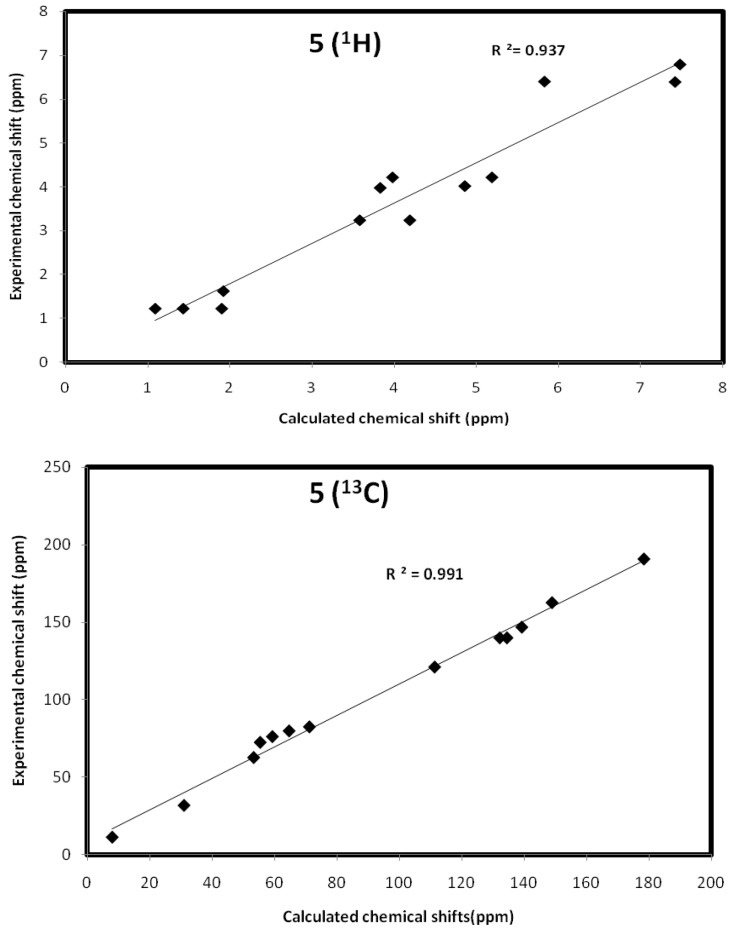
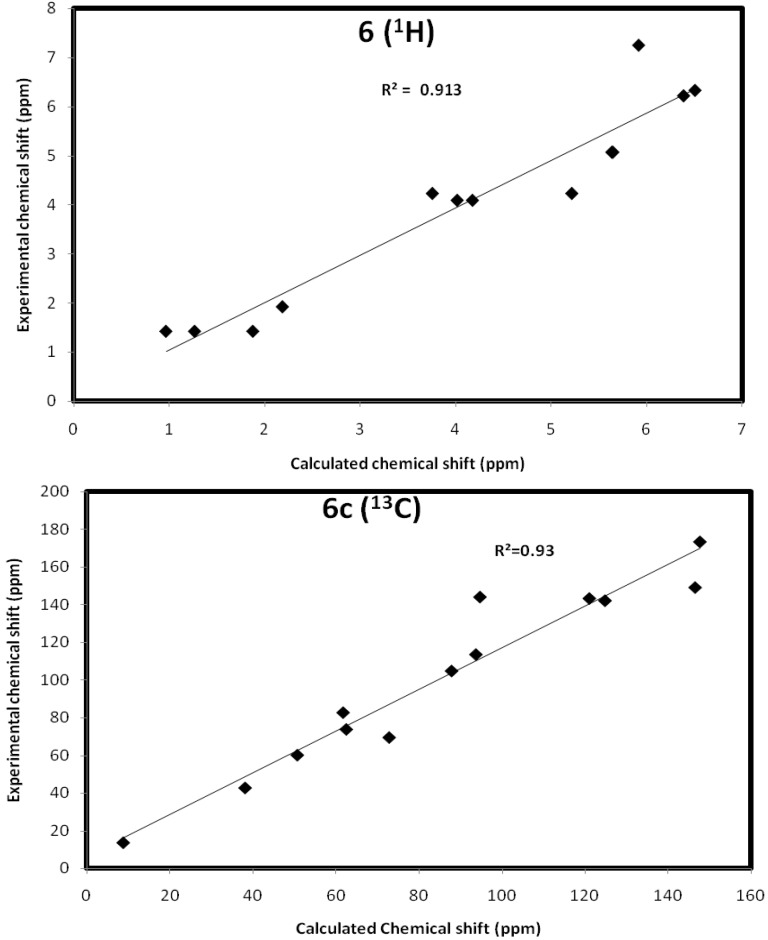
Regioselectively, ethyl propiolate reacted with 1-(propergyl)-pyridinium-3-olate to give two regioisomers; ethyl 4-oxo-8-(prop-2-ynyl)-8-aza-bicyclo(3.2.1)octa-2,6-diene-6-carboxylate 4, ethyl 2-oxo-8-(prop-2-ynyl)-8-aza-bicyclo(3.2.1)octa-3,6-diene-6-carboxylate 5 as well as ethyl 2,6-dihydro-6-(prop-2-ynyl)furo(2,3-c)pyridine-3-carboxylate 6. The obtained compounds were identified by their spectral (IR, mass and NMR) data. Moreover, DFT quantum chemical calculations were used to study the mechanism of the cycloaddition reaction. The regioselectivity was explained using transition state calculations, where the calculations agreed with the formation of products 4 and 5 in almost the same ratio. The reaction was also extended for diphenylaceylene as dipolarophile to give only two products instead of three.
丙炔酸乙酯与1-(炔丙基)-吡啶-3-醇发生区域选择性反应,生成两种区域异构体;4-氧代-8-(丙-2-炔基)-8-氮杂双环(3.2.1)辛-2,6-二烯-6-羧酸乙酯4、2-氧代-8-(丙-2-炔基)-8-氮杂双环(3.2.1)辛-3,6-二烯-6-羧酸乙酯5以及2,6-二氢-6-(丙-2-炔基)呋喃并(2,3-c)吡啶-3-羧酸乙酯6。通过光谱(红外、质谱和核磁共振)数据对所得化合物进行了鉴定。此外,采用密度泛函理论(DFT)量子化学计算研究了环加成反应的机理。利用过渡态计算对区域选择性进行了解释,计算结果表明产物4和5的生成比例几乎相同。该反应还扩展到以二苯乙炔作为亲偶极体,结果只生成了两种产物而非三种。