Ludwig Cancer Research, Science for Life Laboratory, Uppsala University, Box 595, SE 751 24 Uppsala, Sweden.
Department of Medical Biochemistry and Microbiology, Science for Life Laboratory, Uppsala University, Box 582, SE 751 23 Uppsala, Sweden.
J Clin Med. 2016 Jun 29;5(7):63. doi: 10.3390/jcm5070063.
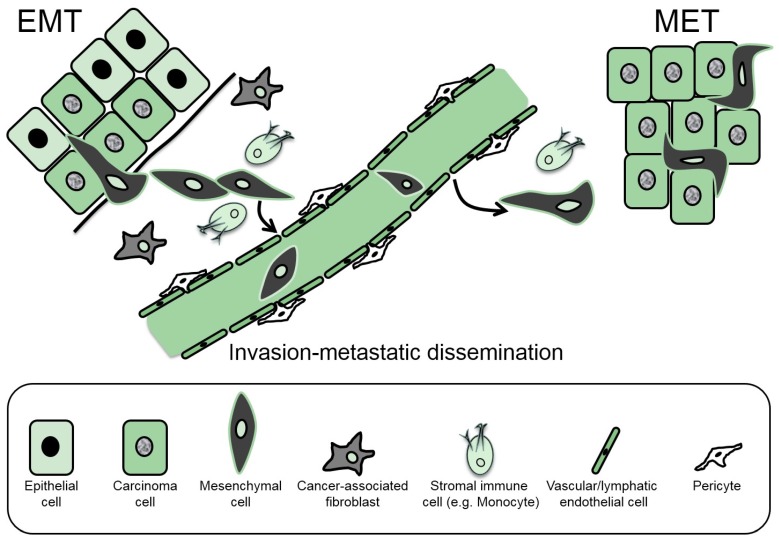
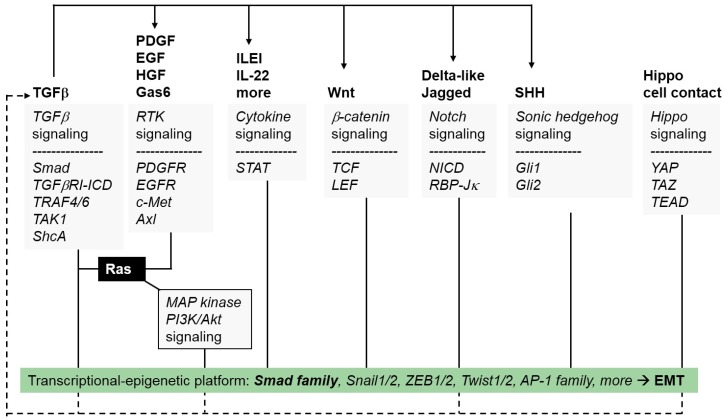
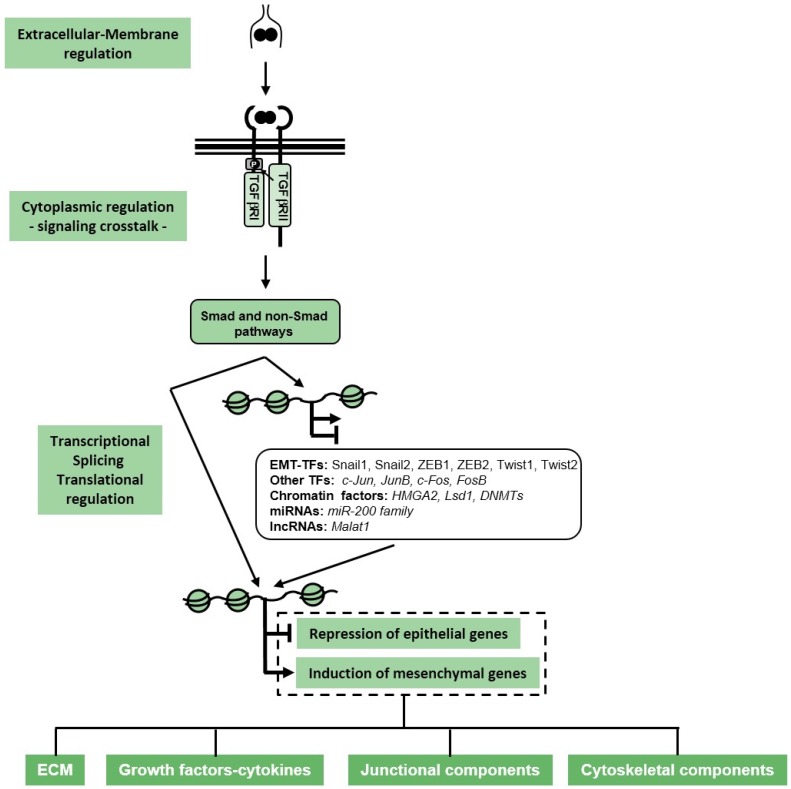
Transitory phenotypic changes such as the epithelial-mesenchymal transition (EMT) help embryonic cells to generate migratory descendants that populate new sites and establish the distinct tissues in the developing embryo. The mesenchymal descendants of diverse epithelia also participate in the wound healing response of adult tissues, and facilitate the progression of cancer. EMT can be induced by several extracellular cues in the microenvironment of a given epithelial tissue. One such cue, transforming growth factor β (TGFβ), prominently induces EMT via a group of specific transcription factors. The potency of TGFβ is partly based on its ability to perform two parallel molecular functions, i.e. to induce the expression of growth factors, cytokines and chemokines, which sequentially and in a complementary manner help to establish and maintain the EMT, and to mediate signaling crosstalk with other developmental signaling pathways, thus promoting changes in cell differentiation. The molecules that are activated by TGFβ signaling or act as cooperating partners of this pathway are impossible to exhaust within a single coherent and contemporary report. Here, we present selected examples to illustrate the key principles of the circuits that control EMT under the influence of TGFβ.
过渡表型变化,如上皮-间充质转化(EMT),有助于胚胎细胞产生迁移后代,这些后代可分布到新的部位,并在发育中的胚胎中建立独特的组织。不同上皮的间充质后代也参与成人组织的伤口愈合反应,并促进癌症的进展。 EMT 可由特定上皮组织微环境中的几种细胞外线索诱导。 TGFβ 是其中一种线索,通过一组特定的转录因子显著诱导 EMT。 TGFβ 的效力部分基于其执行两种平行分子功能的能力,即诱导生长因子、细胞因子和趋化因子的表达,这些因子依次以互补的方式有助于建立和维持 EMT,并介导与其他发育信号通路的信号串扰,从而促进细胞分化的变化。 TGFβ 信号激活的分子或作为该途径的合作伙伴的分子,在单个连贯的当代报告中是不可能穷尽的。 在这里,我们选择了一些例子来说明在 TGFβ 影响下控制 EMT 的电路的关键原则。