Miller Desinia B, Snow Samantha J, Henriquez Andres, Schladweiler Mette C, Ledbetter Allen D, Richards Judy E, Andrews Debora L, Kodavanti Urmila P
Curriculum in Toxicology, University of North Carolina-Chapel Hill, Chapel Hill, North Carolina, United States.
Environmental Public Health Division, National Health and Environmental Effects Research Laboratory, U.S. Environmental Protection Agency, Research Triangle Park, NC, United States.
Toxicol Appl Pharmacol. 2016 Sep 1;306:47-57. doi: 10.1016/j.taap.2016.06.027. Epub 2016 Jun 28.
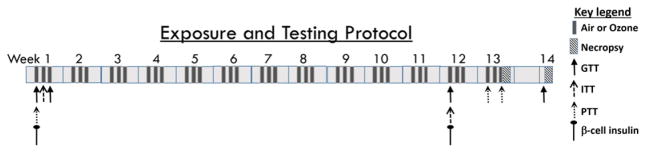
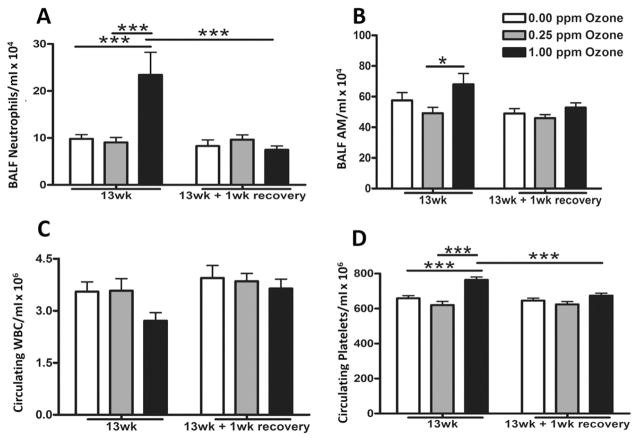
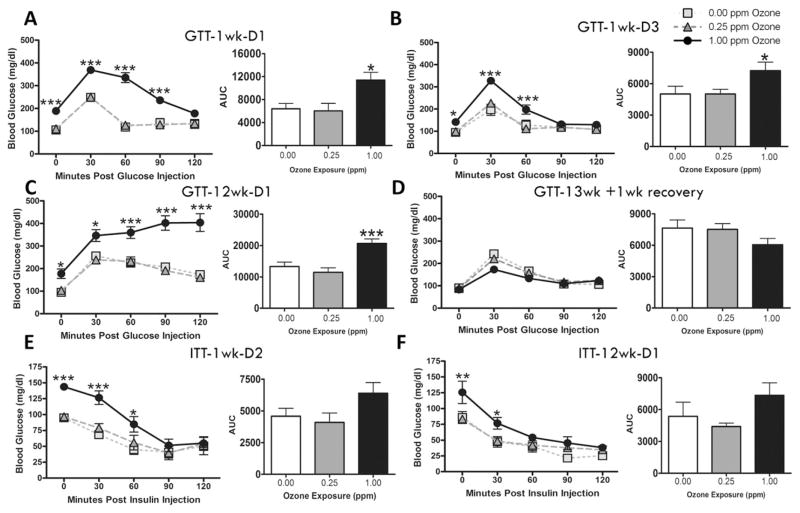
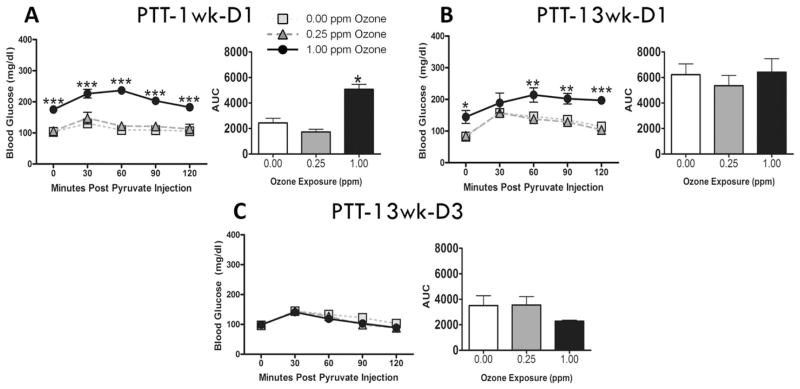
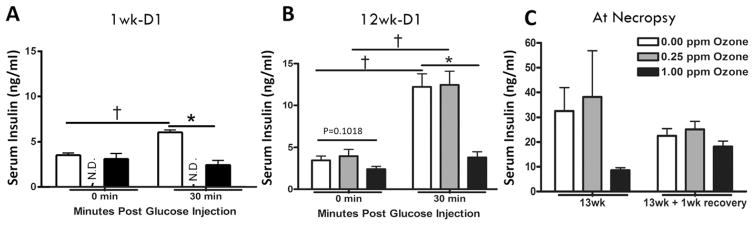
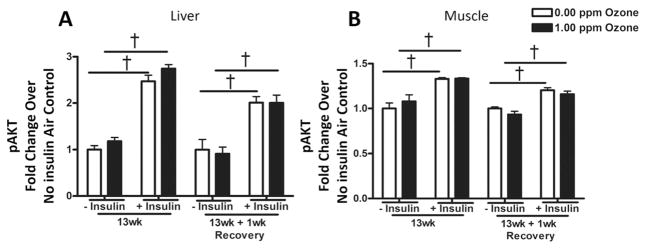
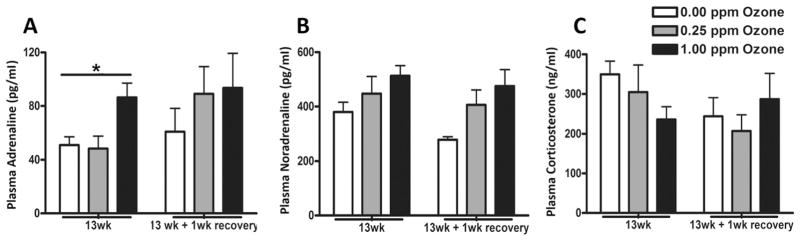
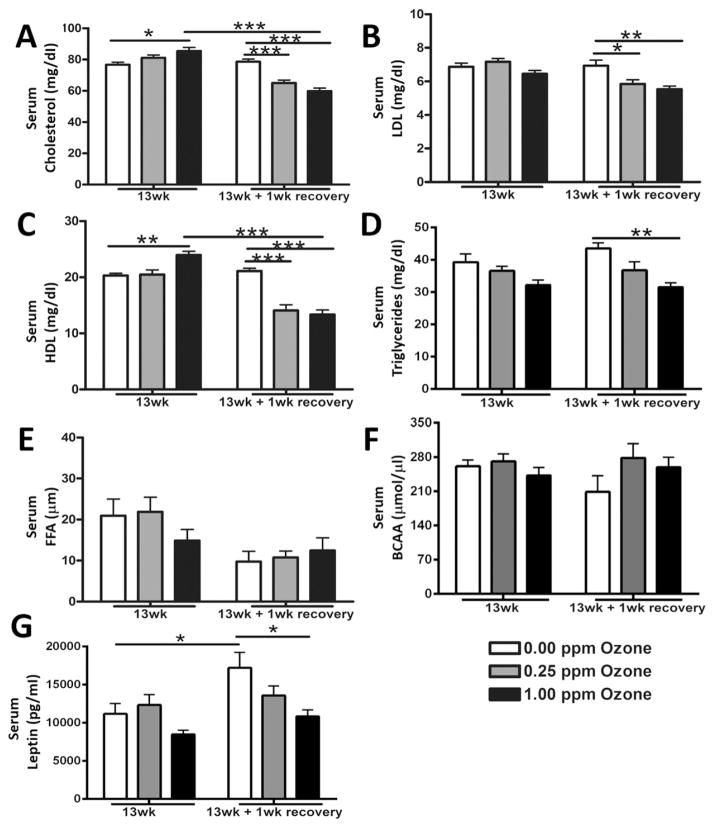
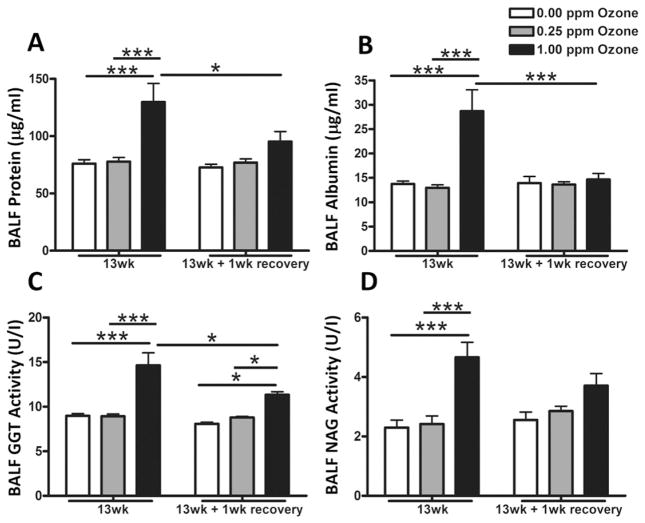
Acute ozone exposure induces a classical stress response with elevated circulating stress hormones along with changes in glucose, protein and lipid metabolism in rats, with similar alterations in ozone-exposed humans. These stress-mediated changes over time have been linked to insulin resistance. We hypothesized that acute ozone-induced stress response and metabolic impairment would persist during subchronic episodic exposure and induce peripheral insulin resistance. Male Wistar Kyoto rats were exposed to air or 0.25ppm or 1.00ppm ozone, 5h/day, 3 consecutive days/week (wk) for 13wks. Pulmonary, metabolic, insulin signaling and stress endpoints were determined immediately after 13wk or following a 1wk recovery period (13wk+1wk recovery). We show that episodic ozone exposure is associated with persistent pulmonary injury and inflammation, fasting hyperglycemia, glucose intolerance, as well as, elevated circulating adrenaline and cholesterol when measured at 13wk, however, these responses were largely reversible following a 1wk recovery. Moreover, the increases noted acutely after ozone exposure in non-esterified fatty acids and branched chain amino acid levels were not apparent following a subchronic exposure. Neither peripheral or tissue specific insulin resistance nor increased hepatic gluconeogenesis were present after subchronic ozone exposure. Instead, long-term ozone exposure lowered circulating insulin and severely impaired glucose-stimulated beta-cell insulin secretion. Thus, our findings in young-adult rats provide potential insights into epidemiological studies that show a positive association between ozone exposures and type 1 diabetes. Ozone-induced beta-cell dysfunction may secondarily contribute to other tissue-specific metabolic alterations following chronic exposure due to impaired regulation of glucose, lipid, and protein metabolism.
急性臭氧暴露会在大鼠中引发典型的应激反应,导致循环应激激素升高,同时伴有葡萄糖、蛋白质和脂质代谢的变化,臭氧暴露的人类也有类似改变。随着时间推移,这些由应激介导的变化与胰岛素抵抗有关。我们推测,急性臭氧诱导的应激反应和代谢损伤在亚慢性间歇性暴露期间会持续存在,并诱导外周胰岛素抵抗。雄性Wistar Kyoto大鼠暴露于空气、0.25ppm或1.00ppm臭氧中,每天5小时,每周连续3天,共13周。在13周后或1周恢复期(13周 + 1周恢复期)后立即测定肺部、代谢、胰岛素信号和应激终点指标。我们发现,间歇性臭氧暴露与持续的肺损伤和炎症、空腹高血糖、葡萄糖耐量异常以及在13周时测定的循环肾上腺素和胆固醇升高有关,然而,这些反应在1周恢复期后基本可逆。此外,在亚慢性暴露后,臭氧暴露后急性出现的非酯化脂肪酸和支链氨基酸水平升高并不明显。亚慢性臭氧暴露后既没有外周或组织特异性胰岛素抵抗,也没有肝糖异生增加。相反,长期臭氧暴露会降低循环胰岛素水平,并严重损害葡萄糖刺激的β细胞胰岛素分泌。因此,我们在年轻成年大鼠中的研究结果为流行病学研究提供了潜在的见解,这些研究表明臭氧暴露与1型糖尿病之间存在正相关。由于葡萄糖、脂质和蛋白质代谢调节受损,臭氧诱导的β细胞功能障碍可能在慢性暴露后继而导致其他组织特异性代谢改变。