Ungerer Martin, Faßbender Julia, Li Zhongmin, Münch Götz, Holthoff Hans-Peter
Procorde (Advancecor), Fraunhoferstrasse 9a, 82152, Martinsried, Germany.
Clin Rev Allergy Immunol. 2017 Apr;52(2):182-193. doi: 10.1007/s12016-016-8562-7.
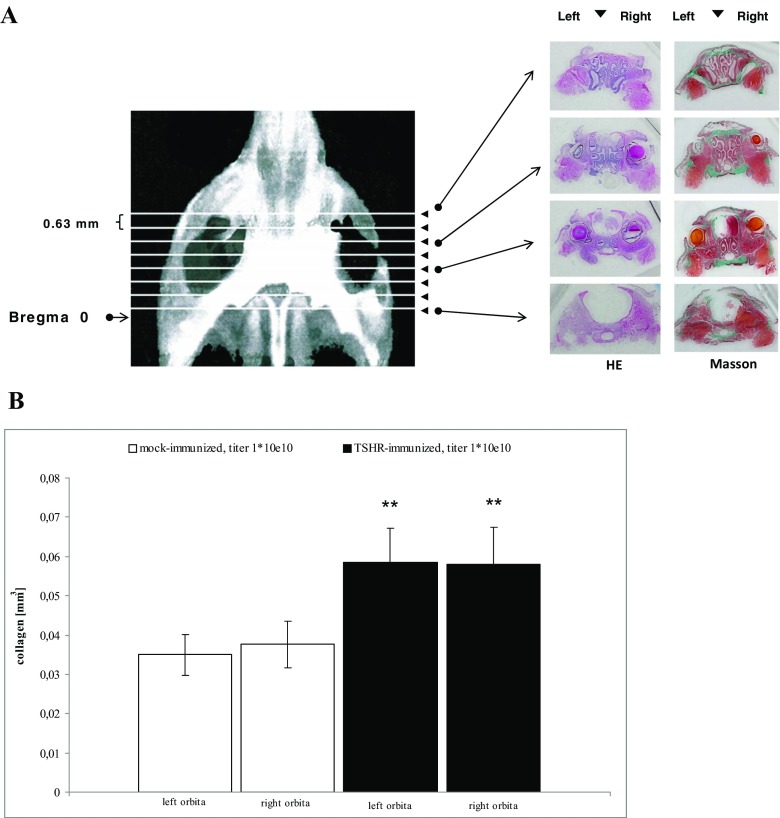
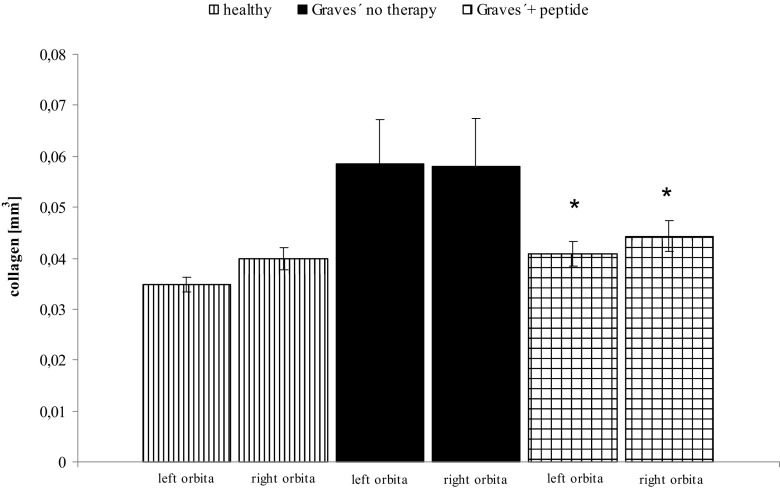
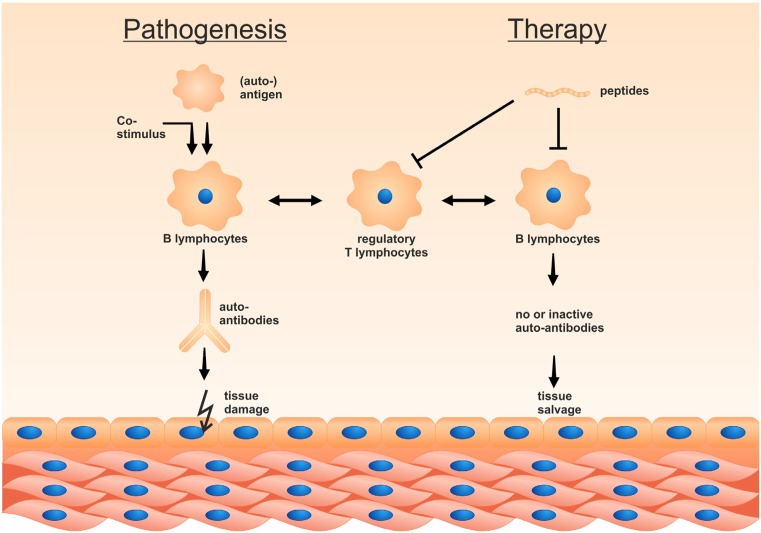
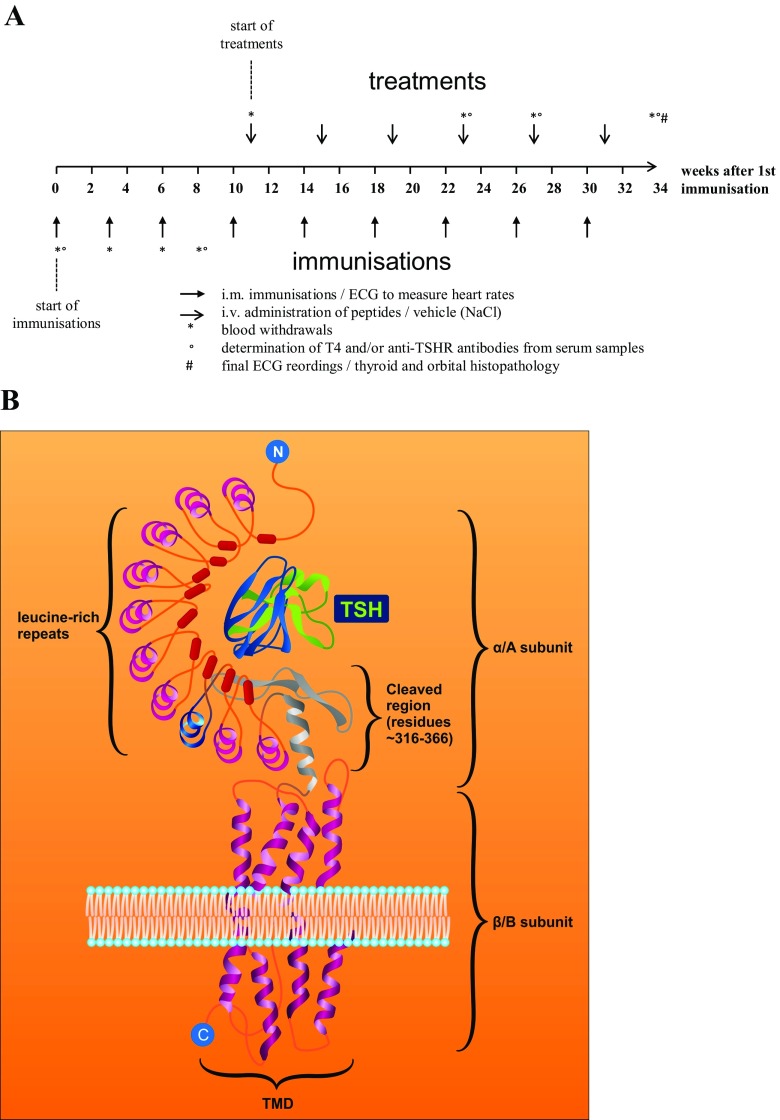
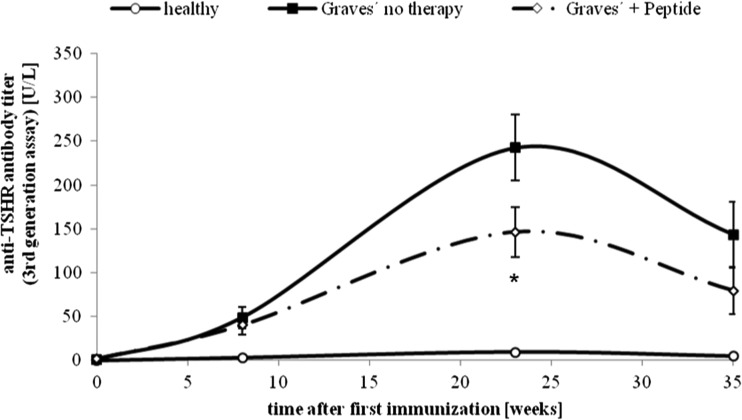
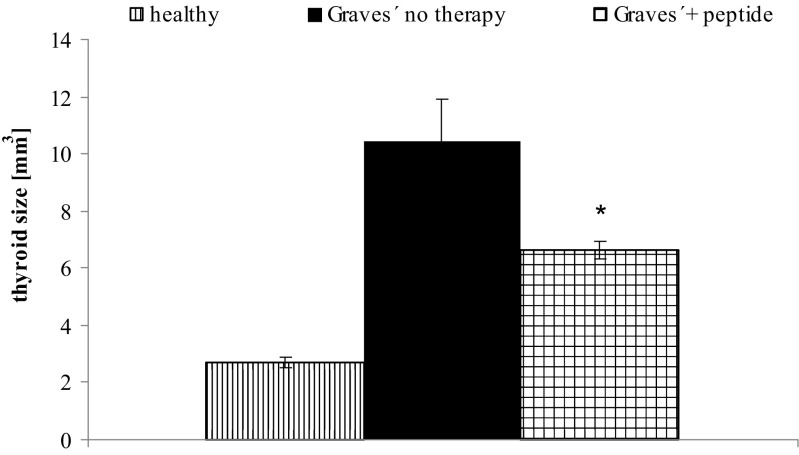
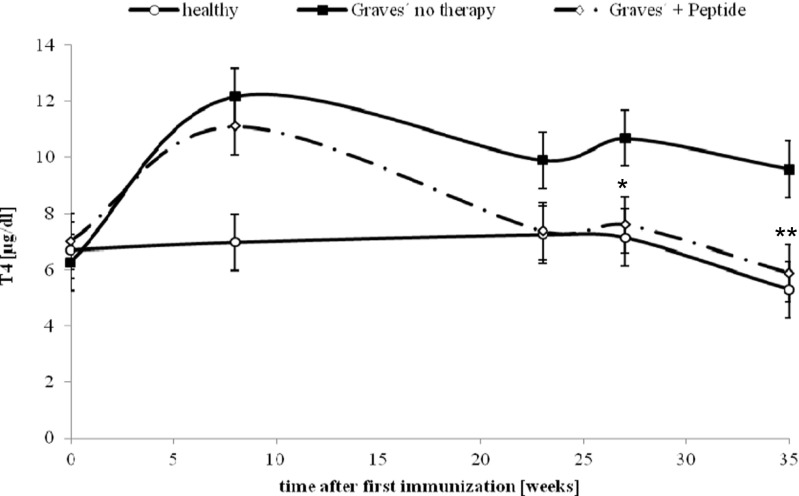
Various approaches have been used to model human Graves' disease in mice, including transfected fibroblasts, and plasmid or adenoviral immunisations with the extracellular A subunit of the human thyrotropin receptor (TSHR). Some of these models were only observed for a short time period or were self-limiting. A long-term model for human Graves' disease was established in mice using continuing immunisations (4-weekly injections) with recombinant adenovirus expressing TSHR. Generation of TSHR binding cAMP-stimulatory antibodies, thyroid enlargement and alterations, elevated serum thyroxin levels, tachycardia and cardiac hypertrophy were maintained for at least 9 months in all Ad-TSHR-immunised mice. Here, we show that these mice suffer from orbitopathy, which was detected by serial orbital sectioning and histomorphometry. Attempts to treat established Graves' disease in preclinical mouse model studies have included small molecule allosteric antagonists and specific antagonist antibodies which were isolated from hypothyroid patients. In addition, novel peptides have been conceived which mimic the cylindrical loops of the TSHR leucine-rich repeat domain, in order to re-establish tolerance toward the antigen. Here, we show preliminary results that one set of these peptides improves or even cures all signs and symptoms of Graves' disease in mice after six consecutive monthly injections. First beneficial effects were observed 3-4 months after starting these therapies. In immunologically naïve mice, administration of the peptides did not induce any immune response.
人们已采用多种方法在小鼠中模拟人类格雷夫斯病,包括转染成纤维细胞,以及用人促甲状腺激素受体(TSHR)的细胞外A亚基进行质粒或腺病毒免疫。其中一些模型仅观察了较短时间或具有自限性。通过用表达TSHR的重组腺病毒持续免疫(每4周注射一次),在小鼠中建立了人类格雷夫斯病的长期模型。在所有接受Ad-TSHR免疫的小鼠中,TSHR结合性cAMP刺激抗体的产生、甲状腺肿大及改变、血清甲状腺素水平升高、心动过速和心脏肥大至少维持了9个月。在此,我们表明这些小鼠患有眼眶病,这是通过连续眼眶切片和组织形态计量学检测到的。在临床前小鼠模型研究中,治疗已确诊的格雷夫斯病的尝试包括小分子变构拮抗剂和从甲状腺功能减退患者中分离出的特异性拮抗剂抗体。此外,人们还构想了新型肽,这些肽模拟TSHR富含亮氨酸重复结构域的圆柱状环,以重建对抗原的耐受性。在此,我们展示了初步结果,即连续每月注射六次后,其中一组肽可改善甚至治愈小鼠格雷夫斯病的所有体征和症状。在开始这些治疗3-4个月后观察到了最初的有益效果。在免疫未致敏的小鼠中,给予这些肽不会诱导任何免疫反应。