Duru Nadire, Gernapudi Ramkishore, Lo Pang-Kuo, Yao Yuan, Wolfson Benjamin, Zhang Yongshu, Zhou Qun
Department of Biochemistry and Molecular Biology, Greenebaum Cancer Center, University of Maryland School of Medicine, Baltimore, MD 21201, USA.
Oncotarget. 2016 Jul 26;7(30):47511-47525. doi: 10.18632/oncotarget.10203.
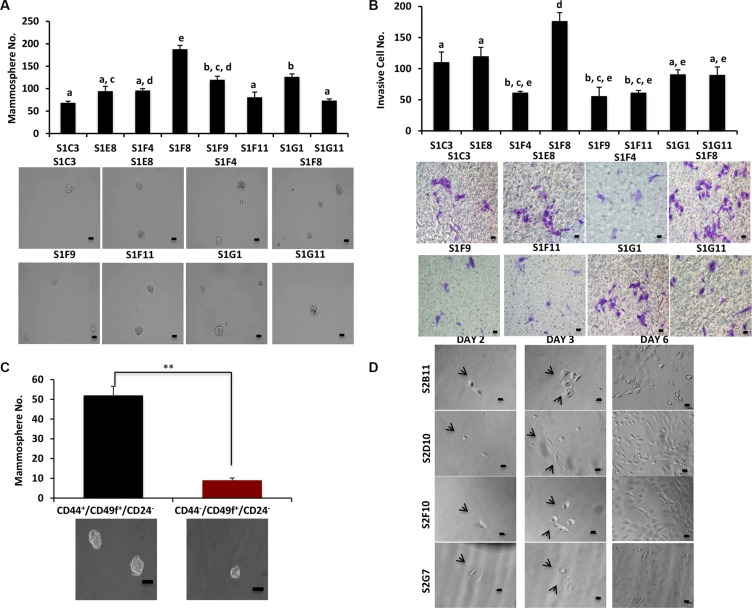
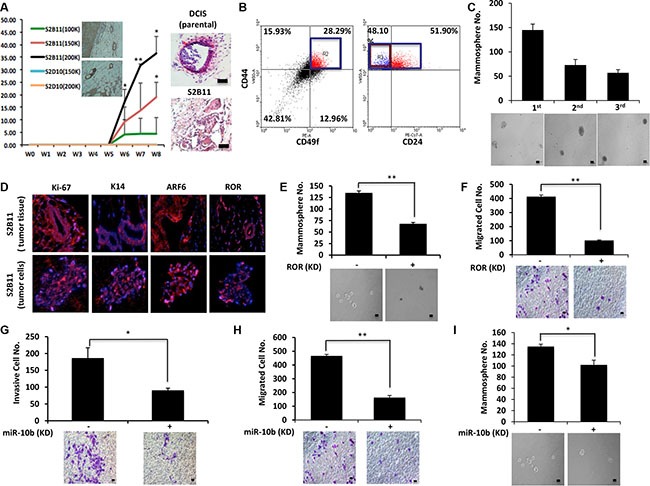
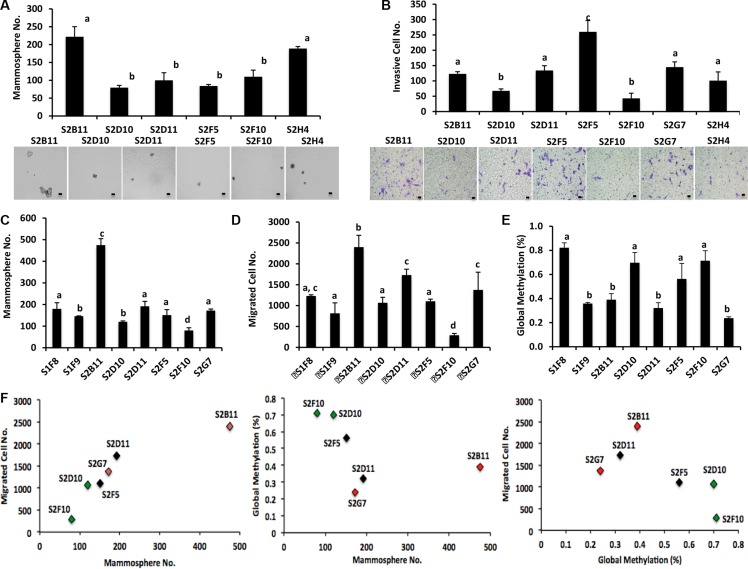
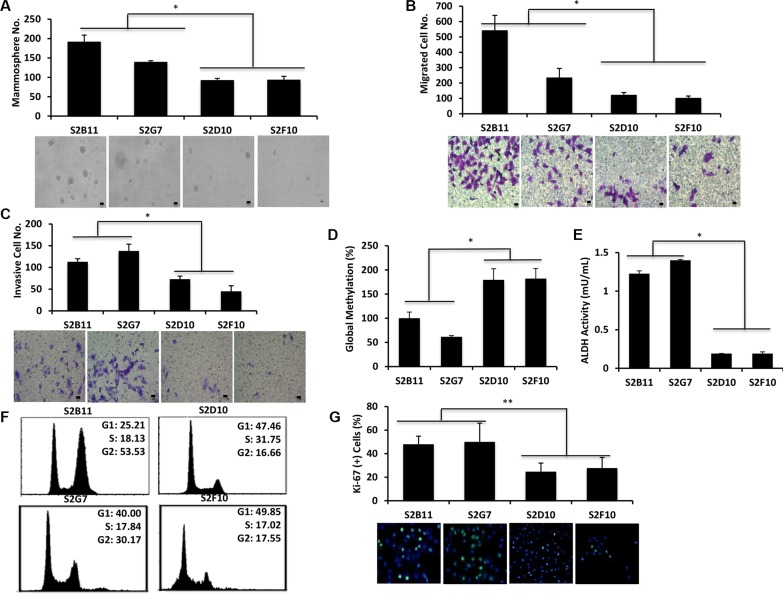
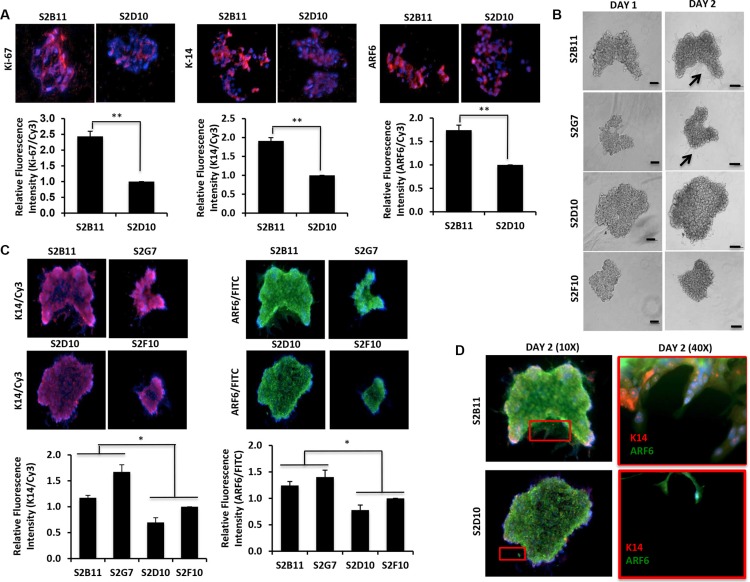
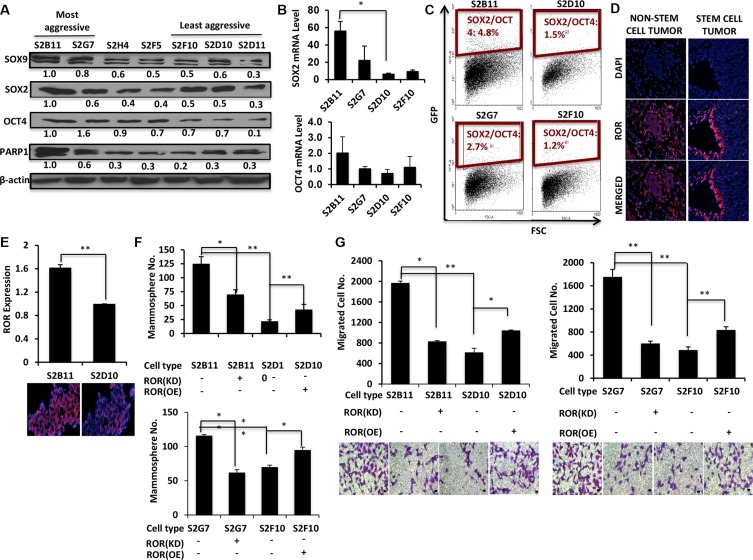
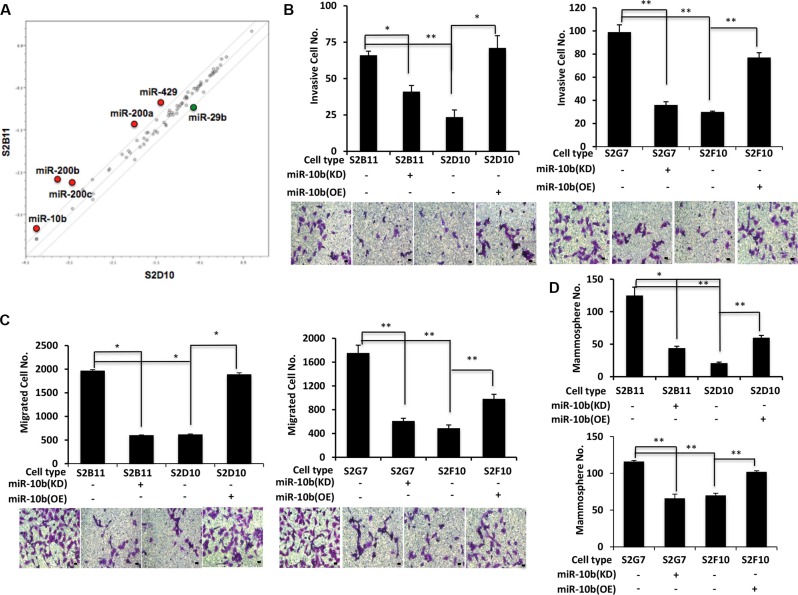
The molecular mechanisms responsible for the Ductal Carcinoma in Situ (DCIS)-Invasive Ductal Carcinoma (IDC) transition have yet to be elucidated. Due to the lack of molecularly targeted therapies, basal-like DCIS has a high risk of recurrence and progression to invasive and metastatic cancers. In this study, by applying a novel single-cell clonogenic approach with the CD49f+/CD44+/CD24- surface markers, we characterized the aggressive clones that have enhanced self-renewal, migratory and invasive capacities derived from a human DCIS model cell line MCF10DCIS. The aggressive clones had elevated ALDH1 activity, lower global DNA methylation and increased expression of stem cell related genes, especially concurrent activation of SOX2/OCT4. In addition, we showed that the aggressive clones have increased expression of lincRNA-RoR and miR-10b compared to non-aggressive clones, which enhance their self-renewal and invasive abilities. Finally, we confirmed our in vitro results in vivo, demonstrating that aggressive clones were capable of forming tumors in nude mice, whereas non-aggressive clones were not. Our data suggest that lincRNA-RoR and miR10b could be used to distinguish aggressive clones from non-aggressive clones within the heterogeneous CD49f+/CD44+/CD24- DCIS population. Our findings also provide the foundation to develop new chemoprevention agents for DCIS-IDC transition.
导管原位癌(DCIS)向浸润性导管癌(IDC)转变的分子机制尚未阐明。由于缺乏分子靶向治疗,基底样DCIS具有较高的复发风险,并易进展为浸润性和转移性癌症。在本研究中,我们应用一种新的单细胞克隆方法,结合CD49f+/CD44+/CD24-表面标志物,对源自人DCIS模型细胞系MCF10DCIS的具有增强自我更新、迁移和侵袭能力的侵袭性克隆进行了表征。侵袭性克隆的ALDH1活性升高,整体DNA甲基化水平降低,干细胞相关基因的表达增加,尤其是SOX2/OCT4的同时激活。此外,我们发现与非侵袭性克隆相比,侵袭性克隆中lincRNA-RoR和miR-10b的表达增加,这增强了它们的自我更新和侵袭能力。最后,我们在体内证实了我们的体外结果,表明侵袭性克隆能够在裸鼠中形成肿瘤,而非侵袭性克隆则不能。我们的数据表明,lincRNA-RoR和miR10b可用于区分异质性CD49f+/CD44+/CD24-DCIS群体中的侵袭性克隆和非侵袭性克隆。我们的研究结果也为开发针对DCIS向IDC转变的新型化学预防药物奠定了基础。