Silva Thaiomara A, Smuczek Basílio, Valadão Iuri C, Dzik Luciana M, Iglesia Rebeca P, Cruz Mário C, Zelanis André, de Siqueira Adriane S, Serrano Solange M T, Goldberg Gary S, Jaeger Ruy G, Freitas Vanessa M
Department of Cell and Developmental Biology, Institute of Biomedical Sciences (ICB), University of Sao Paulo, Sao Paulo, Brazil.
Center of Facilities and Support Research, Institute of Biomedical Sciences (ICB), Sao Paulo, Brazil.
Oncotarget. 2016 Aug 2;7(31):49998-50016. doi: 10.18632/oncotarget.10307.
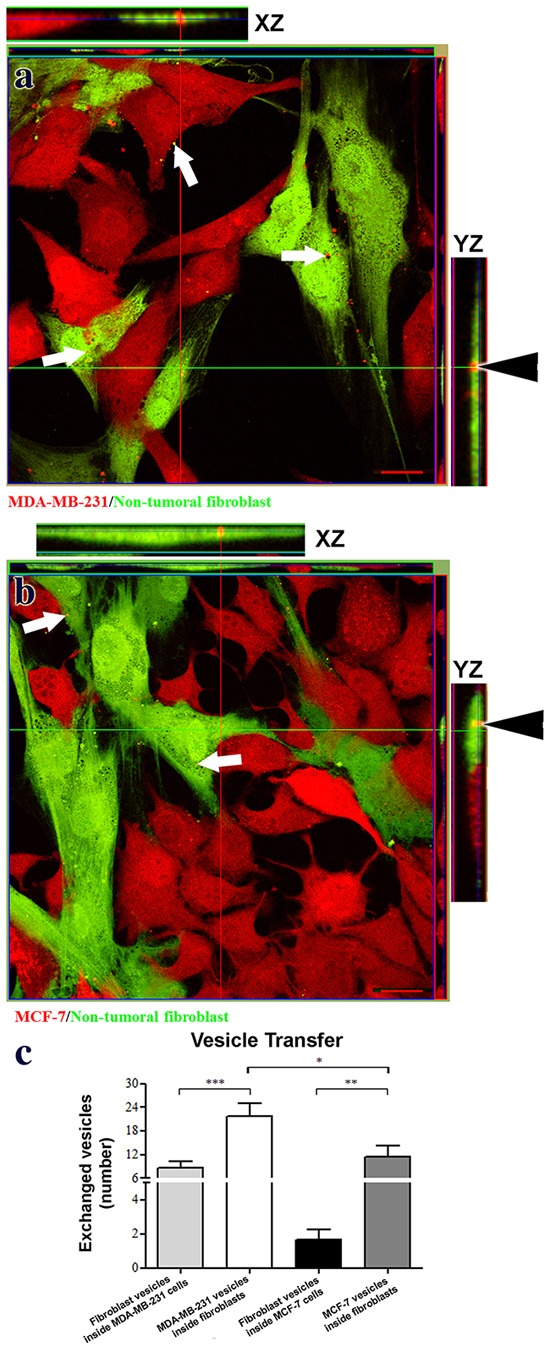
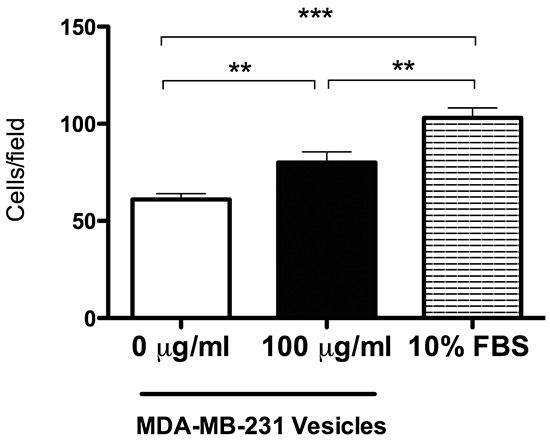
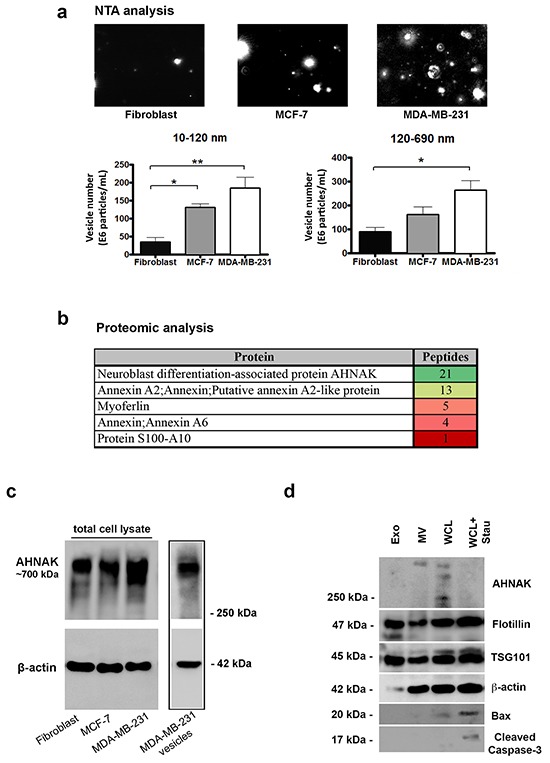
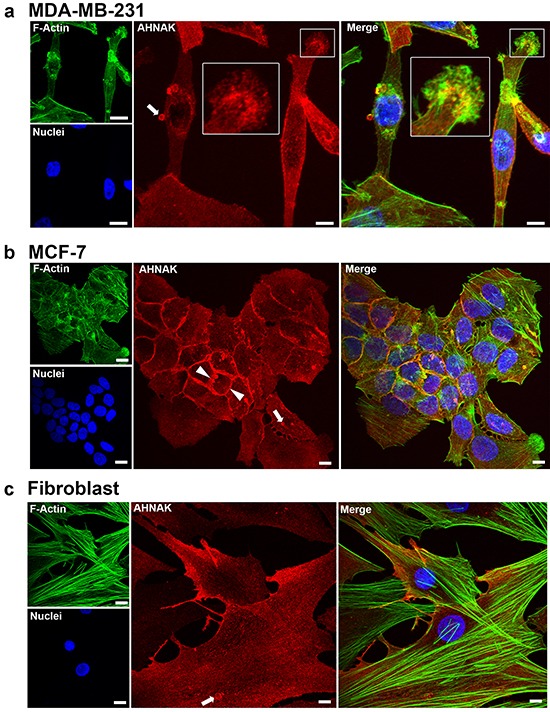
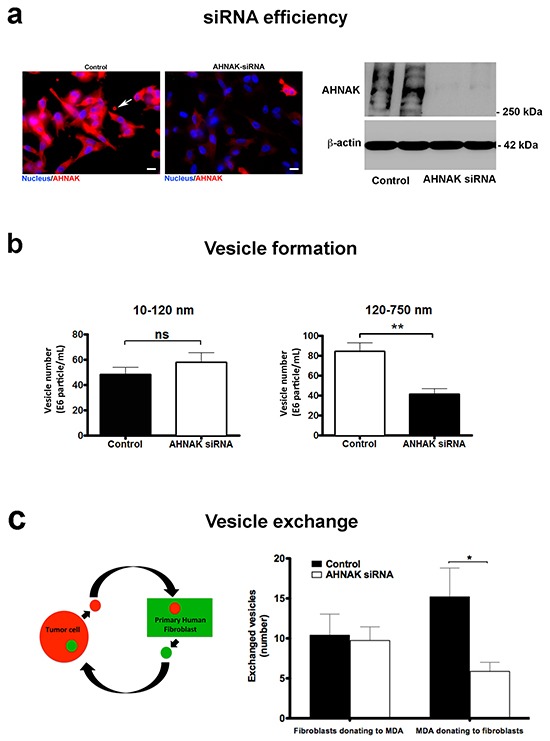
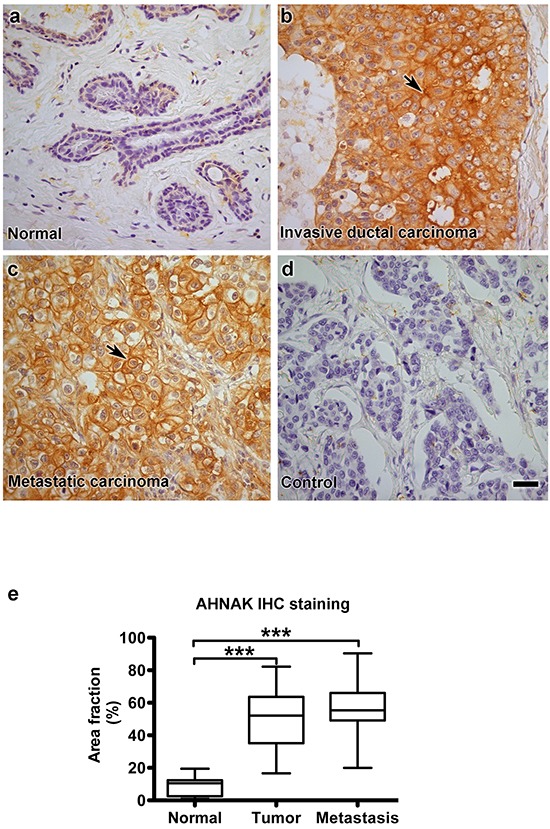
Extracellular vesicles play important roles in tumor development. Many components of these structures, including microvesicles and exosomes, have been defined. However, mechanisms by which extracellular vesicles affect tumor progression are not fully understood. Here, we investigated vesicular communication between mammary carcinoma cells and neighboring nontransformed mammary fibroblasts. Nonbiased proteomic analysis found that over 1% of the entire proteome is represented in these vesicles, with the neuroblast differentiation associated protein AHNAK and annexin A2 being the most abundant. In particular, AHNAK was found to be the most prominent component of these vesicles based on peptide number, and appeared necessary for their formation. In addition, we report here that carcinoma cells produce vesicles that promote the migration of recipient fibroblasts. These data suggest that AHNAK enables mammary carcinoma cells to produce and release extracellular vesicles that cause disruption of the stroma by surrounding fibroblasts. This paradigm reveals fundamental mechanisms by which vesicular communication between carcinoma cells and stromal cells can promote cancer progression in the tumor microenvironment.
细胞外囊泡在肿瘤发展中发挥着重要作用。这些结构的许多成分,包括微囊泡和外泌体,已被明确。然而,细胞外囊泡影响肿瘤进展的机制尚未完全清楚。在此,我们研究了乳腺癌细胞与邻近的未转化乳腺成纤维细胞之间的囊泡通讯。非偏向性蛋白质组学分析发现,这些囊泡中包含了超过1%的整个蛋白质组,其中神经母细胞分化相关蛋白AHNAK和膜联蛋白A2最为丰富。特别是,基于肽段数量,AHNAK被发现是这些囊泡中最突出的成分,并且似乎是其形成所必需的。此外,我们在此报告,癌细胞产生的囊泡可促进受体成纤维细胞的迁移。这些数据表明,AHNAK使乳腺癌细胞能够产生和释放细胞外囊泡,这些囊泡会导致周围成纤维细胞对基质的破坏。这一范例揭示了癌细胞与基质细胞之间的囊泡通讯可促进肿瘤微环境中癌症进展的基本机制。