Rouse Andrew A, Cook Peter F, Large Edward W, Reichmuth Colleen
Long Marine Laboratory, Institute of Marine Sciences, University of California Santa Cruz Santa Cruz, CA, USA.
Department of Psychology, Emory University Atlanta, GA, USA.
Front Neurosci. 2016 Jun 3;10:257. doi: 10.3389/fnins.2016.00257. eCollection 2016.
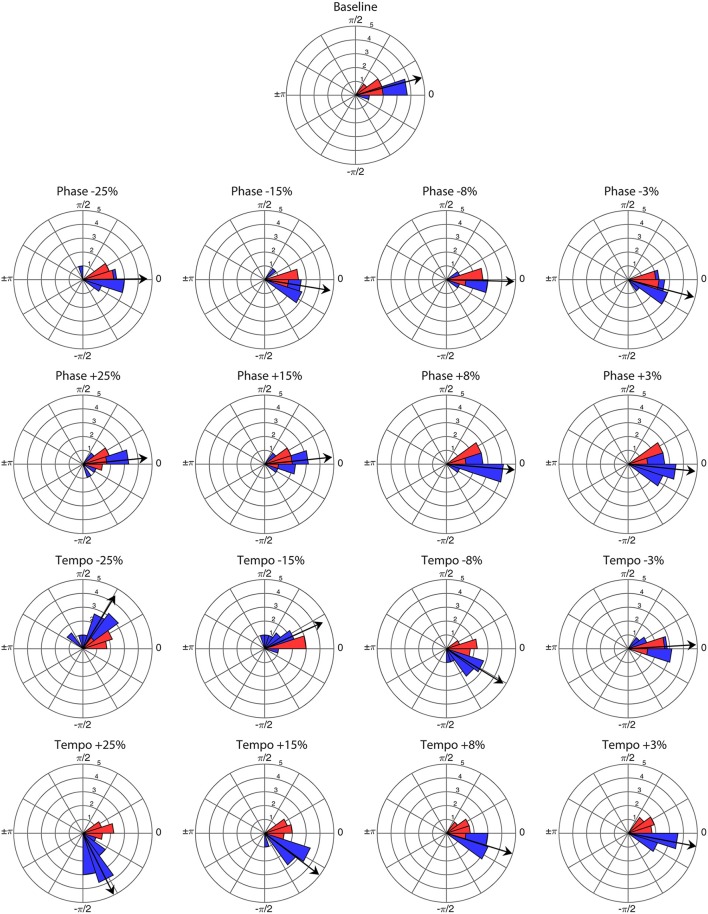
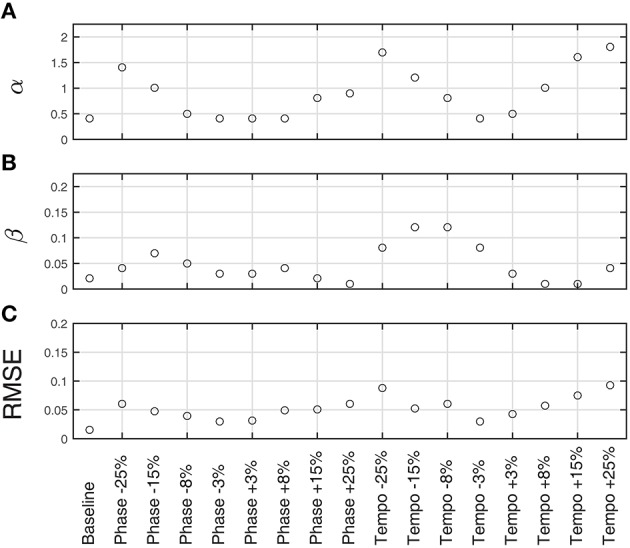
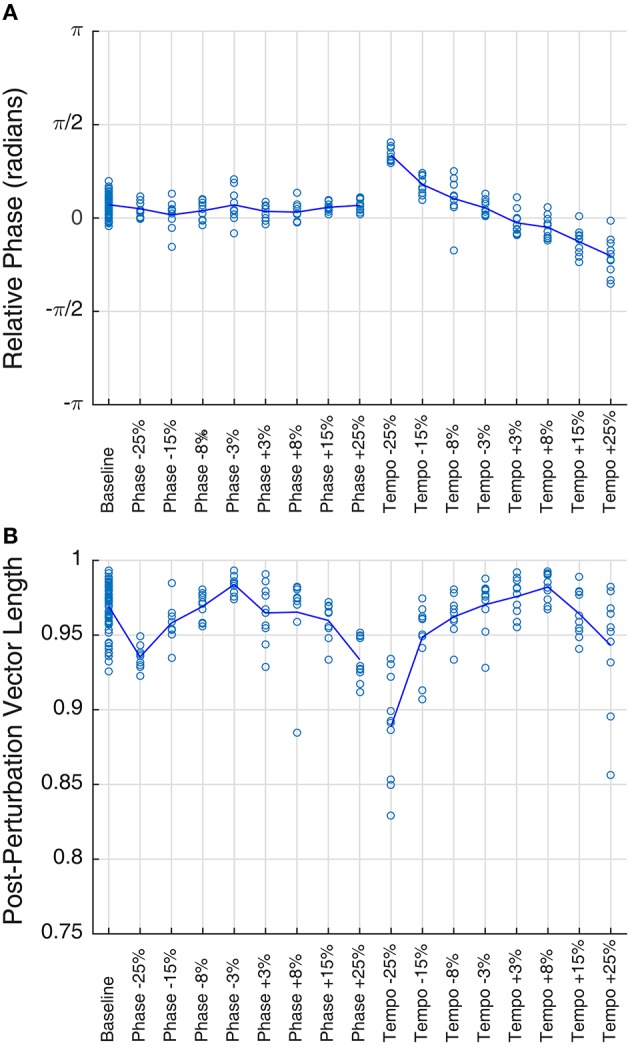
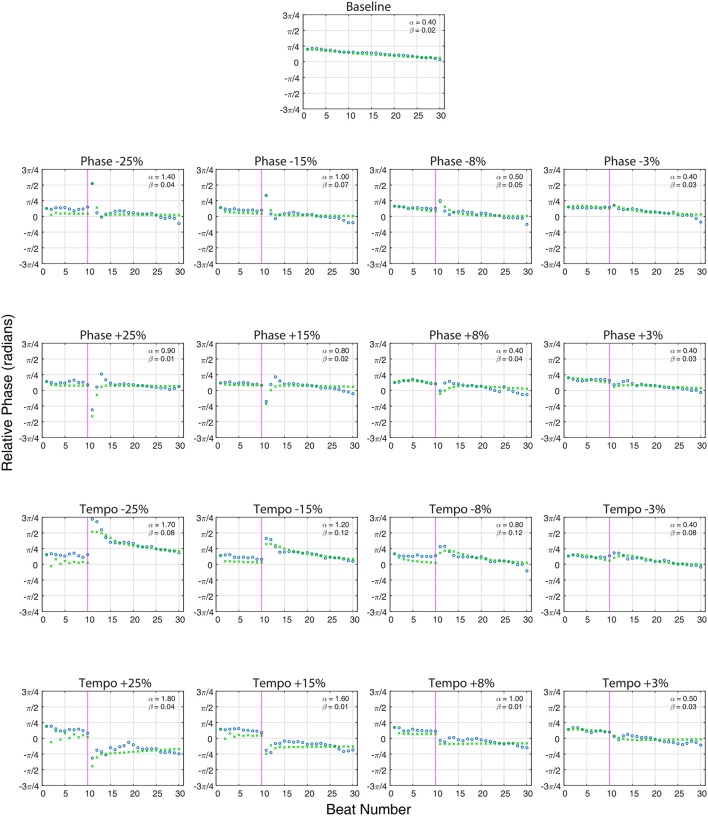
Human capacity for entraining movement to external rhythms-i.e., beat keeping-is ubiquitous, but its evolutionary history and neural underpinnings remain a mystery. Recent findings of entrainment to simple and complex rhythms in non-human animals pave the way for a novel comparative approach to assess the origins and mechanisms of rhythmic behavior. The most reliable non-human beat keeper to date is a California sea lion, Ronan, who was trained to match head movements to isochronous repeating stimuli and showed spontaneous generalization of this ability to novel tempos and to the complex rhythms of music. Does Ronan's performance rely on the same neural mechanisms as human rhythmic behavior? In the current study, we presented Ronan with simple rhythmic stimuli at novel tempos. On some trials, we introduced "perturbations," altering either tempo or phase in the middle of a presentation. Ronan quickly adjusted her behavior following all perturbations, recovering her consistent phase and tempo relationships to the stimulus within a few beats. Ronan's performance was consistent with predictions of mathematical models describing coupled oscillation: a model relying solely on phase coupling strongly matched her behavior, and the model was further improved with the addition of period coupling. These findings are the clearest evidence yet for parity in human and non-human beat keeping and support the view that the human ability to perceive and move in time to rhythm may be rooted in broadly conserved neural mechanisms.
人类将动作与外部节奏同步的能力,即打节拍,是普遍存在的,但其进化历史和神经基础仍然是个谜。最近在非人类动物中发现了对简单和复杂节奏的同步现象,这为评估节奏行为的起源和机制提供了一种新的比较方法。迄今为止,最可靠的非人类节拍保持者是一只名叫罗南的加州海狮,它经过训练,能使头部动作与等时重复刺激相匹配,并表现出这种能力能自发地推广到新节奏和复杂的音乐节奏中。罗南的表现是否依赖于与人类节奏行为相同的神经机制?在当前的研究中,我们以新节奏向罗南呈现简单的节奏刺激。在一些试验中,我们引入了“干扰”,在呈现过程中改变节奏或相位。罗南在所有干扰后都能迅速调整自己的行为,在几拍内恢复与刺激一致的相位和节奏关系。罗南的表现与描述耦合振荡的数学模型预测一致:一个仅依赖相位耦合的模型与她的行为高度匹配,并且通过添加周期耦合进一步改进了该模型。这些发现是迄今为止关于人类和非人类节拍保持具有同等性的最清晰证据,并支持这样一种观点,即人类感知节奏并随节奏同步运动的能力可能植根于广泛保守的神经机制。