Marcoleta Andrés E, Berríos-Pastén Camilo, Nuñez Gonzalo, Monasterio Octavio, Lagos Rosalba
Laboratorio de Biología Estructural y Molecular, Departamento de Biología, Facultad de Ciencias, Universidad de Chile Santiago, Chile.
Front Microbiol. 2016 Jun 3;7:849. doi: 10.3389/fmicb.2016.00849. eCollection 2016.
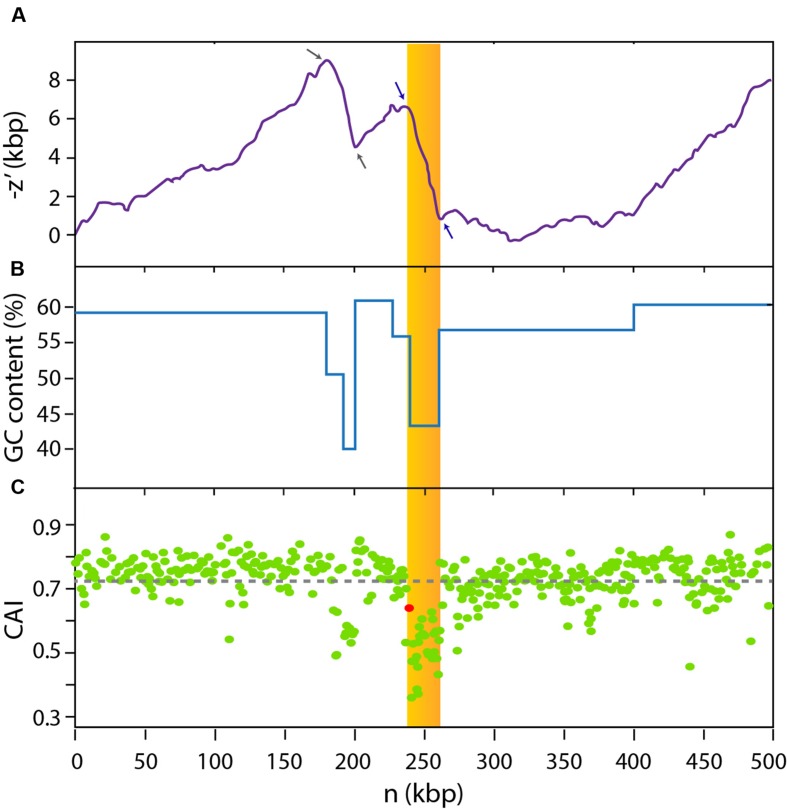
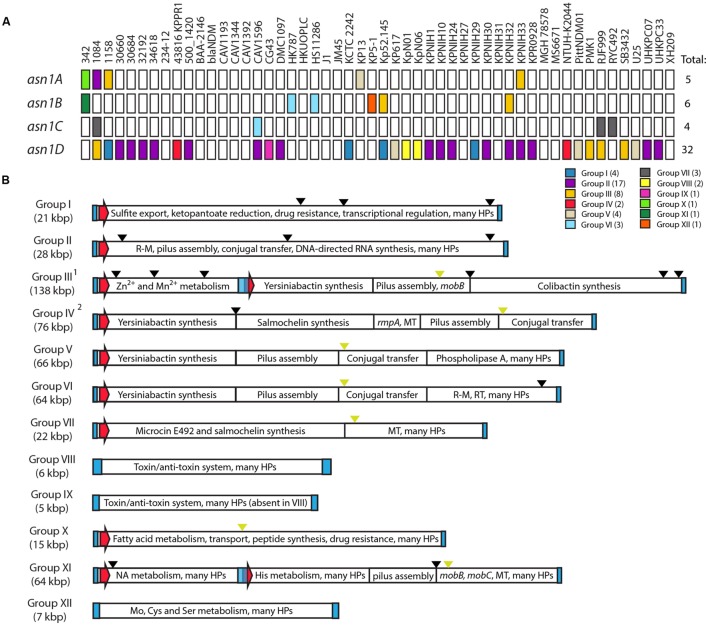
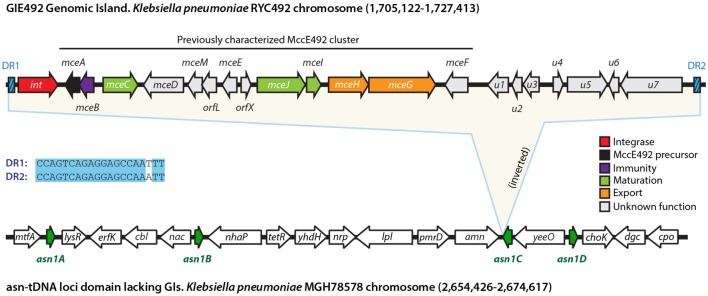
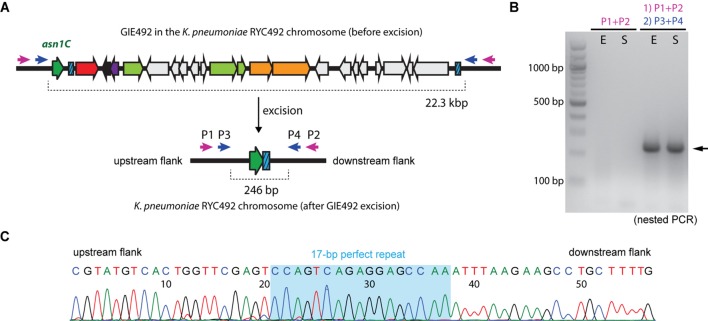
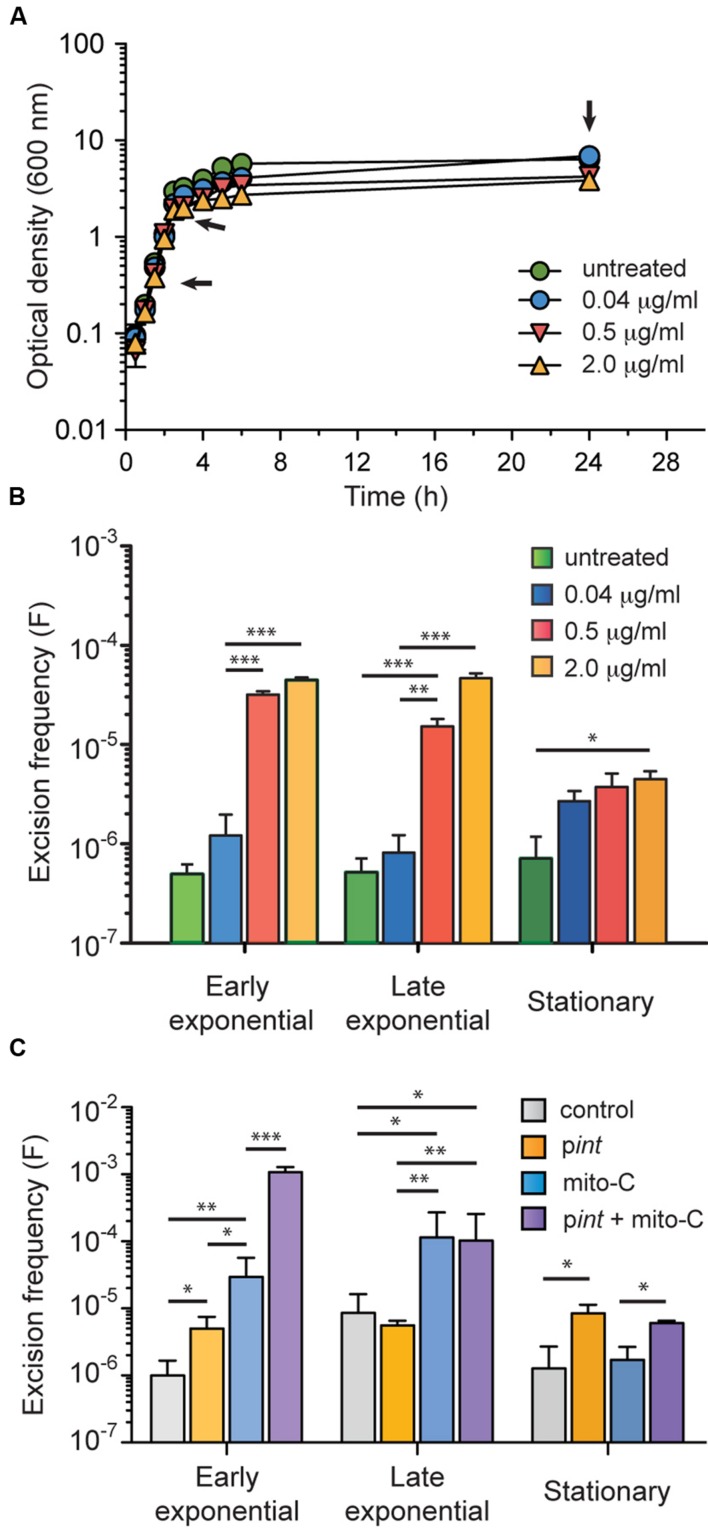
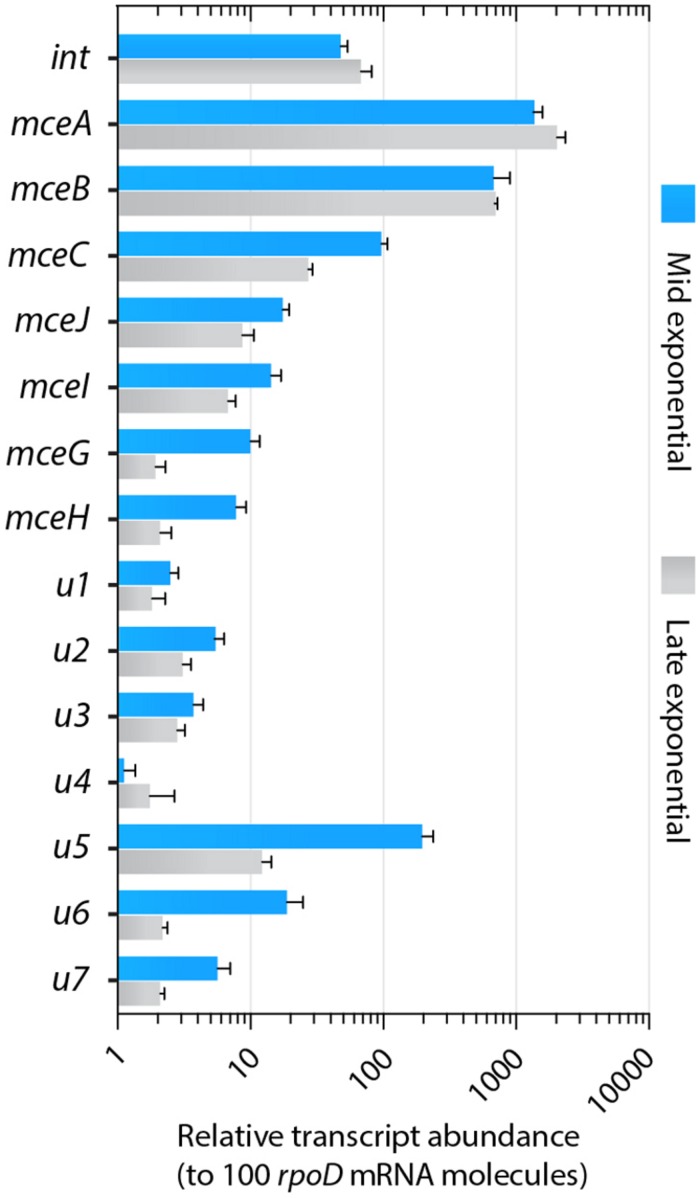
Due to the developing of multi-resistant and invasive hypervirulent strains, Klebsiella pneumoniae has become one of the most urgent bacterial pathogen threats in the last years. Genomic comparison of a growing number of sequenced isolates has allowed the identification of putative virulence factors, proposed to be acquirable mainly through horizontal gene transfer. In particular, those related with synthesizing the antibacterial peptide microcin E492 (MccE492) and salmochelin siderophores were found to be highly prevalent among hypervirulent strains. The determinants for the production of both molecules were first reported as part of a 13-kbp segment of K. pneumoniae RYC492 chromosome, and were cloned and characterized in E. coli. However, the genomic context of this segment in K. pneumoniae remained uncharacterized. In this work, we provided experimental and bioinformatics evidence indicating that the MccE492 cluster is part of a highly conserved 23-kbp genomic island (GI) named GIE492, that was integrated in a specific asparagine-tRNA gene (asn-tDNA) and was found in a high proportion of isolates from liver abscesses sampled around the world. This element resulted to be unstable and its excision frequency increased after treating bacteria with mitomycin C and upon the overexpression of the island-encoded integrase. Besides the MccE492 genetic cluster, it invariably included an integrase-coding gene, at least seven protein-coding genes of unknown function, and a putative transfer origin that possibly allows this GI to be mobilized through conjugation. In addition, we analyzed the asn-tDNA loci of all the available K. pneumoniae assembled chromosomes to evaluate them as GI-integration sites. Remarkably, 73% of the strains harbored at least one GI integrated in one of the four asn-tDNA present in this species, confirming them as integration hotspots. Each of these tDNAs was occupied with different frequencies, although they were 100% identical. Also, we identified a total of 47 asn-tDNA-associated GIs that were classified into 12 groups of homology differing in theencoded functionalities but sharing with GIE492 a conserved recombination module and potentially its mobility features. Most of these GIs encoded factors with proven or potential role in pathogenesis, constituting a major reservoir of virulence factors in this species.
由于多重耐药和侵袭性高毒力菌株的出现,肺炎克雷伯菌已成为近年来最紧迫的细菌病原体威胁之一。对越来越多已测序分离株的基因组比较,使得人们能够鉴定出假定的毒力因子,这些因子主要通过水平基因转移获得。特别是,那些与合成抗菌肽微菌素E492(MccE492)和沙门菌素铁载体相关的因子,在高毒力菌株中高度普遍。这两种分子的产生决定因素最初被报道为肺炎克雷伯菌RYC492染色体13-kbp片段的一部分,并在大肠杆菌中进行了克隆和表征。然而,该片段在肺炎克雷伯菌中的基因组背景仍未得到表征。在这项研究中,我们提供了实验和生物信息学证据,表明MccE492基因簇是一个高度保守的23-kbp基因组岛(GI)的一部分,该基因组岛名为GIE492,它整合在一个特定的天冬酰胺-tRNA基因(asn-tDNA)中,并且在世界各地采集的肝脓肿分离株中发现的比例很高。该元件不稳定,在用丝裂霉素C处理细菌后以及该岛编码的整合酶过表达时,其切除频率增加。除了MccE492基因簇外,它总是包含一个整合酶编码基因、至少七个功能未知的蛋白质编码基因以及一个假定的转移起点,这可能使该GI通过接合作用进行转移。此外,我们分析了所有可用的肺炎克雷伯菌组装染色体的asn-tDNA位点,以评估它们作为GI整合位点的情况。值得注意的是,73%的菌株在该物种存在的四个asn-tDNA之一中至少整合了一个GI,证实它们是整合热点。这些tDNA中的每一个被占据的频率不同,尽管它们100%相同。此外,我们总共鉴定出47个与asn-tDNA相关的GI,它们被分为12个同源组,这些同源组在编码功能上有所不同,但与GIE492共享一个保守的重组模块以及潜在的移动特性。这些GI中的大多数编码在发病机制中具有已证实或潜在作用的因子,构成了该物种毒力因子的主要储存库。