Liu Yi, Zhang Jun
School of Mechanical and Electronic Engineering, Wuhan University of Technology, Wuhan 430070, China.
Digital Manufacture Key Lab of Hubei Province, Wuhan University of Technology, Wuhan 430070, China.
Sensors (Basel). 2016 Jul 1;16(7):975. doi: 10.3390/s16070975.
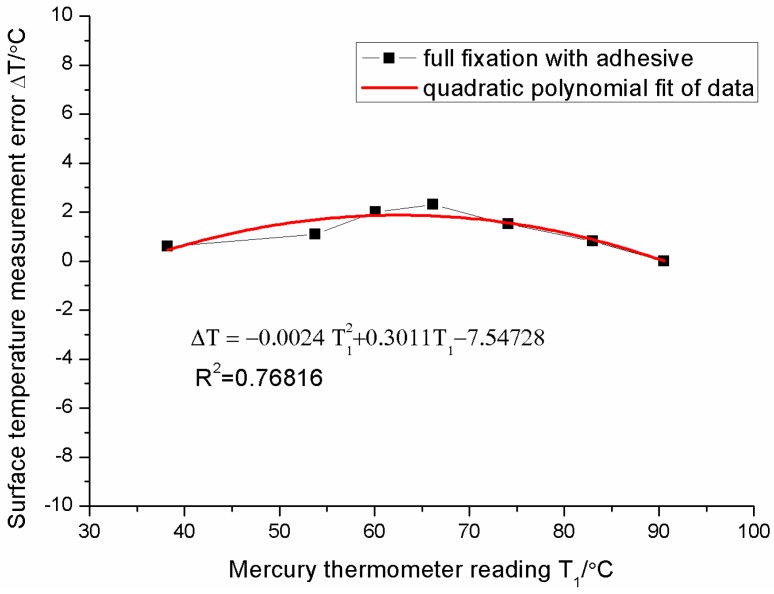
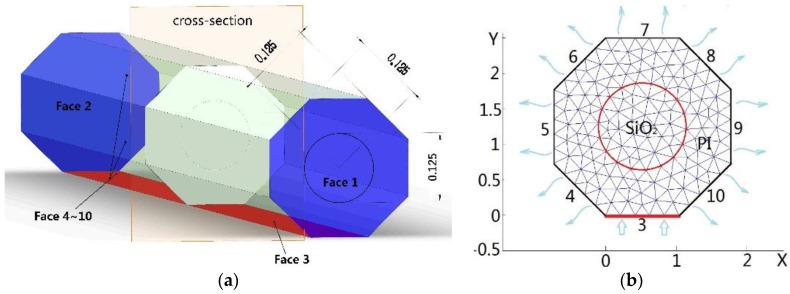
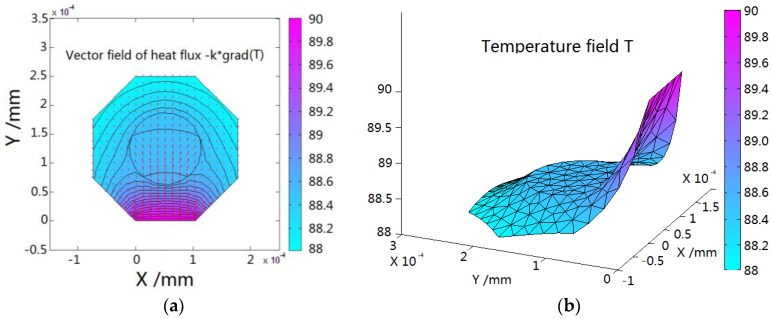
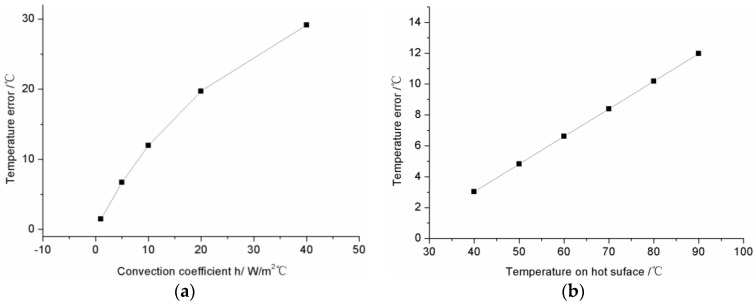
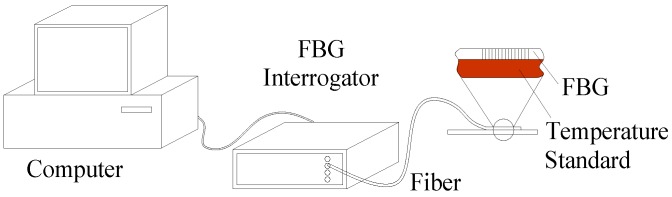
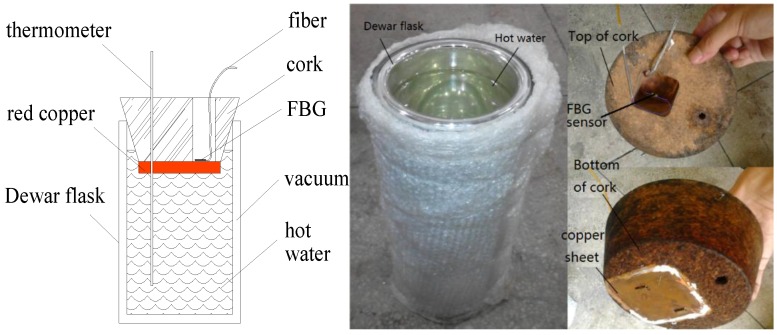
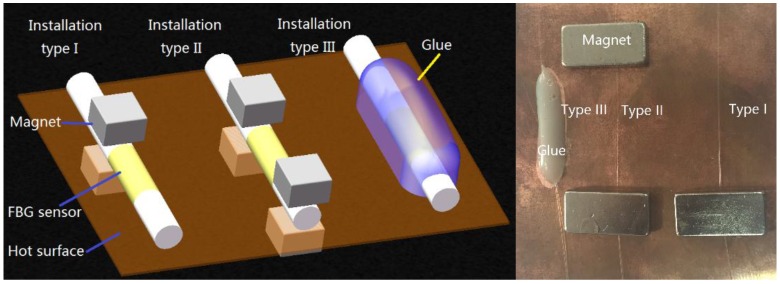
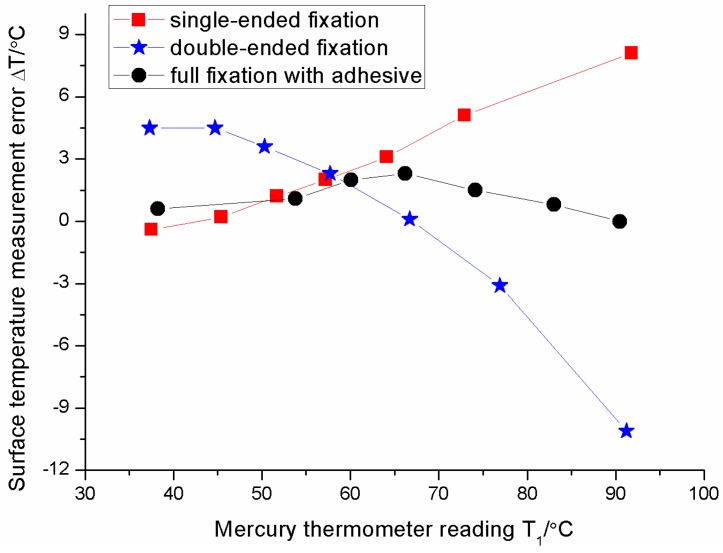
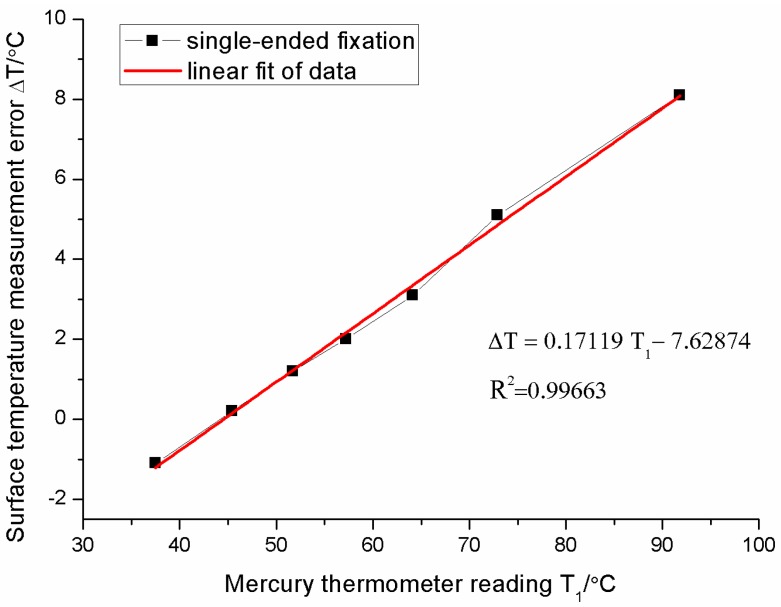
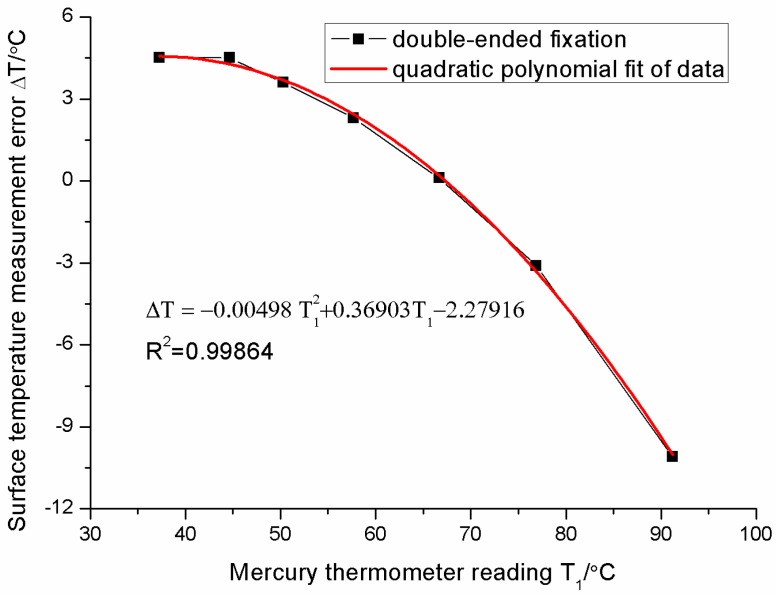
Surface temperature is an important parameter in clinical diagnosis, equipment state control, and environmental monitoring fields. The Fiber Bragg Grating (FBG) temperature sensor possesses numerous significant advantages over conventional electrical sensors, thus it is an ideal choice to achieve high-accuracy surface temperature measurements. However, the effects of the ambient temperature and installation types on the measurement of surface temperature are often overlooked. A theoretical analysis is implemented and a thermal transfer model of a surface FBG sensor is established. The theoretical and simulated analysis shows that both substrate strain and the temperature difference between the fiber core and hot surface are the most important factors which affect measurement accuracy. A surface-type temperature standard setup is proposed to study the measurement error of the FBG temperature sensor. Experimental results show that there are two effects influencing measurement results. One is the "gradient effect". This results in a positive linear error with increasing surface temperature. Another is the "substrate effect". This results in a negative non-linear error with increasing surface temperature. The measurement error of the FBG sensor with single-ended fixation are determined by the gradient effect and is a linear error. It is not influenced by substrate expansion. Thus, it can be compensated easily. The measurement errors of the FBG sensor with double-ended fixation are determined by the two effects and the substrate effect is dominant. The measurement error change trend of the FBG sensor with fully-adhered fixation is similar to that with double-ended fixation. The adhesive layer can reduce the two effects and measurement error. The fully-adhered fixation has lower error, however, it is easily affected by substrate strain. Due to its linear error and strain-resistant characteristics, the single-ended fixation will play an important role in the FBG sensor encapsulation design field in the near future.
表面温度是临床诊断、设备状态控制和环境监测领域中的一个重要参数。光纤布拉格光栅(FBG)温度传感器相较于传统的电传感器具有许多显著优势,因此它是实现高精度表面温度测量的理想选择。然而,环境温度和安装方式对表面温度测量的影响常常被忽视。本文进行了理论分析并建立了表面FBG传感器的热传递模型。理论和模拟分析表明,基底应变以及光纤纤芯与热表面之间的温差是影响测量精度的最重要因素。提出了一种表面型温度标准装置来研究FBG温度传感器的测量误差。实验结果表明,有两种效应会影响测量结果。一种是“梯度效应”。随着表面温度升高,这会导致正线性误差。另一种是“基底效应”。随着表面温度升高,这会导致负非线性误差。单端固定的FBG传感器的测量误差由梯度效应决定,是线性误差。它不受基底膨胀影响。因此,很容易进行补偿。双端固定的FBG传感器的测量误差由这两种效应决定,且基底效应占主导。完全粘贴固定的FBG传感器的测量误差变化趋势与双端固定的相似。粘结层可以减小这两种效应和测量误差。完全粘贴固定的误差较小,然而,它很容易受到基底应变的影响。由于其线性误差和抗应变特性,单端固定在不久的将来将在FBG传感器封装设计领域发挥重要作用。