Tobias-Webb Juliette, Limbrick-Oldfield Eve H, Gillan Claire M, Moore James W, Aitken Michael R F, Clark Luke
a Department of Psychology , University of Cambridge , Cambridge , UK.
b Centre for Gambling Research at UBC, Department of Psychology , University of British Columbia , Vancouver , BC , Canada.
Q J Exp Psychol (Hove). 2017 Aug;70(8):1732-1746. doi: 10.1080/17470218.2016.1206128. Epub 2016 Jul 20.
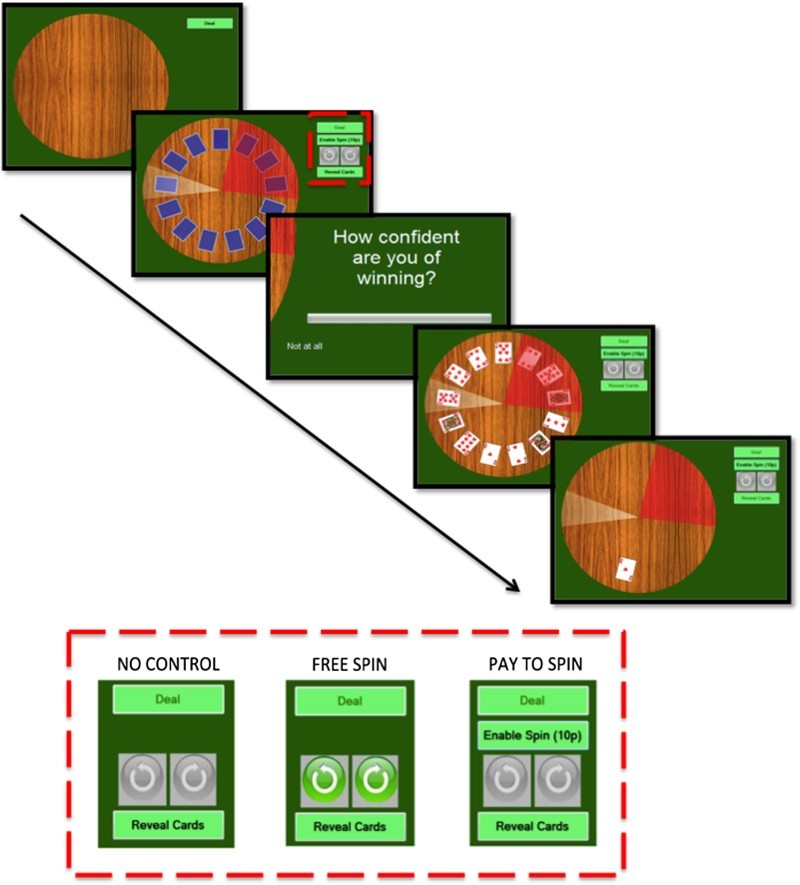
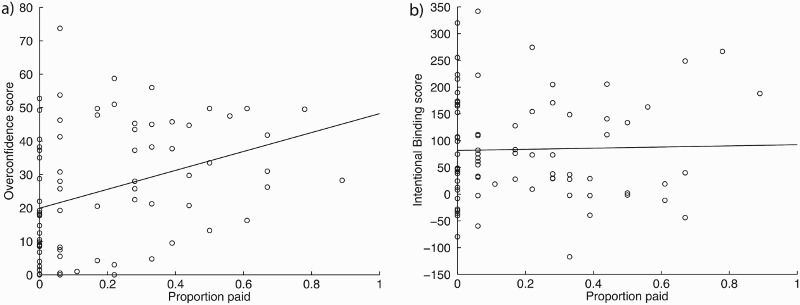
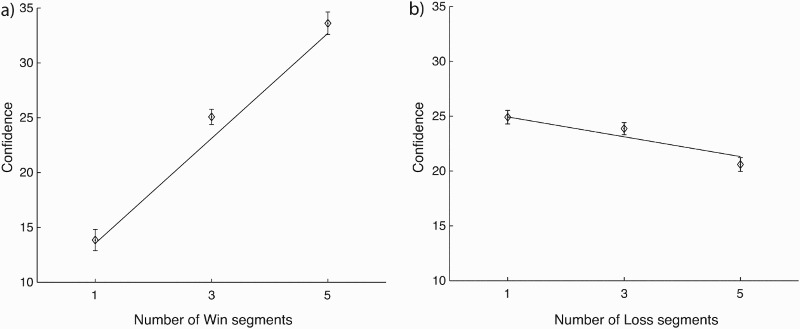
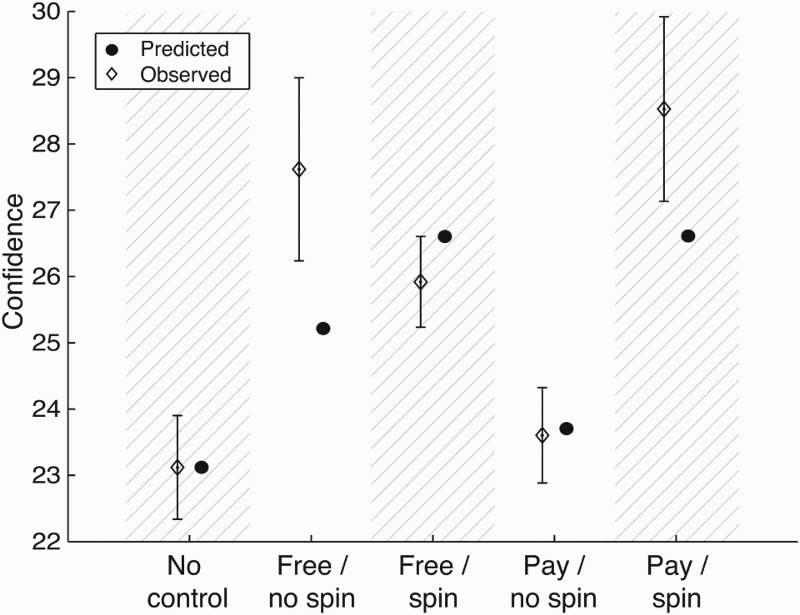
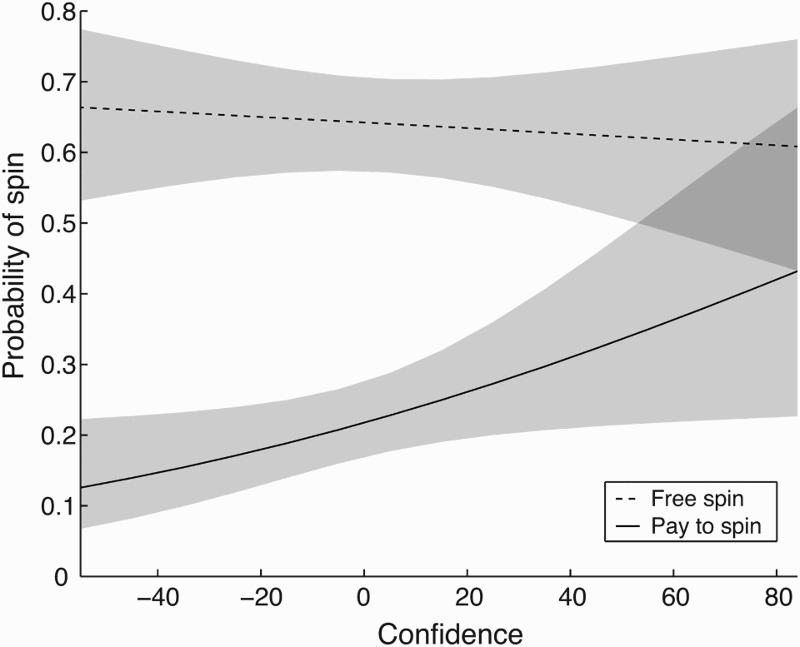
Illusory control refers to an effect in games of chance where features associated with skilful situations increase expectancies of success. Past work has operationalized illusory control in terms of subjective ratings or behaviour, with limited consideration of the relationship between these definitions, or the broader construct of agency. This study used a novel card-guessing task in 78 participants to investigate the relationship between subjective and behavioural illusory control. We compared trials in which participants (a) had no opportunity to exercise illusory control, (b) could exercise illusory control for free, or (c) could pay to exercise illusory control. Contingency Judgment and Intentional Binding tasks assessed explicit and implicit sense of agency, respectively. On the card-guessing task, confidence was higher when participants exerted control than in the baseline condition. In a complementary model, participants were more likely to exercise control when their confidence was high, and this effect was accentuated in the pay condition relative to the free condition. Decisions to pay were positively correlated with control ratings on the Contingency Judgment task, but were not significantly related to Intentional Binding. These results establish an association between subjective and behavioural illusory control and locate the construct within the cognitive literature on agency.
错觉控制是指在机会游戏中出现的一种效应,即与熟练情境相关的特征会提高成功的期望。过去的研究通过主观评分或行为来操作化错觉控制,但对这些定义之间的关系或更广泛的能动性概念考虑有限。本研究对78名参与者使用了一种新颖的猜牌任务,以探究主观和行为错觉控制之间的关系。我们比较了参与者在以下三种情况下的试验:(a) 没有机会行使错觉控制;(b) 可以免费行使错觉控制;(c) 可以付费行使错觉控制。偶然性判断任务和意向性绑定任务分别评估了明确和隐含的能动性意识。在猜牌任务中,参与者行使控制时的信心高于基线条件。在一个补充模型中,当参与者信心较高时,他们更有可能行使控制,并且这种效应在付费条件下相对于免费条件更为明显。付费决策与偶然性判断任务中的控制评分呈正相关,但与意向性绑定没有显著关系。这些结果建立了主观和行为错觉控制之间的关联,并将该概念定位在关于能动性的认知文献中。