Narasimhan Madhusudhanan, Rajasekaran Namakkal S
Department of Pharmacology and Neuroscience, Texas Tech University Health Sciences Center Lubbock, TX, USA.
Cardiac Aging and Redox Signaling Laboratory, Center for Free Radical Biology, Division of Molecular and Cellular Pathology, Department of Pathology, University of Alabama at BirminghamBirmingham, AL, USA; Division of Cardiovascular Medicine, Department of Medicine, University of Utah School of MedicineSalt Lake City, UT, USA; Department of Exercise Physiology, College of Health, University of Utah School of MedicineSalt Lake City, UT, USA.
Front Physiol. 2016 Jun 17;7:241. doi: 10.3389/fphys.2016.00241. eCollection 2016.
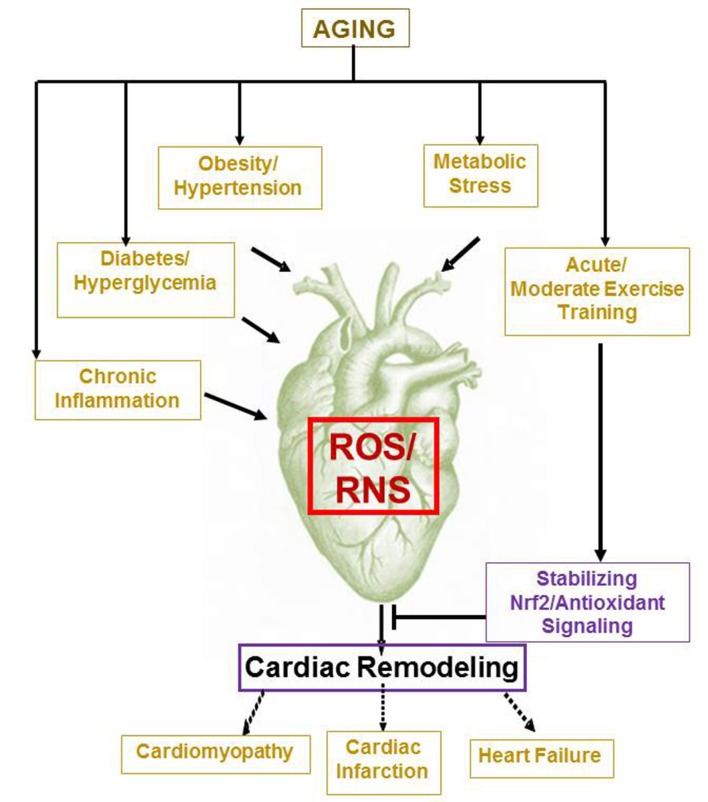
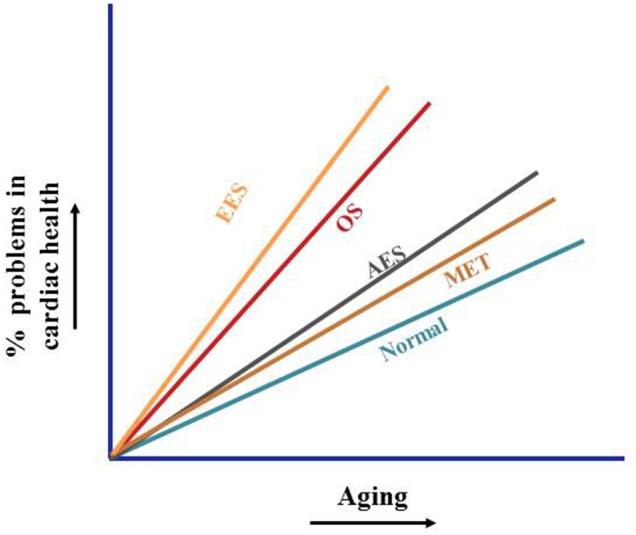
Aging is represented by a progressive decline in cellular functions. The age-related deformities in cardiac behaviors are the loss of cardiac myocytes through apoptosis or programmed cell death. Oxidative stress (OS) and its deleterious consequence contribute to age-related mechanical remodeling, reduced regenerative capacity, and apoptosis in cardiac tissue. The pathogenesis of OS in the elderly can predispose the heart to other cardiac complications such as atherosclerosis, hypertension, ischemic heart disease, cardiac myopathy, and so on. At the molecular level, oxidant-induced activation of Nrf2 (Nuclear erythroid-2-p45-related factor-2), a transcription factor, regulates several genes containing AREs (Antioxidant Response Element) and bring the respective translates to counteract the reactive radicals and establish homeostasis. Myriad of Nrf2 gene knockout studies in various organs such as lung, liver, kidney, brain, etc. have shown that dysregulation of Nrf2 severely affects the oxidant/ROS sensitivity and predispose the system to several pathological changes with aberrant cellular lesions. On the other hand, its gain of function chemical interventions exhibited oxidant stress resistance and cytoprotection. However, thus far, only a few investigations have shown the potential role of Nrf2 and its non-pharmacological induction in cardiac aging. Therefore, here we review the involvement of Nrf2 signaling along with its responses and ramifications on the cascade of OS under acute exercise stress (AES), moderate exercise training (MET), and endurance exercise stress (EES) conditions in the aging heart.
衰老表现为细胞功能的逐渐衰退。心脏行为中与年龄相关的畸形是心肌细胞通过凋亡或程序性细胞死亡而丧失。氧化应激(OS)及其有害后果导致与年龄相关的机械重塑、再生能力降低以及心脏组织中的细胞凋亡。老年人氧化应激的发病机制可使心脏易患其他心脏并发症,如动脉粥样硬化、高血压、缺血性心脏病、心肌病等。在分子水平上,氧化剂诱导转录因子Nrf2(核红细胞2- p45相关因子2)的激活,调节多个含有抗氧化反应元件(ARE)的基因,并产生相应的翻译产物以对抗活性自由基并建立体内平衡。在肺、肝、肾、脑等各种器官中进行的大量Nrf2基因敲除研究表明,Nrf2的失调严重影响氧化剂/活性氧敏感性,并使系统易患多种伴有异常细胞损伤的病理变化。另一方面,其功能获得性化学干预表现出抗氧化应激和细胞保护作用。然而,到目前为止,只有少数研究表明Nrf2及其非药物诱导在心脏衰老中的潜在作用。因此,在这里我们综述了在衰老心脏中,在急性运动应激(AES)、适度运动训练(MET)和耐力运动应激(EES)条件下,Nrf2信号通路及其对氧化应激级联反应的反应和影响。